The tote you need
already exists.
On the ground today
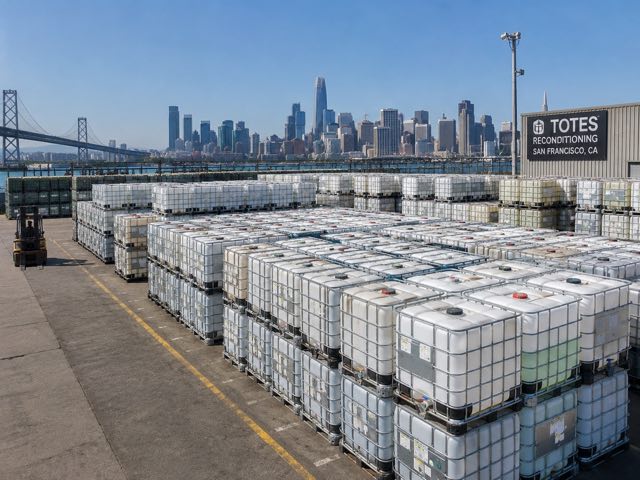
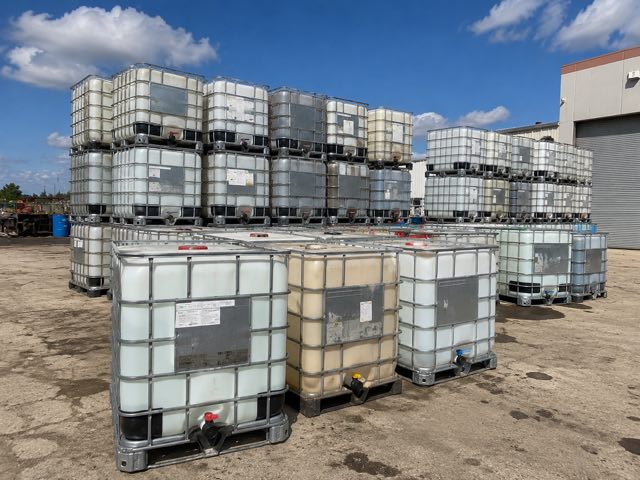
Every unit is photographed, graded and recorded against a number before it is listed — and we refuse roughly 6% of everything offered to us because nobody can say what was in it.
Get a same-day quote
Tell us the liquid, the volume and the zip code. A yard rep replies with grade, availability and a delivered price — usually within one business day.
One container. Three materials. Six lives.
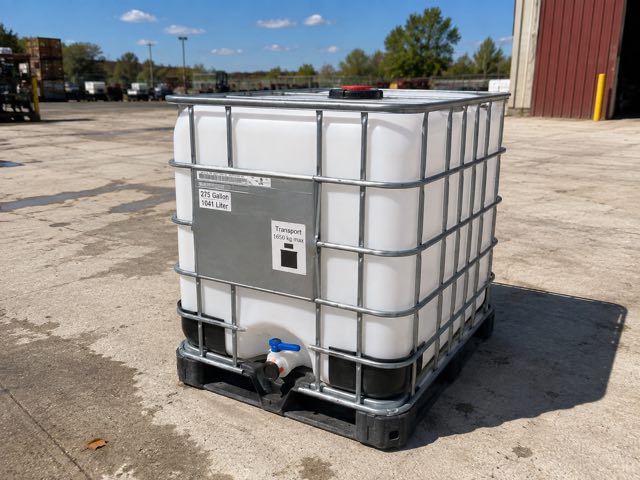
A caged IBC is a blow-moulded HDPE bottle, a galvanised steel cage and a pallet base. Each part wears out at a different rate, which is exactly why throwing the whole thing away is such a waste. We replace the part that failed and keep the rest working.
- Standard capacity275 gal / 1,041 L
- Footprint48 × 40 in
- Height with cage46 in
- Empty weight≈ 125 lb
- Bottle materialHDPE, ≈ 55 lb
- Cage & palletGalvanised steel, ≈ 78 lb
- Stack rating (full)2 high in transit, 3 static
- Outlet2 in butterfly, S60×6 or camlock
Three and a half acres on Bancroft Avenue.
Every container on this site arrives dirty at the north gate and leaves the south dock graded, washed, tested and stacked. Nothing skips a stage and nothing moves backwards through it — which is why we can promise that a food-grade tote has never shared a bay, a hose or a pallet with an industrial one.
- Site area3.4 acres
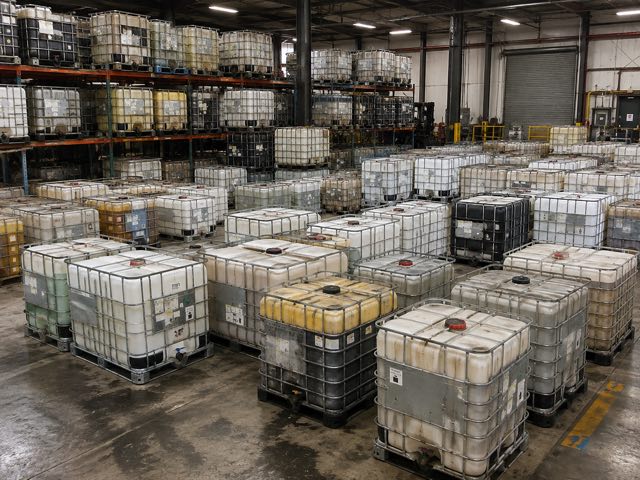
- Covered storage18,000 sq ft
- Wash bays4 — two food-grade, two industrial
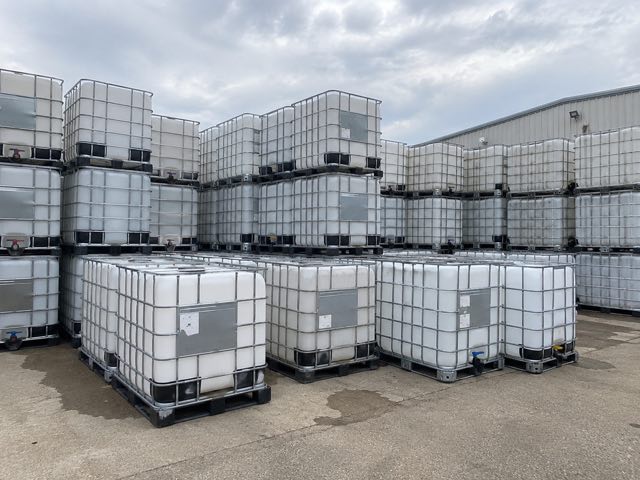
- Containers on the ground≈ 1,400 at any time
- Annual throughput41,800 containers
- Fleet4 flatbeds, 1 liftgate box truck
- Granulator capacity1,100 lb/hr HDPE
- Rooftop solar62 kW, 41% of yard load
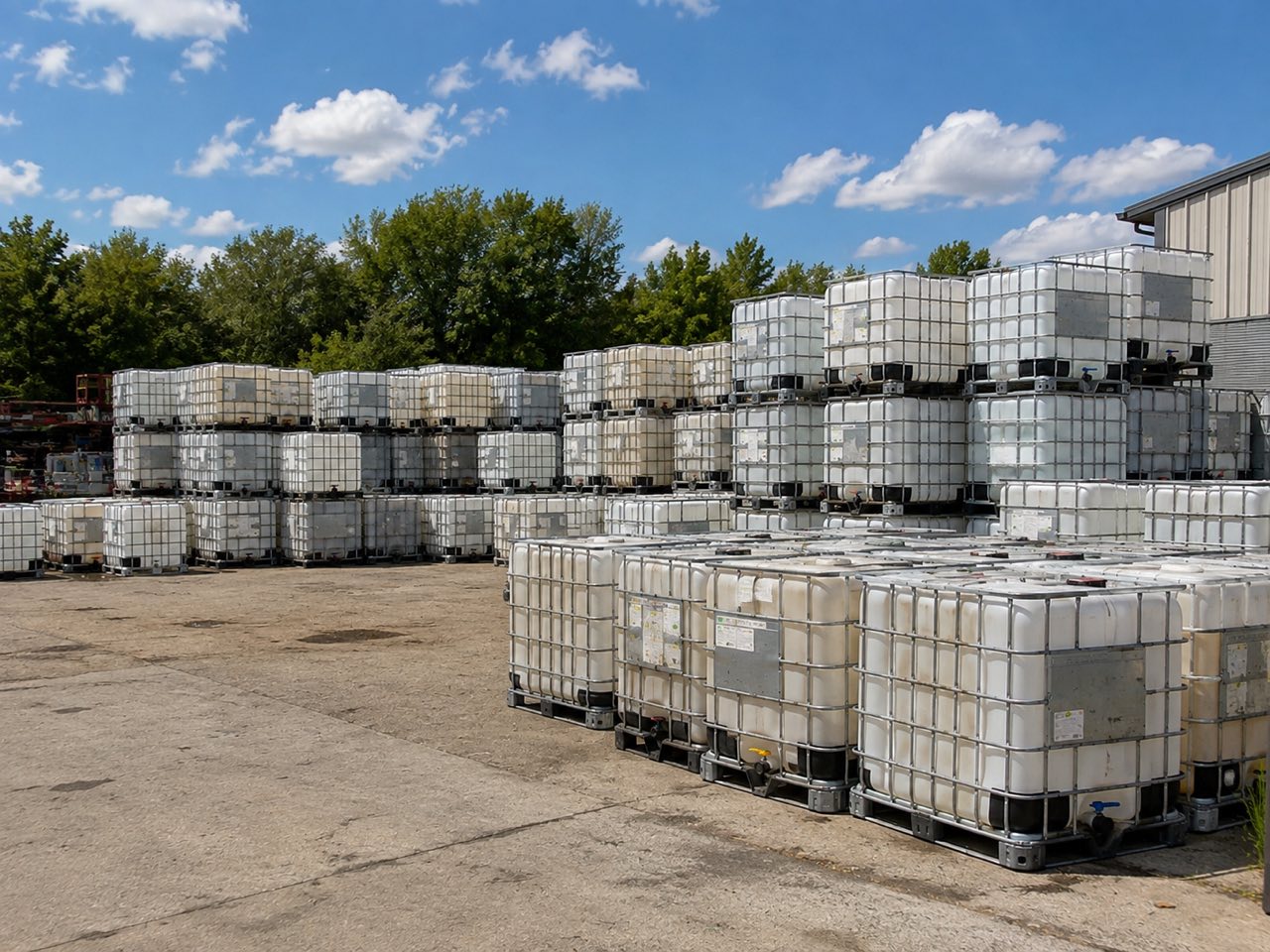
What is actually on the ground this week
Stock moves daily, so treat this as the shape of the yard rather than a live count. Ask the quote desk for the real number on anything you need in quantity.
| Line | Typical units on hand | Grades held | Lead time | Restocked from |
|---|---|---|---|---|
| 275 gallon reconditioned | 500 – 700 | A washed, B rinsed, C as-is | 1–3 days | Daily intake, all lanes |
| 275 gallon food-grade | 100 – 200 | A food-safe only | 1–3 days | Central Valley processors |
| 330 gallon | 80 – 150 | A washed, B rinsed | 1–3 days | East Bay industrial |
| 550 gallon | 20 – 40 | A washed | 2–5 days | Bulk oil and wine |
| Rebottled | Built to order | New bottle, reused cage | 3–7 days | Cage stock + new bottles |
| New | 20 – 60 | Virgin, UN rated available | 2–10 days | Manufacturer |
| Cages and pallets | 200 – 400 | Straightened, inspected | Same week | Rebottling and scrap lines |
| Drums, 55 gallon | 150 – 300 | Poly and steel | Same week | Regional collections |
From your email to your dock, in five steps
No instant-quote widget guessing at your freight. A person reads every request, pulls the stock and photographs the actual units.
Send the request
Liquid or intended use, quantity, a postal code for freight, and whether you have a forklift. That is enough for a delivered price without a follow-up question.
We check compatibility
HDPE resists most water-based chemistry but swells against certain solvents and degrades against strong oxidisers. Send the safety data sheet and we check the resin and the gasket material before quoting, not after you have filled it.
We pull and photograph
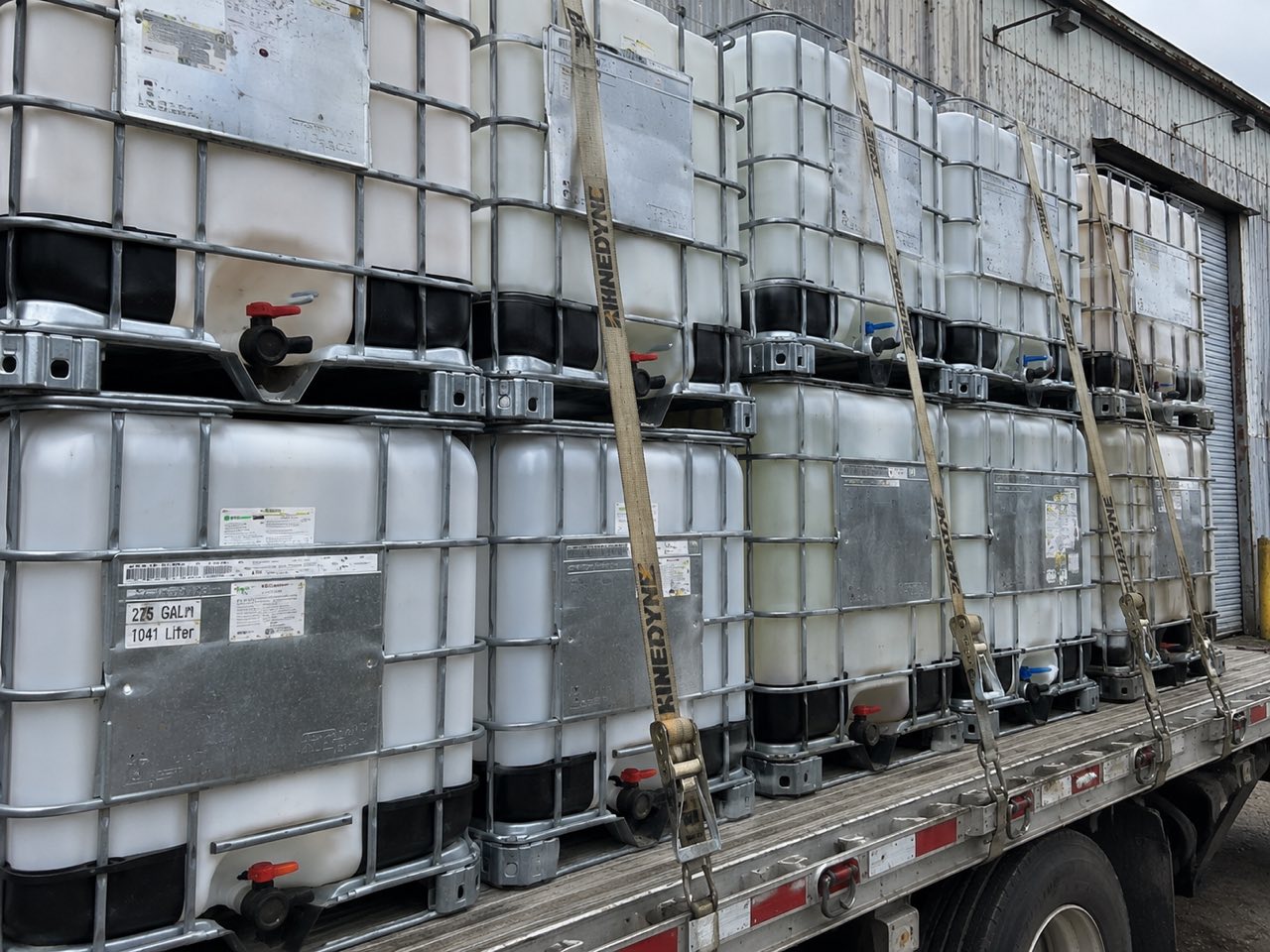
Stock is pulled against unit numbers and photographed as it sits — scuffs, labels, cage condition and all. You see the containers you are buying, not a catalogue rendering.
Quote, hold, approve
A delivered price with freight itemised separately, plus any credit for empties we can collect on the return leg. The stock is held for 48 hours, with no expiring-offer theatre.
Delivered, or collected
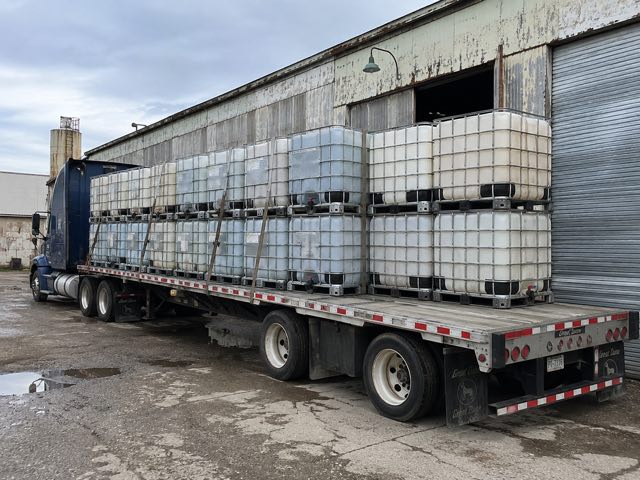
Next business day inside San Francisco, two to three days across the Bay Area, on our own flatbeds. Or collect free at the gate, Monday to Friday.
The fastest route to a price
A closed loop with a gate on Bancroft Avenue
Most container suppliers run a straight line: factory, customer, landfill. We run a circle, and we have been closing it since 2009.
Collected
We pull empties from breweries, packers, growers and plants inside a 250-mile radius — often on the same run that delivers their next batch.
Triaged
Every container is logged, sniffed, UV-lamped and graded A, B, C or scrap before it touches a wash bay.
Washed
Triple rinse, caustic circuit, hot-water finish. 94% of the water goes back around the loop instead of down a drain.
Rebuilt
Bent cages get straightened, cracked bottles get swapped, valves and gaskets get replaced with new EPDM.
Certified
Leak test, pressure check, UN/DOT plate review. Anything hauling regulated liquid leaves with paperwork.
Back to work
Delivered on our own flatbeds across the Bay Area — then collected again when it comes back empty.
…and stage 06 becomes stage 01 again. Our yard average is six full cycles before a bottle is finally granulated into regrind.
The Reuse Impact Engine
Move the sliders. Watch what reuse actually buys you — in carbon, in water, in landfill volume and in dollars. Then send the exact configuration straight into the quote form.
96 containers kept out of production
That is roughly 27,594 miles of driving avoided, or the annual carbon uptake of 494 mature trees.
Figures are directional, not an audited LCA. They combine our weighed container masses with published cradle-to-gate factors for virgin HDPE and galvanised steel. We will happily show you the spreadsheet.
Products
Roughly 1,400 containers on the ground at any time, photographed and graded before they are listed.
Reconditioned IBC Totes
Washed, leak-tested, re-gasketed and graded. The default choice for anyone moving non-hazardous liquid.
From $135
02Rebottled IBC Totes
A brand-new bottle dropped into a reclaimed cage and pallet. Virgin-clean inside, reused outside.
From $195
03Food-Grade IBC Totes
Single-trip totes with a traceable food-contact history, washed on a dedicated line.
From $165
04New IBC Totes
When an audit, a pharma spec or a regulator says virgin resin only. We stock them and we say so.
From $315
05Drums & Closed-Top Containers
55 gallon poly, tight-head steel and open-top fibre drums, reconditioned and pressure-checked.
From $28
06Valves, Lids & Accessories
S60x6 caps, camlock adapters, EPDM gaskets, sight tubes, cage guards, secondary containment.
From $6
07Rainwater Harvesting Kits
Food-grade tote, first-flush diverter, UV cover, overflow and tap — sized for Bay Area roofs.
From $265
08Upcycled Builds
Wicking planters, tool cages, compost tumblers and market stalls fabricated from retired stock.
Made to order
Recycling is what we do when we have finally run out of ideas.
Reusing an IBC tote avoids about 235 lb of virgin material per turn. Recycling that same tote recovers material but still burns the energy to shred it, melt it and mould it again. Every additional cycle we squeeze out of a container is pure avoided impact — which is why our entire operation is built to postpone the granulator, not feed it.
Services
Buying a tote is the easy part. Keeping a fleet of them clean, compliant, delivered and eventually retired is the work.
Buy Used IBC Totes
Graded, photographed stock with prior-contents records — pick a grade, we pull the pallet.
02We Buy Your Totes
Turn a yard full of empties into cash or credit, with free pickup on twelve or more.
03Reconditioning & Rebottling
Send us your fleet, get it back washed, re-caged, re-gasketed and ready to fill.
04Triple-Rinse Washing
Caustic circuit, hot-water finish, closed-loop water and a documented wash certificate.
05Recycling & End-of-Life
Granulation, steel recovery and a diversion report you can put in a sustainability filing.
06Freight & Local Delivery
Our flatbeds inside the Bay Area, vetted carriers to the rest of the western states.
07Tote Leasing & Pooling
Rent the container instead of owning the disposal problem. Seasonal terms welcome.
08Custom Fabrication
Cut, plumb, weld, stencil and manifold totes into whatever your process actually needs.
Pick a size by footprint, not by hope
Three capacities cover 95% of what leaves our gate. The difference that catches people out is height, not volume — a 330 sits on the same pallet as a 275 but will not clear a 48-inch shelf.
| Capacity | Litres | Footprint (in) | Height (in) | Tare (lb) | Gross (lb) | Typical use |
|---|---|---|---|---|---|---|
| 275 gal | 1,041 | 48 × 40 | 46 | 125 | 2,400 | Everything: the default Bay Area workhorse |
| 330 gal | 1,249 | 48 × 40 | 53 | 145 | 2,900 | More volume where headroom allows |
| 550 gal | 2,082 | 48 × 48 | 68 | 228 | 4,800 | Bulk oils, wine, water storage |
| 120 gal | 454 | 40 × 32 | 38 | 78 | 1,100 | Tight cellars, lab and pilot batches |
Answers written by people who wash these for a living
No affiliate listicles. Just the questions our quote desk gets asked every week, answered properly.
IBC Tote Grades Explained
What separates an A from a B, and why a C can still be the right buy.
Food-Grade vs Industrial
The paperwork, the wash line and the honest limits of a reused container.
How to Clean an IBC Tote
A triple-rinse procedure you can actually run in a back lot.
Rainwater Harvesting Guide
Sizing, siting, first-flush and what San Francisco code expects.
One yard, 250 miles of reach
Our own trucks cover the nine Bay Area counties. Beyond that we broker flatbed freight across California, Nevada and Oregon.
Bancroft Avenue yard
1450 Bancroft Ave, San Francisco, CA 94124yard@ibctotessanfrancisco.com
- Monday – Friday7:00 AM – 4:30 PM
- Saturday8:00 AM – 12:00 PM
- SundayClosed
Two-person kombucha startups and municipal public works, on the same truck
Roughly 1,900 accounts across Northern California. There is no minimum order and never has been.
| Sector | What they usually buy | Typical order | What matters most to them |
|---|---|---|---|
| Breweries, cideries, kombucha | Grade A food-safe, Grade A washed | 8–24 units | Traceable prior contents and a wash certificate |
| Wineries and custom crush | Leased food-grade | 20–60 units, seasonal | A confirmed August slot and matched lots |
| Chemical blending and coatings | Grade A washed industrial | 12–60 units | Resin and gasket compatibility, checked in writing |
| Biotech and pharmaceutical | Rebottled, new | 4–24 units | Documentation their quality system will accept |
| Agriculture and irrigation | Grade B rinsed | 10–40 units | Price per gallon and delivery that turns up |
| Construction and civil | Grade C as-is | 6–20 units | Cheap, replaceable, delivered this week |
| Municipal and public works | Grade A washed, upcycled builds | 6–34 units | Insurance certificates and diversion reporting |
| Schools and community gardens | Upcycled builds | 4–18 units | Cost, and a food-contact history they can point to |
Frequently asked questions
What does a used IBC tote cost in San Francisco?
Yard prices in 2026 run roughly $110–$180 for a rinsed industrial 275 gallon tote, $165–$235 for a washed Grade A tote, $195–$260 for a rebottled unit with a new bottle in a reused cage, and $290–$360 for new. Price moves with grade, previous contents, cage condition and how many you take. Anything over a pallet of twelve gets tiered pricing, and delivery inside San Francisco proper is a flat yard fee rather than a freight quote.
Are your used totes safe for food, beverage or cosmetic use?
Only the ones we sell as Grade A food-safe. Those arrive here having held a single food-contact product — cane syrup, fruit concentrate, olive oil, glycerine, vinegar — and we can trace the prior contents to a named shipper. They are washed on a dedicated food line that never sees an industrial container, and each one ships with its prior-contents record. Anything with an unknown or industrial history is sold as industrial and labelled that way, no exceptions.
Will you buy the empty totes sitting behind my building?
Almost certainly, if they held a non-hazardous product and the cage is straight. Send a photo of the UN plate and the label, tell us the count and your zip, and we come back with a per-unit price. Twelve or more inside our 250-mile radius earns free pickup; smaller lots can be dropped at the Bancroft Avenue gate during yard hours. We pay by cash, check or credit against your next order.
How quickly can you deliver?
Stock totes going anywhere in San Francisco, Daly City, Brisbane or South San Francisco usually move the next business day. The wider nine-county Bay Area is two to three days on our own flatbeds. Anything beyond that rides common carrier, which adds two to five days depending on where you are in California, Nevada or Oregon.
What actually happens to a tote you cannot resell?
It gets dismantled instead of dumped. The bottle is cut, shredded and granulated into HDPE regrind that goes to moulders making drainage pipe, wheel chocks and pallets. The galvanised cage and steel pallet go to a Bay Area scrap processor. Valves and gaskets are stripped for the parts bin. Across a typical year 98.6% of the incoming mass leaves as product or feedstock.
More of these on the full FAQ page, or dig into the learning centre.