What a tote becomes when it stops being a tote
Price upcycled builds
Quantity, liquid and zip code is enough to get a real number back. We confirm grade and stock before we quote — no auto-replies.
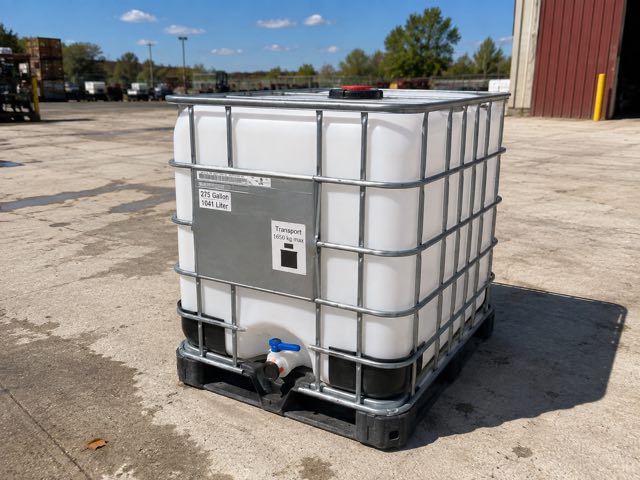
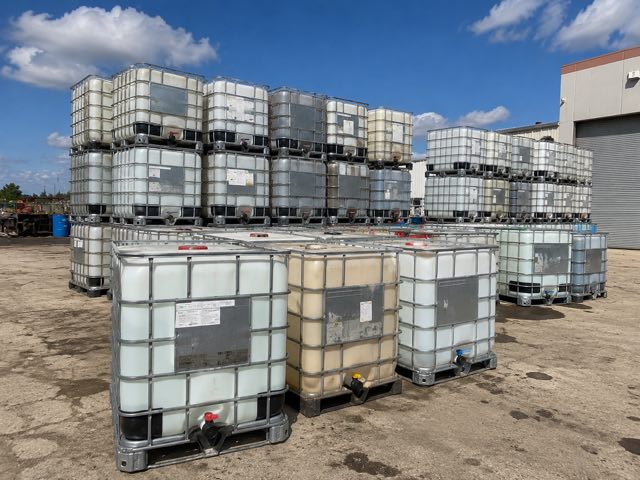
Containers that fail liquid-service testing are cut, plumbed and rebuilt into wicking planters, compost tumblers, wash stations, market stalls, tool cages and aquaponics beds rather than granulated immediately. It postpones recycling by years, which is the whole point: every additional year of use is avoided impact that no recycling process can match.
The standing catalogue
| Build | Base container | What we do to it | Price | Popular with |
|---|---|---|---|---|
| Wicking planter, half-tote | 275 gal, cut horizontally | Cut, cap, install reservoir, wick and overflow | $185 | Schools, community gardens, rooftops |
| Wicking planter, full cage | 275 gal, cut at 60% | Deep-bed version with cage retained as trellis | $245 | Urban farms, restaurants |
| Compost tumbler | 275 gal, rotated on frame | Cut hatch, weld axle, build stand | $395 | Community composting, schools |
| Wash station | 275 gal + drum | Plumb tap, basin, greywater catch | $310 | Farmers markets, job sites, events |
| Market stall / display frame | Bare cage | Cut, paint, add shelving and canopy mounts | $220 | Market vendors, pop-ups |
| Tool and gas cage | Bare cage + steel pallet | Weld door, add hasp and floor | $260 | Contractors, marinas |
| Aquaponics bed set | 2 × 275 gal | Grow bed, sump, bell siphon, plumbing | $780 | Schools, research, hobbyists |
| Custom | Anything in the yard | Sketch it, we will quote it | Quoted | Everyone else |
Where they end up
School and community gardens
Wicking planters are the most requested build we make. Water goes in a reservoir under the soil, plants draw it up, and a bed that would need daily watering survives a week. We have built over 400 for Bay Area schools.
Farmers markets and events
Wash stations and stall frames that fold onto a pallet and lift with a forklift. Built from cages that have already done a decade of chemical service.
Contractors and marinas
Lockable tool and gas cages from bare frames with a welded door and steel floor — cheaper than a job box, and ventilated by design.
Research and teaching
Aquaponics bed sets and demonstration rigs for schools, colleges and community programmes, built to a plan you supply or one we develop with you.
What it will and will not hold
These start as containers that failed a liquid-service leak test. Cutting a bottle voids any UN rating permanently and the unit is marked accordingly, so everything here is atmospheric-pressure duty by definition.
| Contents | Verdict | Gasket | What decides it |
|---|---|---|---|
| Growing edible produce | Yes, food-history stock only | — | We do not build edible planters from industrial containers at any price |
| Ornamental planting | Yes | — | Wider stock available; cheaper |
| Composting and worm systems | Yes | — | Cage retained as the frame |
| Potable handwashing stations | Yes, food-history and sanitised | EPDM (standard) | Foot pump for hands-free operation where code requires it |
| Tool and gas cages | Bare frames | — | Ventilated by design, which matters for fuel cans |
| Aquaponics and fish | Yes, food-history | EPDM (standard) | Bell siphon plumbing supplied with a diagram |
| Pressure or transport duty | No | — | A cut bottle is not a pressure vessel and never will be |
Exactly what you receive
- A donor container with a documented prior-contents history appropriate to the build
- All cutting, capping and reinforcement, with a folded and reinforced lip where cut
- The cage retained wherever it adds strength or serves as a trellis or guard
- Plumbing, taps, siphons or drainage as the build requires
- Delivery assembled where it fits on a flatbed
- A written note of the donor container's prior product on the invoice
What you will need separately
- Soil, growing medium, gravel or plants
- Site preparation — these are heavy when filled
- Any UN rating, permanently
Ask before you order, not after
Five checks worth five minutes
Written from the problems that reach our returns desk, which is the only honest source for a list like this.
Ask what was in the donor container
For anything edible, we use containers that would have gone out as Grade A food-safe had they passed the leak test, and we state the prior product on the invoice. If a supplier will not tell you, that is the answer.
Prepare the base for the filled weight
A wicking planter full of wet soil and a 40 gallon reservoir is well over 2,000 lb. Level, compacted ground or a pad. This catches people who are thinking of it as a planter rather than as a container.
Set the overflow at the top of the gravel
Not in the soil. Soil sitting permanently in standing water goes anaerobic within a season — it smells, roots rot, and the bed underperforms a plain raised bed.
Insist on an inspection tube
You cannot manage a reservoir you cannot see. A 3 inch PVC tube to the reservoir floor lets you fill through it and check the level with a torch.
Send a sketch for anything custom
Roughly half of what leaves the fabrication shop is somebody else's idea. A photograph of the space and rough dimensions is enough to start.
Three mistakes we watch people make
Using soil as the wicking medium
Building edible beds from industrial stock
Assuming it can still carry liquid on a road
The commercial detail
Indicative 2026 yard pricing. Everything is quoted properly before anything moves, and freight is always itemised separately.
| Build | Base container | Price | Lead time | Popular with |
|---|---|---|---|---|
| Wicking planter, half-tote | 275 gal, cut horizontally | $185 | 1–2 weeks | Schools, community gardens, rooftops |
| Wicking planter, full cage | 275 gal, cut at 60% | $245 | 1–2 weeks | Urban farms, restaurants |
| Compost tumbler | 275 gal on a welded frame | $395 | 2–3 weeks | Community composting, schools |
| Wash station | 275 gal + 55 gal drum | $310 | 2–3 weeks | Farmers markets, job sites, events |
| Market stall / display frame | Bare cage | $220 | 1–2 weeks | Market vendors, pop-ups |
| Tool and gas cage | Bare cage + steel pallet | $260 | 1–2 weeks | Contractors, marinas |
| Aquaponics bed set | 2 × 275 gal | $780 | 2–3 weeks | Schools, research, hobbyists |
| Custom | Anything in the yard | Quoted | 1–3 weeks | Everyone else |
Upcycled Builds: FAQ
Are these safe for growing food?
The builds we sell for food growing use containers with a documented food-contact history — the same stock that would have gone out as Grade A food-safe had it passed the leak test. We do not build planters out of industrial-history containers, and we say so on the invoice. If you want a specific prior product, ask; we can usually match it.
Can I bring my own design?
Yes, and roughly half of what leaves the fabrication shop is somebody else’s idea. Send a sketch, a photo or a dimensioned drawing through the form. Tomás will come back with a materials list, a price and an honest opinion about whether it will work.
Do you deliver assembled?
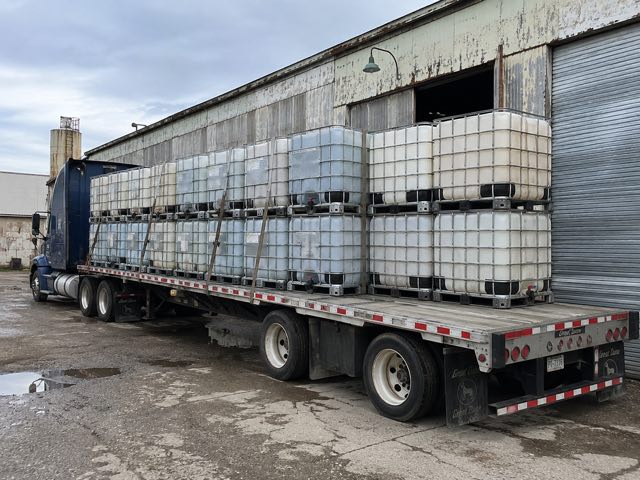
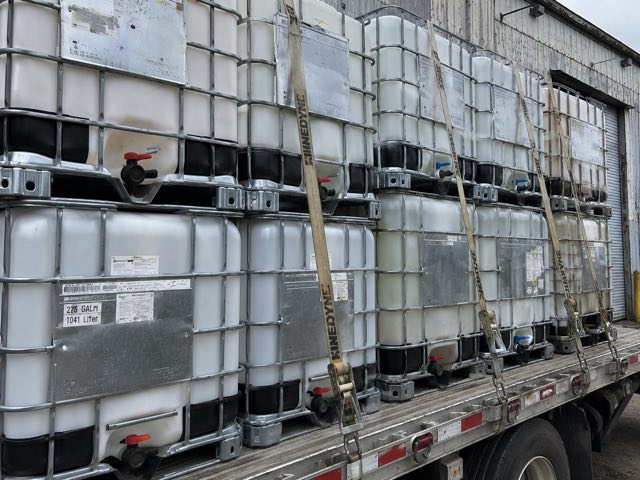
Anything that fits on a flatbed goes out assembled, which is most of it. Aquaponics sets and multi-tote arrays ship as components with a plumbing diagram, because they need siting before they need assembling.
Why not just recycle the container?
Because a planter that lasts fifteen years is fifteen more years of avoided manufacturing, and granulating a bottle spends energy today to make a lower-value product. We granulate what we cannot rebuild — but we try to rebuild first. See our sustainability page for the arithmetic.
Why build these at all instead of recycling the container?
Because a planter that lasts fifteen years is fifteen more years of avoided manufacturing, and granulating a bottle spends energy today to produce a lower-value product. Recycling is our failure state, not our goal. We granulate what we cannot rebuild — but we try to rebuild first.
Can I have the plans if I want to build my own?
Yes, and we publish the wicking planter design in full because the first forty we built were wrong in three specific ways and there is no reason for anyone else to repeat them. Ask and we will send dimensions, materials and the overflow height that matters most.
Do these arrive assembled?
Anything that fits on a flatbed goes out assembled, which is most of it. Aquaponics sets and multi-tote arrays ship as components with a plumbing diagram, because they need siting before they need assembling.