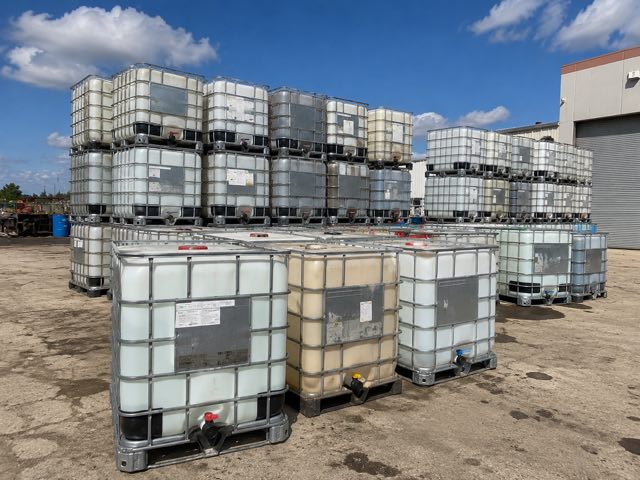
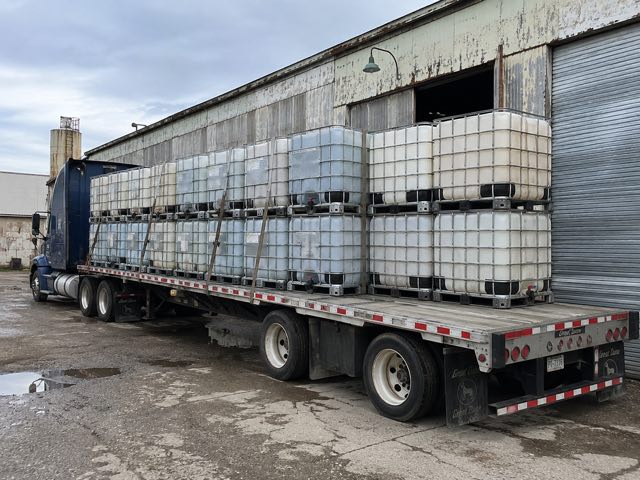
One flatbed, a quarter acre
Founded off Third Street with 200 totes bought from a Modesto cannery. 1,100 containers moved in the first year, most of them sold as-is with a rinse and a promise.
Every account gets a running diversion statement from the first order. Tell us what you need and we will open one.
Founded off Third Street with 200 totes bought from a Modesto cannery. 1,100 containers moved in the first year, most of them sold as-is with a rinse and a promise.
A Richmond specialty chemical blender signs a standing empties agreement. The idea that a customer might want us to take the container back turns out to be the whole business.
After two disputes in one month, we stop describing stock as "good" and "rough" and start photographing and recording every unit against A, B, C and scrap.
A caustic circuit with a three-stage separator replaces the pressure washer. Water per container drops by roughly two thirds. Grade A becomes a category we can defend.
Intake, grading and dispatch get separated into distinct zones for the first time. Annual volume passes 6,000 containers.
Stops the freight bleed that had made the first four years marginal. Same-week Bay Area delivery becomes a standing promise rather than a favour.
New HDPE bottles dropped into reclaimed cages opens the door to customers who need virgin-clean interiors. Now roughly a third of shipped volume.
Priya arrives and insists that food-contact containers get their own bays, hoses and staff rotation. Costs throughput, wins the beverage accounts.
We stop sending regulated containers out for third-party inspection and bring the leak test, plate review and documentation on site.
3.4 acres, four wash bays, covered storage and a fabrication shop. The single largest capital decision in the company’s history and the one that made everything after it possible.
Wicking planters for a school district turn into a standing catalogue of upcycled builds: compost tumblers, wash stations, market stalls, tool cages.
Demand for food-grade totes spikes as distilleries pivot to hand sanitiser. We ration stock, publish a fair-allocation policy and refuse to raise prices on emergency orders.
Scrap bottles stop leaving the site as waste and start leaving as HDPE regrind. Landfill diversion crosses 98% and stays there.
Covers roughly 41% of yard load including the granulator. Payback modelled at nine years; running two years ahead of that.
Seasonal customers — harvest, brewing, construction water — start renting containers instead of buying and storing them. Utilisation per container rises sharply.
We begin issuing per-account diversion statements so procurement teams can put real numbers in their own sustainability filings.
First year past forty thousand, on the same footprint. Growth now comes from cycle count, not acreage.
41,800 containers a year, 23 employees, four flatbeds, and a 250-mile service radius covering Northern California, western Nevada and southern Oregon.
From the yard
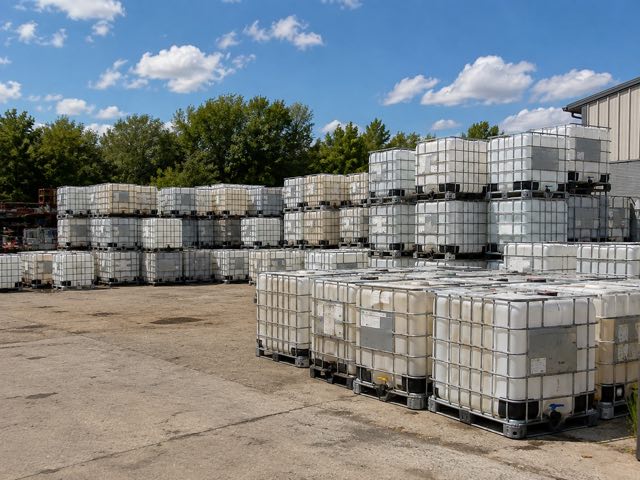
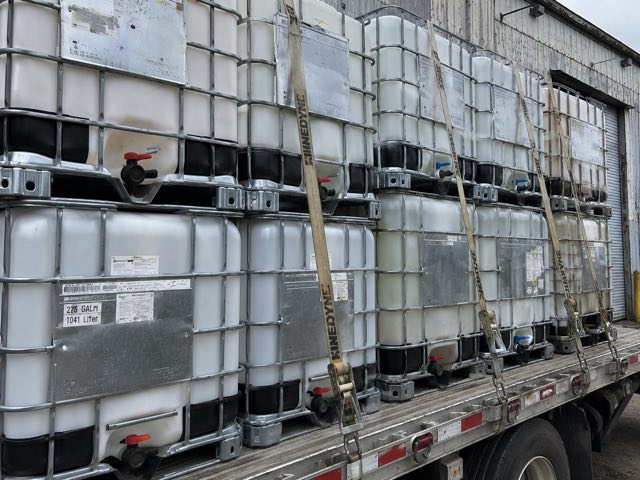
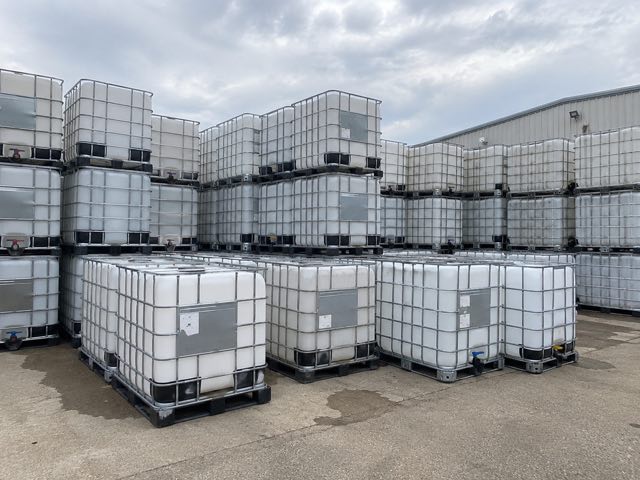
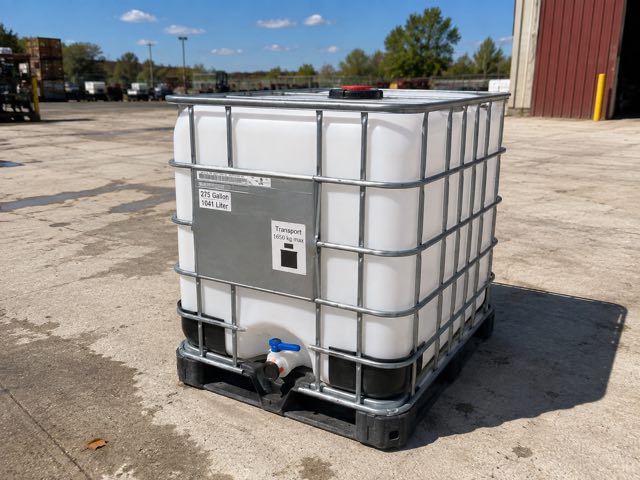
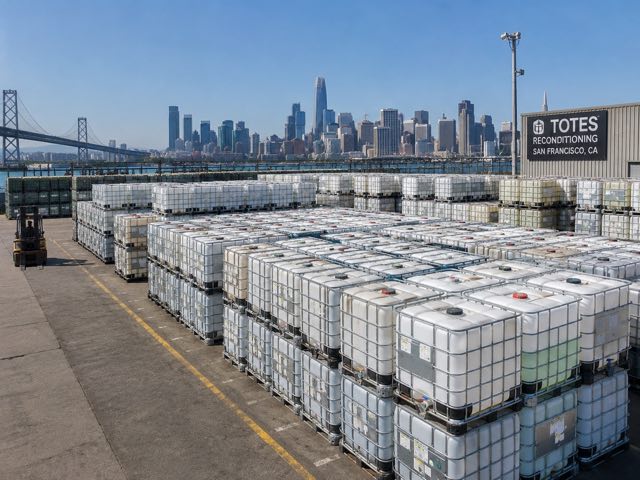
2009, with two hundred containers bought out of a Modesto cannery and washed on rented equipment. The business existed for its first couple of years as an arbitrage on other people's disposal costs, which is a polite way of saying it had no wash bays of its own. Everything since — the Bancroft yard, the caustic circuit, the rebottling line, the granulator — has been bought out of the margin on containers that would otherwise have been shredded.
Three. Taking the Bancroft Avenue site, which turned a trading operation into a processing one. Commissioning the closed-loop wash circuit, which made food-grade work possible and permanently changed the customer mix. And bringing granulation in house, which meant end-of-life containers stopped being somebody else's problem and started being a recovered material stream with a price attached.
No. Food-grade stock only became possible once there was a dedicated wash line that never sees industrial caustic, because the whole proposition rests on there being no cross-contact path at all. Before that the honest answer to a food-grade enquiry was that we could not help. South San Francisco biotech and North Bay wineries are now among the largest parts of the book, and none of that existed in the first five years.
Supply quality and steel price, in that order. Documented prior-contents records used to be rare and are now normal, which makes grading faster and reuse defensible. Cage steel, meanwhile, moves with the scrap market and quietly sets the floor under every price on the yard — when second-hand steel is expensive, a sound cage with a failed bottle is worth rebottling, and when it is cheap, it is worth granulating.
Further into fabrication and leasing, and further away from one-way sales. A leased container that comes back for washing is worth more over its life than a sold one, and it keeps the end-of-life decision with the people who can actually act on it. The constraint is wash capacity rather than demand, so the next capital item is bay five rather than another truck.
Same form, same quote desk, no phone calls. Fill it in once and we come back with grade, availability and a delivered price.