Twenty per cent more liquid on the same square footage.
Price 330 gallon totes
Tell us your rack beam height or door clearance along with the quantity. We would rather catch a fit problem now than on your loading dock.
A 330 gallon IBC tote measures 48 × 40 × 53 inches and holds 1,249 litres — the same footprint as a 275 but seven inches taller. It gives you 20% more volume for about 15% more money and zero additional floor space. Before you order one, measure your lowest rack beam, your doorway and your truck deck clearance.
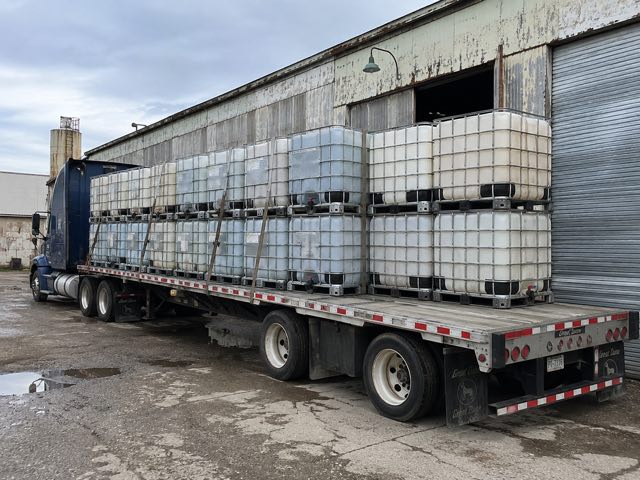
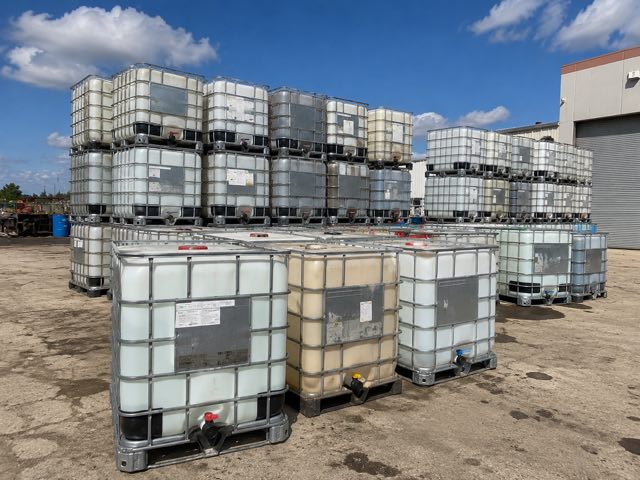
From the yard
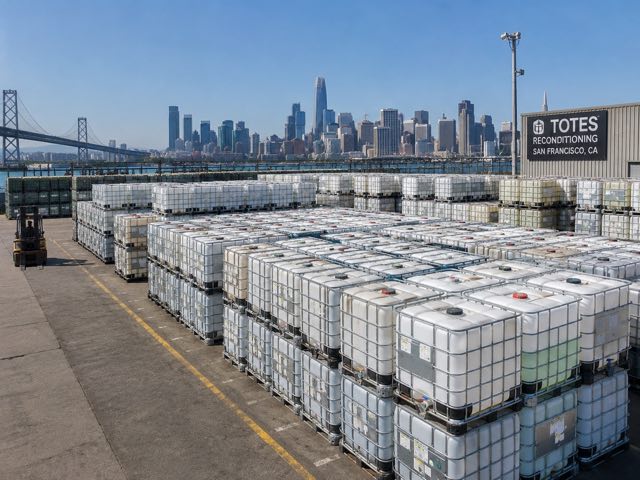
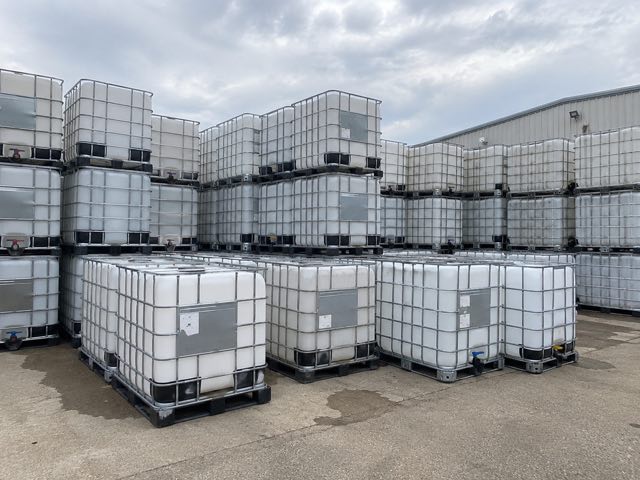
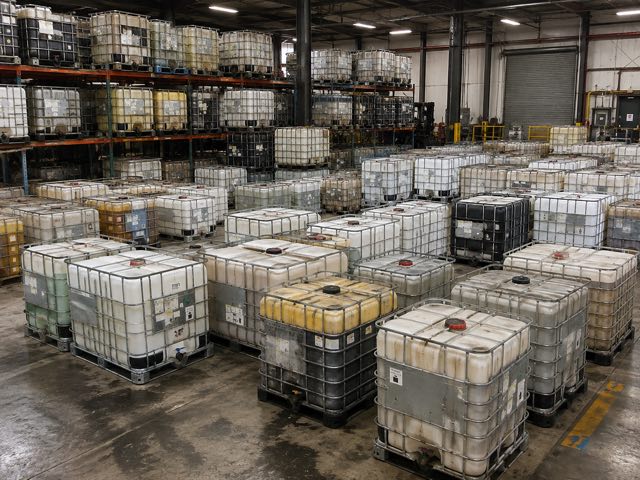
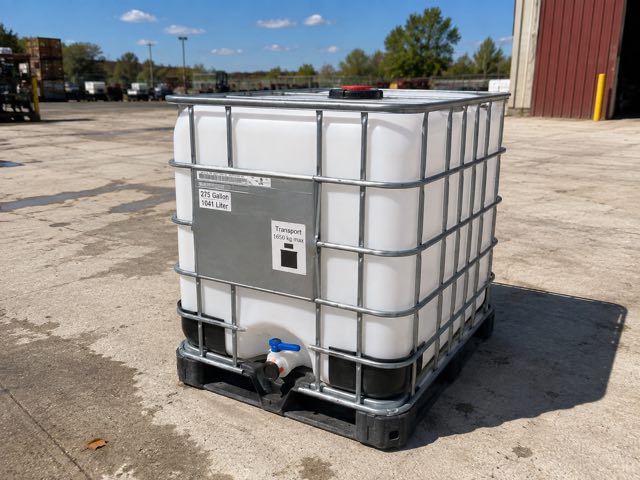
330 gallon in full
- Nominal capacity330 gal / 1,249 L
- Footprint48 × 40 in — identical to a 275
- Overall height53 in (1,346 mm)
- Liquid fill height≈ 45 in
- Tare weight145 lb
- Gross with water2,897 lb
- Wall thickness2.4 – 3.0 mm HDPE
- Outlet2 in butterfly, S60×6 buttress
- Pallet typesComposite or steel
- Stack rating2 high transit, 2 static recommended
330 against 275
| 275 gal | 330 gal | Difference | |
|---|---|---|---|
| Capacity | 275 gal | 330 gal | +20% |
| Footprint | 48 × 40 in | 48 × 40 in | none |
| Height | 46 in | 53 in | +7 in |
| Tare | 125 lb | 145 lb | +20 lb |
| Gross (water) | 2,418 lb | 2,897 lb | +479 lb |
| Typical price | $135 – $195 | $158 – $225 | +15% |
| Cost per gallon | $0.49 – $0.71 | $0.48 – $0.68 | slightly better |
| Fits 48 in rack beam | Yes | No | critical |
When the 330 is the right call
Open floor storage
No racking, no shelf, plenty of ceiling. This is where the 330 is straightforwardly better — you get a fifth more liquid for the same square foot of a floor you are already paying rent on.
Fixed-footprint bunding
If you have already built or bought secondary containment sized for 48 × 40 positions, the 330 increases capacity without new civil work — provided the sump volume also scales.
Fewer handling movements
Six 330s replace seven 275s for the same volume. Over a year of transfers that is a meaningful reduction in forklift movements, connections and spill opportunities.
Outdoor tank farms
Where height is genuinely unconstrained and you are optimising the concrete pad. Pair with UV-opaque covers — a taller container catches more sun, not less.
Measure three things first
Do not mix stacks
Watch the forklift derating
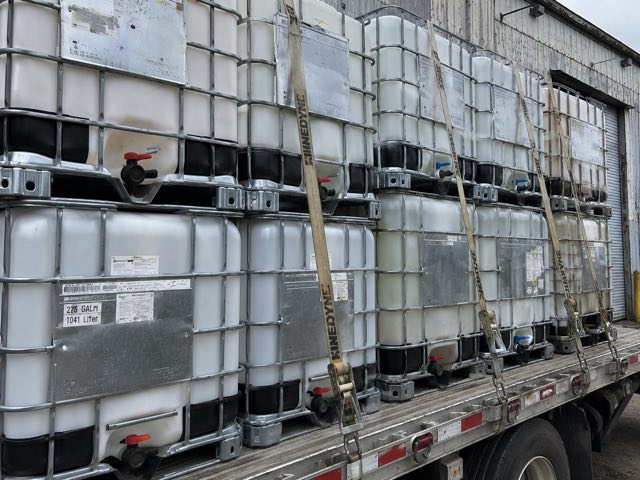
330 gallon FAQ
Is a 330 gallon tote worth the extra cost?
On a per-gallon basis, usually yes: a 330 costs roughly 15% more than a 275 for 20% more capacity, on the same floor space. The question is never economics, it is clearance. If your racking, doorways, truck deck height and stacking plan can absorb 53 inches instead of 46, the 330 is the better buy every time. If any one of those is fixed at 48 inches, it is a container you cannot use.
Does a 330 fit the same spill pallet?
The footprint is identical so it sits on a standard 48 × 40 spill pallet perfectly. What changes is the sump requirement: secondary containment must generally hold the volume of the largest container, so a 330 needs a sump of at least 330 gallons where a 275 needed 275. Check the pallet rating, not just the footprint.
How much does a full 330 gallon tote weigh?
About 2,897 lb with water: 145 lb of container plus 2,752 lb of liquid. That is roughly 480 lb more than a full 275, which pushes many 3,000 lb forklifts out of their comfortable envelope even with plain water. With anything denser you are firmly into 4,000 lb truck territory.