The part underneath that decides how long the container lasts.
Order a pallet swap
Tell us the container count and the base type you want. Swaps run $28–$60 in parts plus bench time, which beats replacing the unit.
Composite is the default, plastic is for wash-down and food, steel is for heavy and outdoor service, and wood should be avoided. The base is 20 to 45 lb of the container's tare weight and it takes every impact, every spill and all of the moisture. Choosing it deliberately adds years to the container's working life.
From the yard
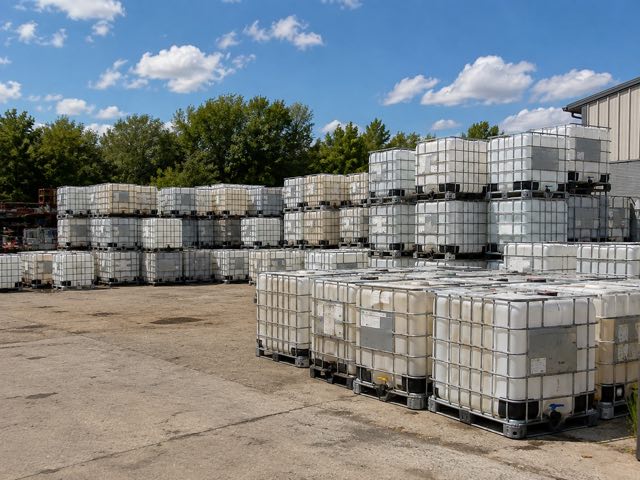
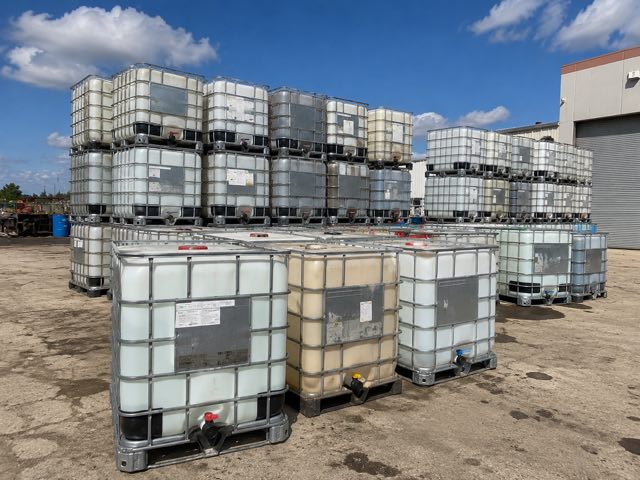
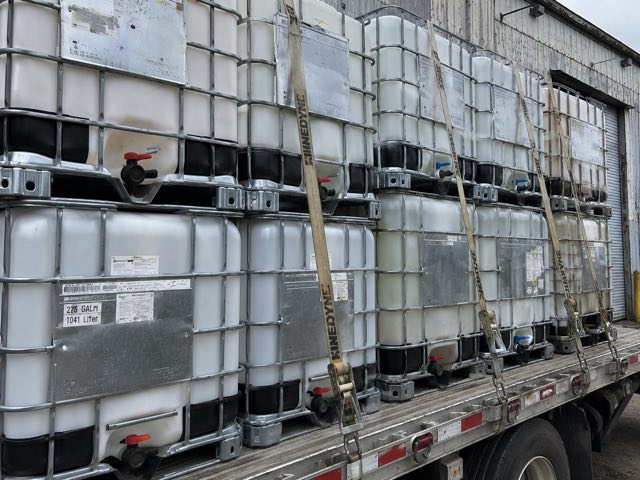
Four bases compared
| Base type | Weight | Cost used | Hygiene | Durability | Fails by | Best for |
|---|---|---|---|---|---|---|
| Composite (HDPE deck, steel runners) | ≈ 30 lb | $28 – $45 | Good | High | Runner corrosion, deck cracking at the corners | General industrial — the default |
| One-piece plastic | ≈ 26 lb | $40 – $65 | Excellent | Medium-high | Deck fatigue under repeated point loading | Food, pharma, wash-down environments |
| Full steel | ≈ 45 lb | $35 – $60 | Fair | Very high | Corrosion at welds and base ring | Outdoor, heavy service, 550 gallon units |
| Wood | ≈ 38 lb | $12 – $20 | Poor | Low | Moisture, rot, splitting, fastener pull-through | Nothing we would recommend |
How each base actually gives up
Corner cracking
The HDPE deck cracks at the corners where forklift tines strike it and where the bottle's weight concentrates. Visible early, and a good reason to inspect the base at every wash.
Deck fatigue
One-piece plastic bases go soft rather than breaking, deflecting more each cycle under a full container until the bottle no longer sits square. Catch it by checking for a visible sag.
Base-ring corrosion
The bottom ring sits in whatever the pallet collects — rainwater, product, wash residue — and corrodes from the inside. It is the number one reason we reject cages at rebottling triage.
Everything, quickly
Absorbs product and water, rots, splits, and pulls fasteners through. Also requires ISPM 15 heat treatment for export. If a container arrives here on wood, we quote a swap before anything else.
Why 48 × 40 rules everything
The GMA pallet footprint is the reason the 275 gallon tote became the standard, and the reason a 550 gallon unit is awkward. Racking, spill pallets, truck decks, dock levellers and warehouse aisles in North America are all dimensioned around 48 × 40 inches.
The practical consequence: if you standardise your container fleet on 48 × 40 footprints, every piece of handling equipment you already own continues to work. Step outside it — a 550 at 48 × 48, or an imported European unit at 1200 × 1000 mm — and you will find out which of your equipment was quietly dimension-dependent.
Never stack mixed pallet types
Check pocket width, not just entry count
Swap early, not late
Pallet FAQ
Which IBC pallet type is best?
Composite for general industrial use — it is the default for good reason, balancing weight, cost and durability. Plastic for anything washed down or food-related, because it does not absorb, splinter or harbour bacteria. Steel for heavy service, outdoor storage and 550 gallon units. Wood for almost nothing any more: it fails to moisture, fails export phytosanitary requirements without treatment, and is the single most common reason a container gets scrapped.
Can I swap the pallet under a tote?
Yes, and it is routine — a pallet swap costs $28–$60 in parts and about fifteen minutes at the bench. It is nearly always cheaper than replacing the container. Bring the unit to the yard or add it to a reconditioning batch. Note that swapping a pallet on a UN-rated container can affect the certification if the base is part of the design type, so ask first if the unit is in regulated service.
Do all pallet types have four-way fork entry?
Composite, plastic and steel bases are four-way as standard, but pocket dimensions vary between manufacturers by an inch or so. Narrow-carriage forklifts and pallet jacks with wide tines occasionally do not mate cleanly with a steel base designed around different spacing. If you run a mixed fleet of trucks, standardise on one pallet type.