Twenty-four questions, answered properly.
Ask us anything
Genuinely anything about containers. If it is a good question we will answer it and then add it to this page.
The three questions we get most: what does a used tote cost, is it safe for food, and will you buy my empties. $85–$360 depending on grade; yes if it is Grade A food-safe with documentation; and yes, $25–$95 each with free pickup on twelve or more.
From the yard
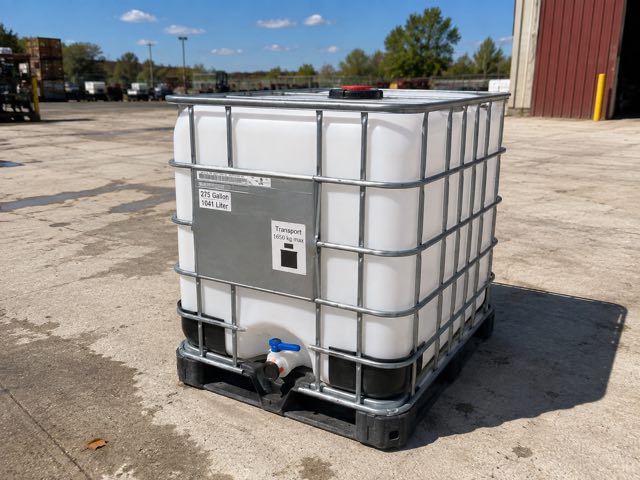
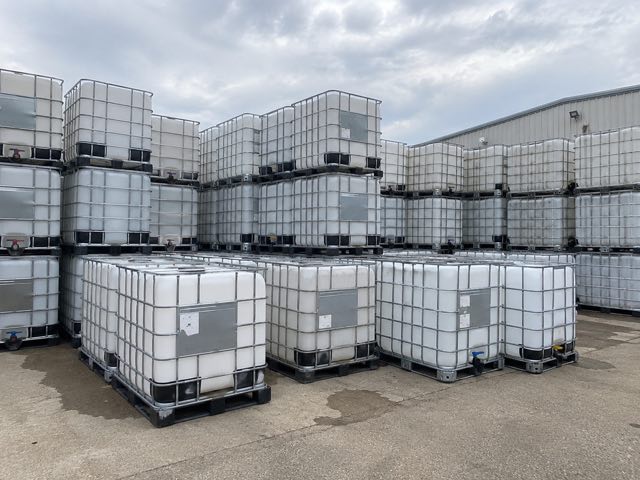
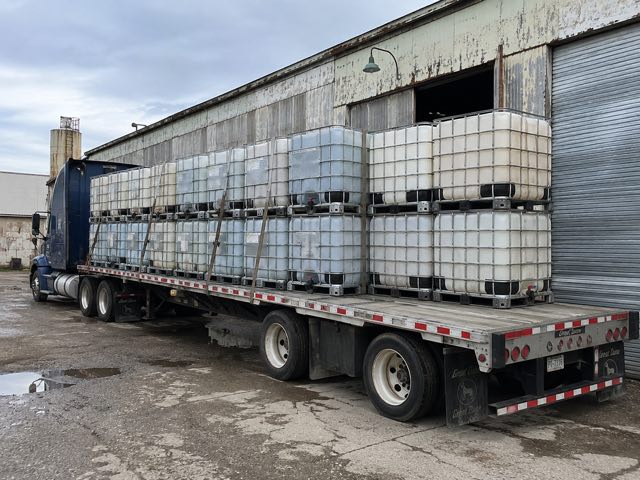
Buying
How much does a used IBC tote cost?
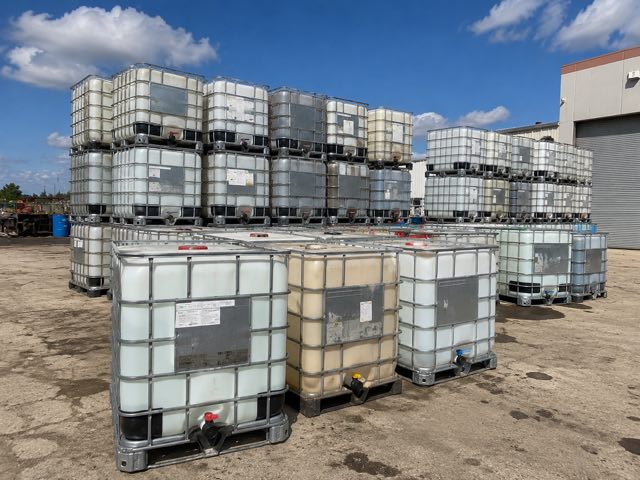
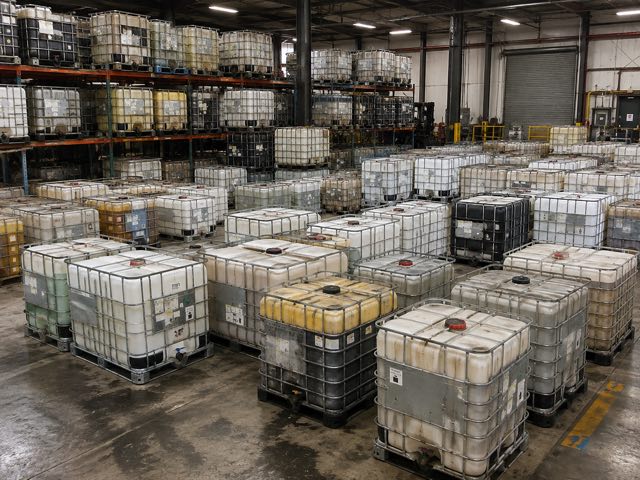
In 2026 our yard prices run $85–$120 for Grade C as-is, $115–$155 for Grade B rinsed, $145–$195 for Grade A washed industrial, $165–$235 for Grade A food-safe, $195–$260 for rebottled and $290–$360 for new. All figures are for a 275 gallon caged unit before tiering and before delivery. Twelve or more units moves you into tiered pricing.
Is there a minimum order?
No. A single container gets the same grading, the same documentation and the same wash as a fifty-container order. Pricing improves at twelve units and again at forty-eight, but nothing prevents you buying one.
Can I see the containers before I buy?
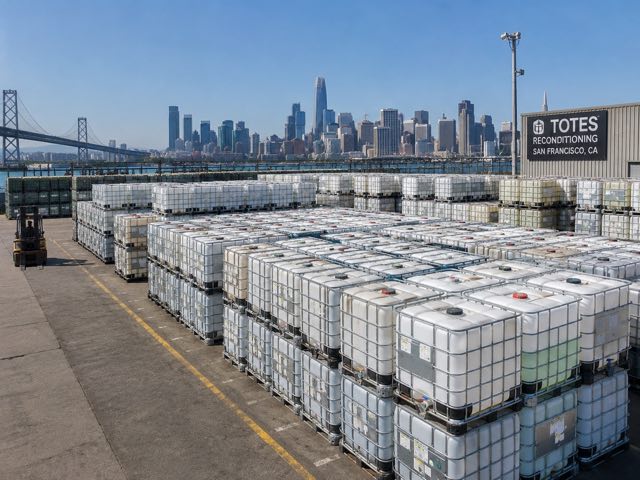
Yes, and we would prefer you did. The yard at 1450 Bancroft Ave is open Monday to Friday 7:00 AM to 4:30 PM, and Saturday mornings by appointment. For remote buyers we photograph the specific units against their unit numbers before shipping.
How quickly can I get them?
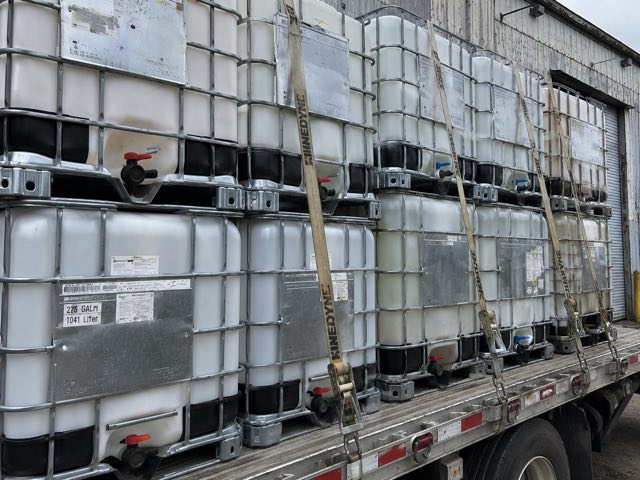
Stock going anywhere in San Francisco usually moves the next business day. The wider nine-county Bay Area is two to three days on our own flatbeds. Beyond that, brokered freight adds two to five days depending on where you are.
Do you take credit cards?
Yes, and ACH, check and net-30 terms for established accounts. Card payments over $2,500 carry the processing fee; ACH does not, which is why most repeat customers use it.
Can I return a container?
Within 14 days, unused and unfilled, yes — less a 15% restocking charge and the return freight. If a container is not as graded, there is no charge at all and we will collect it ourselves.
Grades, safety & suitability
What is the difference between Grade A and Grade B?
Grade A has been washed on a caustic circuit and is free of residue and odour, with a straight cage. Grade B has been rinsed rather than washed, and typically shows staining, some residual odour or minor cage damage. Both carry a documented prior-contents record. The price gap is about $40 on a 275 gallon unit, and a toll wash at $38 will often turn a B into an A.
Are your totes safe for food or drinking water?
The ones we sell as Grade A food-safe are, with two conditions: they carry a traceable single food-contact prior product and a dedicated-line wash certificate, and you should sanitise before first potable fill. We do not sell industrial-history containers for food use at any price.
Will my chemical attack the plastic?
HDPE resists most water-based chemistry — acids, alkalis, salts, fertilisers, detergents — but is swelled by many solvents and degraded by strong oxidisers. Gasket material matters as much as the bottle. Send us the safety data sheet before ordering and we check both.
How long does a used IBC tote last?
A bottle typically manages six to eight service cycles before stress-crazing ends it, which for most customers is eight to fifteen years. Outdoors uncovered, expect four to six years; with a UV-opaque cover, eight to twelve. Cages and pallets usually outlast bottles and are why rebottling exists.
Can I stack them?
Two high in transit and three high static for full containers, on matched pallet types only, with the fuller unit underneath. Empty totes stack four high. Where the UN plate states a stacking load, that figure governs.
Why do some totes smell?
Because certain products — aromatics, essential oils, some solvents — penetrate HDPE rather than sitting on it, and no wash removes them. Any container with detectable odour after washing is downgraded to industrial here. If you receive one from us that smells of anything but clean plastic, we take it back.
Selling and recycling
Will you buy my used totes?
Almost certainly, if the prior contents were non-hazardous and can be named, and the cage is straight. We pay $25–$95 per 275 gallon unit depending on condition and history. Twelve or more inside our 250-mile radius earns free pickup, usually on the return leg of a delivery.
What do I need to send you to get a price?
Two photographs per lot — the UN plate on the cage and the product label on the bottle — plus a count and a zip code. That is enough for a firm written price. If the containers held anything regulated, send the safety data sheet too.
Do you charge to take away containers you cannot resell?
Not for non-hazardous containers; the recovered HDPE and steel cover the handling. Containers requiring hazardous handling carry a fee we quote in advance and itemise. Nothing is sprung on you at the gate.
What happens to a container you cannot save?
It is dismantled rather than dumped. The bottle is granulated on site into HDPE regrind for pipe and pallets, the cage and steel pallet go to a Bay Area scrap processor, and valves and gaskets are stripped for the parts bin. Across a year, 98.6% of incoming mass leaves as product or feedstock.
Can I get a diversion report?
Yes, at no charge. Every account can have a quarterly statement showing containers purchased and returned, mass diverted and estimated avoided CO₂e. Several customers put those figures straight into CDP submissions and municipal sustainability reports.
Freight, compliance and the yard
How much is delivery?
A flat $120 inside San Francisco for up to eight totes. Oakland and the inner East Bay is $180, San Jose and the South Bay $240, the North Bay $285 and Sacramento or Stockton $320. Liftgate service is $60 extra. Beyond our own fleet’s range we broker flatbed or LTL freight and quote it separately.
Do I need a forklift?
For a flatbed delivery, yes, unless you book liftgate service. A 275 gallon tote is 125 lb empty and does not come off a truck by hand. Tell us at quote time — arriving with a flatbed and no way to unload is the most expensive avoidable mistake in this business.
Do your totes come UN/DOT certified?
Some do. The rating attaches to the container as a design type and requires an intact, legible plate plus current periodic test dates. We perform 2.5-year leak tests and 5-year full inspections on site for $38 per unit. What nobody can do is create a rating for a container that never carried one.
Why do you not have a phone number?
Deliberately. Every request — quotes, pickups, freight, complaints — goes through one written channel so nothing is lost to a voicemail nobody checks, and so the answer you get is on the record. It is the thing customers comment on most, and after sixteen years we have no plans to change it.
Can I visit the yard?
Yes. Will-call pickup runs Monday to Friday 7:00 AM to 4:30 PM and Saturday mornings by appointment, and we host walk-throughs most Wednesday mornings for buyers, procurement teams and sustainability auditors. Steel-toe boots required, high-vis provided.
How far do you deliver?
Our own flatbeds cover the nine Bay Area counties routinely and run weekly to Sacramento, Stockton, Napa and Salinas. Brokered freight reaches the rest of California, Nevada and Oregon within a 250-mile working radius for collection, further for delivery.
Do you work with municipalities and schools?
Regularly. We hold the insurance certificates and vendor documentation that public procurement requires, and schools, community gardens and non-profits in San Francisco get upcycled builds at cost plus fabrication labour. Mention the organisation in your request.