Rebottled IBC totes: new inside, reused outside
Price rebottled ibc totes
Quantity, liquid and zip code is enough to get a real number back. We confirm grade and stock before we quote — no auto-replies.
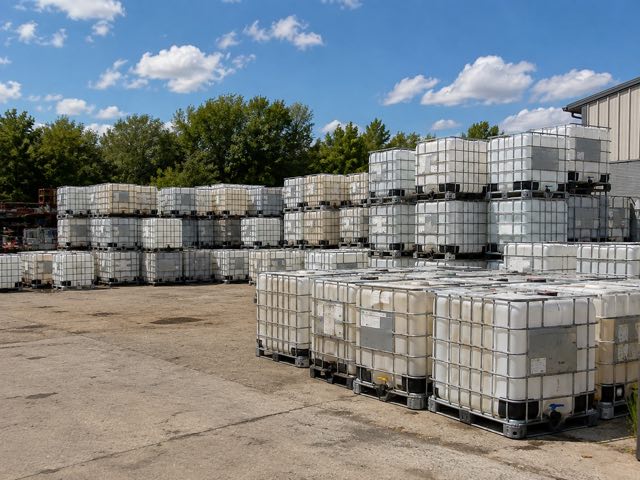
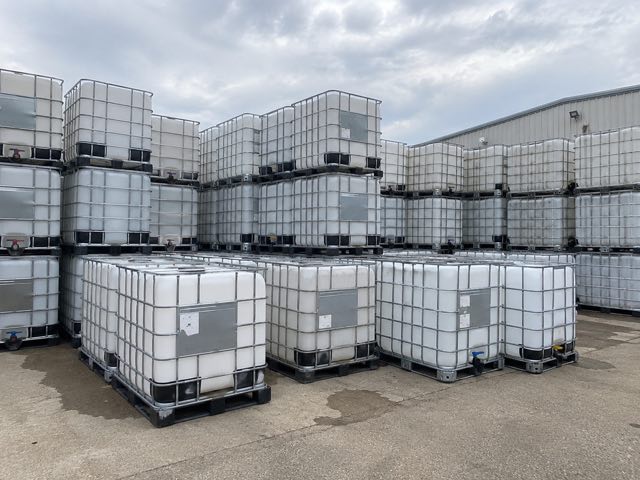
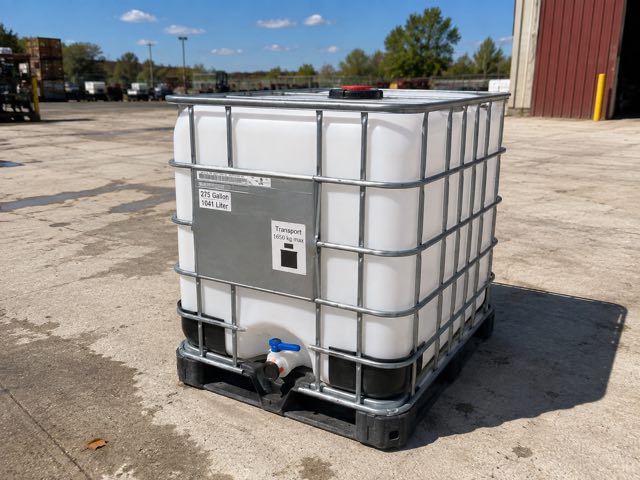
A rebottled IBC tote pairs a brand-new virgin HDPE bottle with a straightened, inspected cage and pallet recovered from a retired container. The interior is indistinguishable from new — same resin, same mould, never filled — while the steel is reused. It costs about 40% less than a fully new unit and avoids roughly 78 lb of virgin steel per container.
The numbers on the plate
Everything below is what you actually receive. Where a figure varies by manufacturer we quote the range rather than the flattering end of it, and we confirm the exact unit before it ships.
- BottleNew virgin HDPE, FDA 21 CFR 177.1520
- Bottle wall2.2–2.8 mm, blow moulded
- CageReclaimed galvanised steel, straightened & inspected
- PalletReclaimed composite or steel
- Capacities275 and 330 gal
- OutletNew 2 in butterfly valve, new EPDM gasket
- LidNew 6 in vented or solid
- UN ratingAvailable on request — cage and plate dependent
- Lead time3–7 business days
- Avoided virgin steel≈ 78 lb per unit
Rebottled against the alternatives
| Reconditioned | Rebottled | New | |
|---|---|---|---|
| Interior | Original bottle, washed | New bottle, never filled | New bottle, never filled |
| Cage & pallet | Reused, straightened | Reused, straightened | New |
| Prior-contents question | Documented history | None — bottle is new | None |
| Typical 275 gal price | $135 – $195 | $195 – $260 | $290 – $360 |
| Virgin material avoided | ≈ 133 lb HDPE + steel | ≈ 78 lb steel | None |
| Food-contact suitable | Grade A food-safe only | Yes, with wash certificate | Yes |
| Best for | Industrial & ag liquid | Beverage, cosmetics, potable, audits | Pharma, regulated virgin-only specs |
Where they end up
Beverage and food production
Juice concentrate, syrup, brine, culture media and edible oils. The new bottle removes the prior-contents conversation entirely, which is often what an auditor actually wants.
Cosmetics and personal care
Surfactant blends, glycerine, fragrance bases — applications where a faint residual odour from a reconditioned unit would be unacceptable.
Potable and emergency water
Municipal emergency stores, event water, remote site supply. Pair with a UV-opaque cover from our accessories range to prevent algal growth.
Regulated liquid transport
Where the cage and plate support it we can supply rebottled units with a current UN/DOT inspection record, giving you road-legal capacity at a used-steel price.
What we do to it first
Cage triage
Only cages that pass weld, base-ring and geometry inspection make it to the rebottling station. Anything marginal goes to scrap rather than into a unit with a new bottle in it.
Straighten and clean
Bent bars are pressed back in a jig, the frame is degreased, and corroded base rings are cut out and replaced with new galvanised stock.
Drop and seat
The new bottle is seated, the outlet is aligned and torqued to spec, and the top collar is clamped. This is the step where a rushed job shows up six months later as a stress crack.
Test and document
Leak test at 3 psi, valve function check, and a certificate stating bottle manufacture date, cage origin and inspection result.
What it will and will not hold
The bottle is virgin HDPE from the same moulder that supplies new containers, so the resin question is identical to a new unit. Where rebottled differs is the cage: a reclaimed frame carries its own history, and that is what we inspect hardest.
| Contents | Verdict | Gasket | What decides it |
|---|---|---|---|
| Food, beverage, juice concentrate | Yes | EPDM (standard) | The most common reason people choose rebottled |
| Cosmetics, glycerine, surfactants | Yes | EPDM (standard) | No residual odour risk, which reconditioned cannot fully promise |
| Potable and emergency water | Yes | EPDM (standard) | Sanitise before first fill; fit a UV-opaque cover |
| Pharmaceutical intermediates | Depends on your spec | EPDM (standard) | Virgin product contact — yes. "New container" as written — no |
| Industrial acids and alkalis | Yes | EPDM (standard) | Works, though reconditioned is usually the better value here |
| Oils and fuels | Yes | Nitrile | Specify the gasket at order time |
| Aromatic solvents | No | — | Same limitation as any HDPE container |
Exactly what you receive
- A new virgin HDPE bottle, never filled, with its manufacture date recorded
- A reclaimed galvanised cage — straightened in a jig and weld-checked
- A reclaimed composite or steel pallet, swapped if the original was soft
- A new base ring where the original showed corrosion
- A new 2 in butterfly valve and a new EPDM gasket
- A new 6 in lid, vented or solid
- A certificate stating bottle manufacture date, cage origin and inspection result
- A leak-test record at 3 psi
What you will need separately
- A UN rating, unless the reclaimed cage carries an intact matching plate — we confirm before quoting
- A prior-contents record, because there are no prior contents to record
- Covers, adapters and containment, as with any container
Ask before you order, not after
Five checks worth five minutes
Written from the problems that reach our returns desk, which is the only honest source for a list like this.
Check whether your spec means "virgin contact" or "new container"
Rebottled satisfies the first exactly and does not satisfy the second at all. It is worth settling in writing with your quality team before the purchase order, not at goods-in.
Ask about the plate if you need a rating
The UN design type covers the container as an assembly. Some reclaimed cages carry an intact, legible plate that matches the bottle we are fitting; many do not. We check before quoting and tell you plainly.
Inspect the cage, not the bottle
The bottle is new. The interesting question is the frame: base-ring condition, weld integrity at the bottom rail, and whether the geometry is square. Ours are pressed back on a jig rather than heated.
Confirm the pallet type
Composite, steel or plastic. It changes the tare weight, the hygiene profile and how the container behaves under a narrow-carriage forklift.
Plan for the lead time
Three to seven business days, driven by new bottle stock rather than by our bench. For a recurring requirement we will hold inspected cages ready and bring it down to two or three.
Three mistakes we watch people make
Paying for new when rebottled meets the spec
Expecting a UN rating by default
Ordering on Friday for Monday
The commercial detail
Indicative 2026 yard pricing. Everything is quoted properly before anything moves, and freight is always itemised separately.
| Configuration | 1–11 units | 12–47 units | 48+ units | Lead time | UN rating |
|---|---|---|---|---|---|
| 275 gal, composite pallet | $195 – $245 | −8% | −14% | 3–7 days | Cage dependent |
| 275 gal, steel pallet | $210 – $260 | −8% | −14% | 3–7 days | Cage dependent |
| 330 gal, composite pallet | $225 – $285 | −8% | −14% | 5–10 days | Cage dependent |
| Rebottle your own cage (toll) | $135 – $165 | same | same | 7–10 days | Cage dependent |
| Cage inspection only | $0 with an order | — | — | Same visit | — |
Rebottled IBC Totes: FAQ
Is a rebottled tote as good as a new one?
For the liquid inside, yes — it is the same virgin HDPE bottle from the same moulder, never filled. The difference is the steel around it, which has been in service and shows it cosmetically. If your specification is about product contact, rebottled meets it. If your specification literally says "new container", it does not, and we will sell you a new one instead.
Why is rebottling cheaper than new?
Because the cage and pallet are roughly 40% of the cost and nearly all of the embodied steel. Reusing them takes about twenty minutes of skilled labour instead of a rolling mill, a galvanising bath and a freight leg from the manufacturer.
Can rebottled totes be UN/DOT rated?
Sometimes. The rating attaches to the container as a design type, so it depends on whether the reclaimed cage carries an intact, legible plate matching the bottle we are fitting. We check this before quoting and we will tell you plainly when a unit cannot be rated.
What happens to the old bottle?
It is cut, shredded and granulated in our own plant into HDPE regrind that goes to moulders making drainage pipe, wheel chocks and pallets. Nothing about rebottling involves landfilling a bottle.
Is the bottle genuinely new, or refurbished?
Genuinely new. It is a blow-moulded virgin HDPE bottle from the same moulder that supplies new caged units, delivered to us sealed and fitted without ever having held anything. We record its manufacture date on the certificate so you can see it for yourself.
Why not just buy new if the bottle is new anyway?
Because the cage and pallet are roughly 40% of a new container's cost and nearly all of its embodied steel. Reusing them takes about twenty minutes of skilled labour instead of a rolling mill, a galvanising bath and a freight leg from the manufacturer. You get an identical interior for about 40% less.
What happens to the bottle that came out?
It is cut, shredded and granulated in our own plant into HDPE regrind that goes to moulders making drainage pipe, wheel chocks and pallets. Nothing about rebottling involves landfilling a bottle, and the old bottle never goes into storage where it might be confused with stock.