Recycling is the thing we do after every other option is gone
Book recycling & end-of-life
One written channel for everything: quotes, bookings, freight and questions. A person reads every one of these.
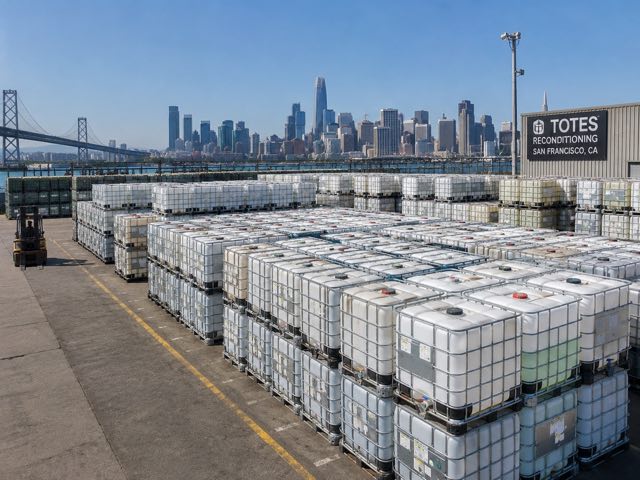
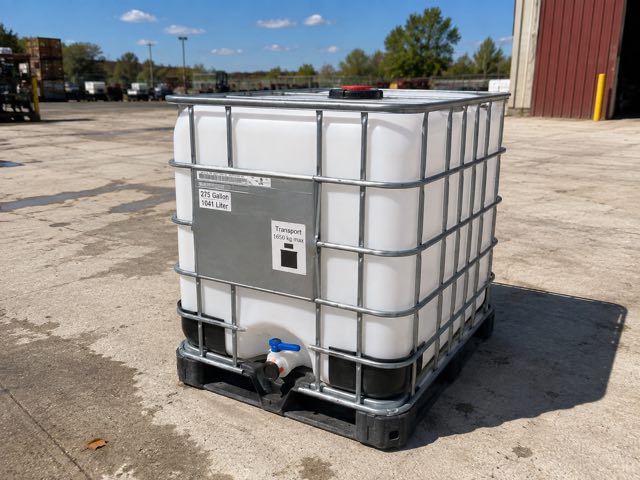
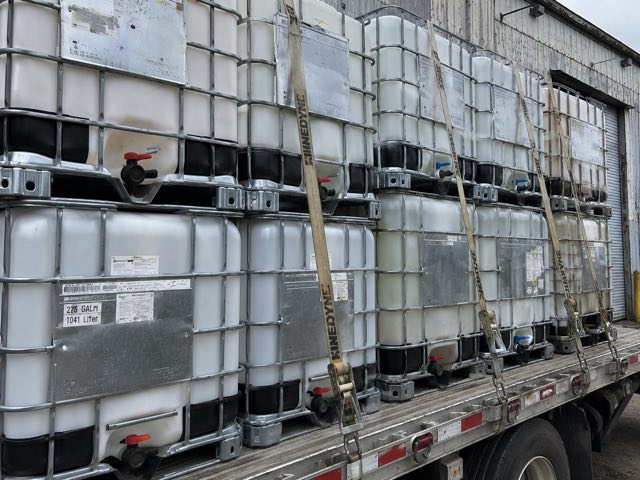
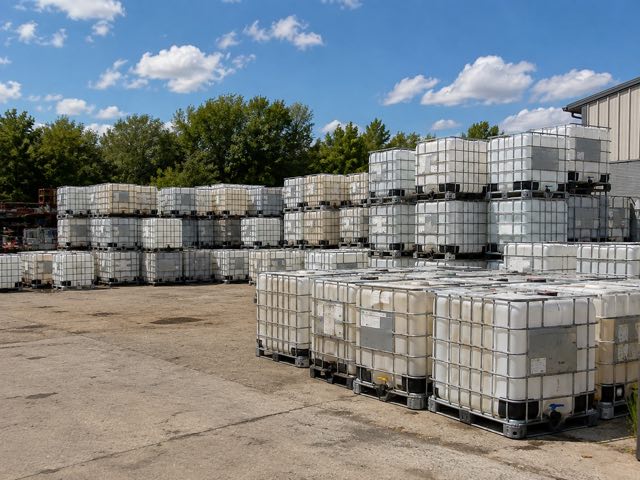
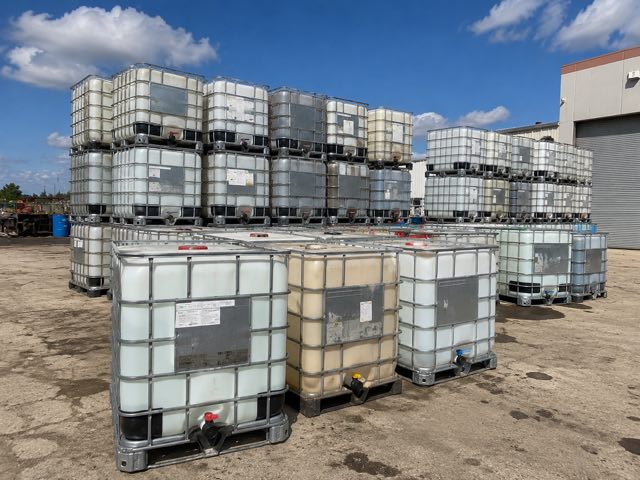
We take end-of-life IBC totes at no charge for non-hazardous prior contents, because the HDPE and galvanised steel have recoverable value. Bottles are granulated on site into regrind for pipe, wheel chocks and pallets; cages and steel pallets go to a scrap processor; valves and gaskets are salvaged. You receive a weighed diversion statement suitable for corporate reporting.
How it runs, step by step
Establish the history
Prior contents and, where relevant, a safety data sheet. Non-hazardous containers move immediately; regulated ones get a written determination on the empty-container rule before anything is collected.
Collect or receive
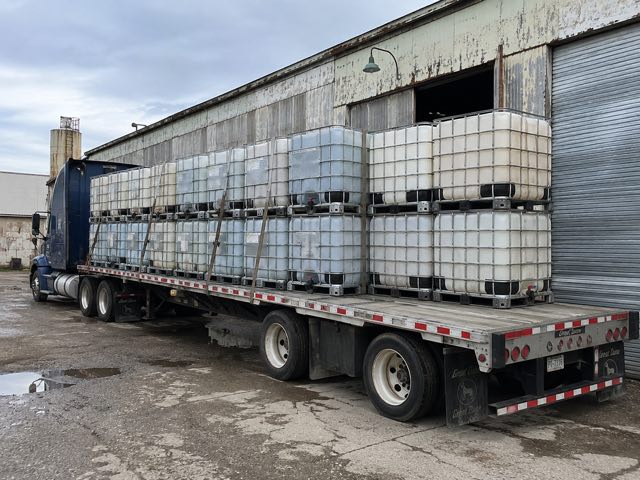
Free pickup at twelve or more units within our radius, usually on the return leg of a delivery. Smaller lots come to the Bancroft Avenue gate during yard hours.
Try to save it anyway
Every container entering the recycling stream is graded one more time. Roughly one in six turns out to be repairable, rebottlable or good enough for an upcycled build, and we will tell you so and credit you for it.
Dismantle and separate
Bottle cut from cage, valve and gasket stripped, pallet separated. Composite pallets are split into HDPE deck and steel runners.
Granulate and bale
Bottles shredded and granulated at 1,100 lb/hour into HDPE regrind. Cages and steel baled for a Bay Area processor. Everything weighed across the certified scale.
Report
A diversion statement with inbound mass, recovered mass by stream, landfilled mass and estimated avoided CO₂e — the same figures our own reporting uses.
Where the material actually goes
| Stream | Share by mass | Processed how | Becomes |
|---|---|---|---|
| HDPE bottle | 58% | Cut, shredded, granulated on site | Drainage pipe, wheel chocks, pallets, kerbing |
| Galvanised cage | 29% | Baled, sent to Bay Area processor | Remelted structural and reinforcing steel |
| Steel pallet runners | 6% | Baled with cage stock | Remelted steel |
| Composite pallet deck | 4% | Granulated with bottle stock | Regrind, lower grade |
| Valves, lids, gaskets | 1.6% | Stripped, cleaned, tested | Parts bin for reconditioning |
| Residual to landfill | 1.4% | Manifested disposal | Contaminated trim, bonded rubber |
What we need from you
Five answers. Supply them with the first email and the job is quoted and scheduled without a single round trip.
The prior contents
Non-hazardous containers move immediately. Regulated ones get a written empty-container determination before anything is collected.
A count and access details
Twelve or more inside our radius earns free pickup, usually on the return leg of a delivery.
A safety data sheet for anything regulated
It determines whether a manifest is required and whether we can take it at all.
Whether you want the reporting
The diversion statement is free but we only produce it if you ask, and it is much easier to switch on at the start than to reconstruct later.
What is included
- One more grading pass — roughly one in six containers turns out to be repairable
- Dismantling: bottle cut from cage, valve and gasket stripped, pallet separated
- On-site HDPE granulation at 1,100 lb/hour into regrind
- Steel baled for a Bay Area scrap processor
- Everything weighed across a certified truck scale
- A diversion statement with inbound mass, recovered mass by stream and landfilled mass
What we will not do
- Charging you for non-hazardous containers — the recovered material covers the handling
- Quietly landfilling anything and calling it diverted
- Taking regulated containers without the determination first
If it is not listed, ask
Turnaround, price and process
Indicative 2026 figures. Where a lane or a service level genuinely varies, the range is the range rather than the flattering end of it.
| Stream | Share by mass | Processed how | Becomes | Evidence |
|---|---|---|---|---|
| HDPE bottle | 58% | Cut, shredded, granulated on site | Drainage pipe, chocks, pallets, kerbing | Outbound scale ticket |
| Galvanised cage | 29% | Baled for a Bay Area processor | Remelted structural steel | Processor weigh receipt |
| Steel pallet runners | 6% | Baled with cage stock | Remelted steel | Processor weigh receipt |
| Composite pallet deck | 4% | Granulated with bottle stock | Lower-grade regrind | Outbound scale ticket |
| Valves, lids, gaskets | 1.6% | Stripped, cleaned, tested | Parts bin for reconditioning | Internal parts ledger |
| Residual to landfill | 1.4% | Manifested disposal | Nothing | Disposal manifest |
The problems this actually solves
"The transfer station will not take them"
"We need diversion numbers for a filing"
"Some of these might still be good"
What you end up holding
Reused containers live or die on documentation. This is everything that leaves here with the job, and how long we keep our copy.
| Document | Issued | We retain | What it is for |
|---|---|---|---|
| Empty-container determination | Regulated prior contents | 5 years | Your RCRA compliance file |
| Collection manifest | Where required | Per regulation | Chain of custody |
| Weigh tickets | Every collection | 5 years | Mass reconciliation |
| Diversion statement | Quarterly, free | Ongoing | CDP, municipal and corporate reporting |
| Salvage credit note | Where units are recovered | 5 years | Value returned to you for repairable stock |
Recycling & End-of-Life: FAQ
Do you charge to recycle IBC totes?
Not for non-hazardous containers — the recovered HDPE and steel more than cover the handling, which is exactly why free disposal exists as an option at all. Containers requiring hazardous handling carry a fee that we quote in advance and itemise.
Can I put an IBC tote in municipal recycling?
No. Kerbside and municipal programmes will not take a 125 lb composite container, and most transfer stations will turn it away or charge bulky-item rates. The bottle is recyclable HDPE and the cage is recyclable steel, but only once someone separates them — which is the service.
What kind of report do I get?
A diversion statement showing units received, total inbound mass, mass recovered by stream, mass landfilled and estimated avoided CO₂e, signed and dated. Several of our customers use these directly in CDP submissions and municipal sustainability reporting. There is no charge for it.
What about totes that held pesticides?
Triple-rinsed agricultural containers can often enter the recycling stream, but the rules depend on the specific product and the rinse documentation. Send us the label and the rinse record and we will give you a straight answer, including when the answer is that it needs to go to a permitted hazardous facility instead of to us.
Does it really cost nothing?
For non-hazardous containers, yes. The recovered HDPE and galvanised steel more than cover the handling, which is exactly why free disposal exists as an option at all. Containers requiring hazardous handling carry a fee that we quote in advance and itemise, and nothing gets sprung on anyone at the gate.
What is in the 1.4% you landfill?
Composite pallet trim with cured resin bonded to it, gasket rubber bonded to metal fittings, and the small share of bottles whose prior contents make granulation unsafe. All of it goes to a permitted facility under manifest. We would like the number to be zero and it will not be soon — the first category is a design problem in composite pallets rather than something a reconditioner can solve alone.
Can the regrind become new IBC bottles?
No, and it is worth being precise about this because it gets over-claimed. Food-contact and pressure applications require virgin resin, and post-use regrind from containers with mixed histories does not qualify. Ours becomes drainage pipe, wheel chocks, plastic pallets and kerbing. That is downcycling, and it is the honest word for it — which is why we treat recycling as a failure state and try to postpone it.