Drums, when 275 gallons is more than you need
Price drums & closed-top containers
Quantity, liquid and zip code is enough to get a real number back. We confirm grade and stock before we quote — no auto-replies.
A reconditioned 55 gallon drum costs $28–$85 depending on material and closure type, against $95–$180 new. Poly drums suit acids, caustics and most water-based chemistry; tight-head steel suits solvents and oils; open-top drums suit solids, viscous product and anything you need to scoop. All our drums are washed, leak-checked and sold with a prior-contents record.
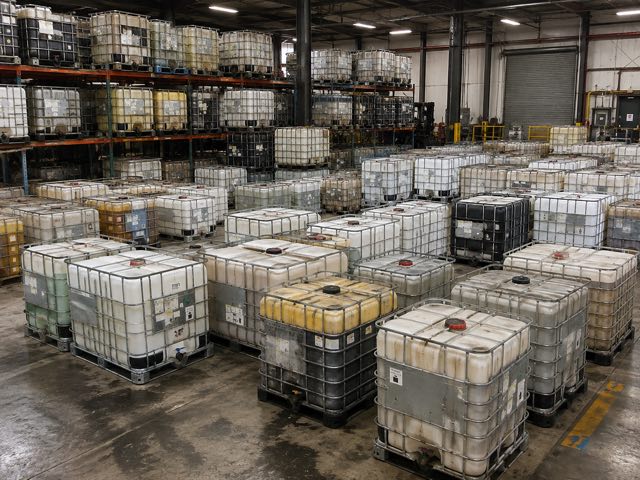
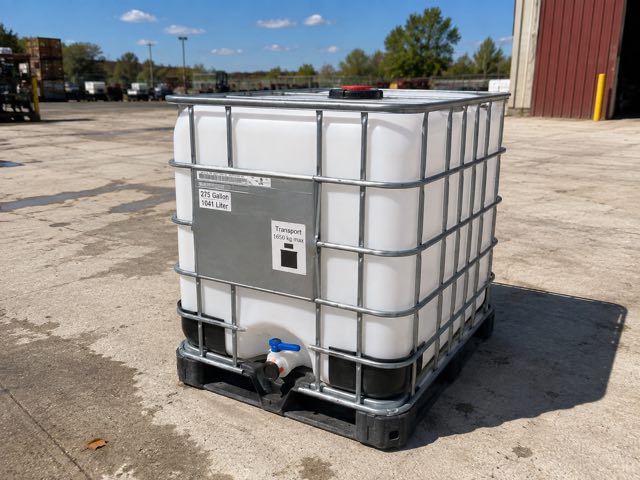
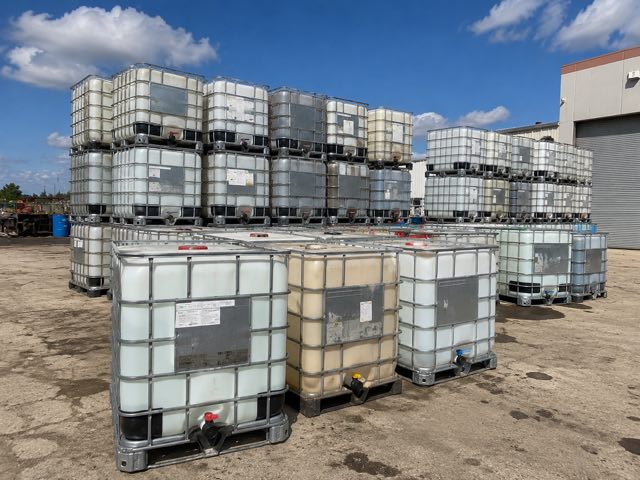
Drum stock and pricing
| Drum | Capacity | Closure | Condition | Price | Suits |
|---|---|---|---|---|---|
| Poly drum, blue | 55 gal | Tight-head, 2 in + 3/4 in bung | Reconditioned, washed | $38 – $62 | Acids, caustics, water-based chemistry |
| Poly drum, open-top | 55 gal | Removable lid, lever ring | Reconditioned, washed | $45 – $70 | Viscous product, solids, absorbents |
| Steel drum, tight-head | 55 gal | 2 in + 3/4 in bung, lined | Reconditioned, leak-tested | $42 – $68 | Solvents, oils, fuels |
| Steel drum, open-top | 55 gal | Lever ring, gasketed lid | Reconditioned | $48 – $85 | Waste collection, parts washing |
| Poly drum | 30 gal | Tight-head | Reconditioned | $32 – $48 | Smaller batch chemistry |
| Poly drum | 15 gal | Tight-head | Reconditioned | $28 – $38 | Lab, dosing, sampling |
| Fibre drum | 55 gal | Lever ring, poly liner | Reconditioned | $28 – $40 | Dry goods, powders, compost |
Where they end up
Rainwater and greywater at small scale
Open-top poly drums are the cheapest legitimate way to start capturing roof runoff. Pair with a first-flush diverter and a fine screen; see our rainwater harvesting guide before you plumb anything.
Waste collection and parts washing
Open-top steel drums with lever-ring lids for shop waste, used oil and solvent parts washing. Ask about matching spill pallets from our accessories range.
Composting and worm systems
Fibre and poly drums cut and plumbed as tumblers and worm bins. Our fabrication shop builds these to order for schools and community gardens.
Small-batch food production
Food-grade open-top poly drums for brining, fermenting and pickling. Same dedicated wash line as our food-grade totes, same documentation.
What it will and will not hold
Material choice matters more with drums than with totes, because you have a genuine steel-or-poly decision rather than one resin. This is the short version; send the safety data sheet for the definite answer.
| Contents | Verdict | Gasket | What decides it |
|---|---|---|---|
| Acids and caustics | Poly | EPDM (standard) | Steel corrodes; poly does not care |
| Solvents and thinners | Steel, lined | Viton (FKM) | Poly swells against aromatics and chlorinated solvents |
| Fuels and used oil | Steel | Nitrile | Grounding and bonding matter; poly cannot be bonded |
| Water-based cleaning chemistry | Poly | EPDM (standard) | The most common poly drum duty we sell into |
| Viscous product and solids | Open-top, either | — | Lever-ring lid so you can actually get it out |
| Dry goods and powders | Fibre with a liner | — | Cheapest option and perfectly adequate |
| Food and fermentation | Open-top poly, food line | EPDM (standard) | Same documentation as a food-grade tote |
Exactly what you receive
- The drum, washed and leak-checked
- Bungs or a lever-ring lid with a new gasket, as appropriate to the type
- A prior-contents record naming the previous product
- A condition note
What you will need separately
- Drum dollies, pumps, taps and spill pallets — quoted separately
- Bonding and grounding equipment for flammables
Ask before you order, not after
Five checks worth five minutes
Written from the problems that reach our returns desk, which is the only honest source for a list like this.
Work out whether you actually want drums
Five 55 gallon drums hold the same volume as one 275 gallon tote, cost about $250 against $135, take more floor space and give you five closures instead of one. Buy drums for divisibility and one-person handling, never to save money on volume.
Choose the material from the liquid, not the price
Poly for acids, caustics and water-based chemistry. Steel for solvents, oils and anything flammable where you need to bond and ground.
Decide open-top or tight-head early
Tight-head for anything you will pump. Open-top for anything you will scoop, soak or clean out. Converting one to the other is not a thing.
Plan the handling
A full 55 gallon drum is roughly 500 lb. A drum dolly and a level floor, or a forklift with a drum attachment. Rolling a full drum on its rim is how backs go.
Check secondary containment rules
Oils, fuels and regulated chemistry generally need a sump. Drum spill pallets are cheap and the requirement is easy to trip over at four drums.
Three mistakes we watch people make
Poly for solvent duty
Buying drums by the pallet to save money
Reusing the bung gasket
The commercial detail
Indicative 2026 yard pricing. Everything is quoted properly before anything moves, and freight is always itemised separately.
| Drum | Capacity | Closure | Price | Best duty |
|---|---|---|---|---|
| Poly, blue, tight-head | 55 gal | 2 in + 3/4 in bung | $38 – $62 | Acids, caustics, water-based chemistry |
| Poly, open-top | 55 gal | Lever ring | $45 – $70 | Viscous product, solids, absorbents |
| Steel, tight-head, lined | 55 gal | 2 in + 3/4 in bung | $42 – $68 | Solvents, oils, fuels |
| Steel, open-top | 55 gal | Lever ring, gasketed | $48 – $85 | Waste collection, parts washing |
| Poly, tight-head | 30 gal | Tight-head | $32 – $48 | Smaller batch chemistry |
| Poly, tight-head | 15 gal | Tight-head | $28 – $38 | Lab, dosing, sampling |
| Fibre with poly liner | 55 gal | Lever ring | $28 – $40 | Dry goods, powders, compost |
| Drum spill pallet, 4-drum | — | — | $310 | Secondary containment |
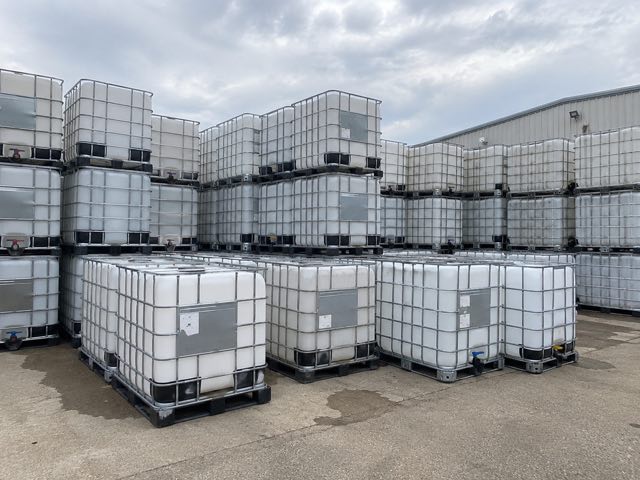
Drums & Closed-Top Containers: FAQ
Are drums cheaper per gallon than totes?
No — considerably more expensive. Five 55 gallon drums cost roughly $250 and hold 275 gallons; a single reconditioned 275 gallon tote costs $135 and holds the same volume in a quarter of the floor space with one valve instead of five bungs. Buy drums when you need the liquid split into batches, not to save money on volume.
Poly or steel?
Poly for acids, caustics, salts and most water-based chemistry, and for anything where you care about the container not rusting. Steel for solvents, oils, fuels and anything flammable where grounding and bonding matter. Send us the safety data sheet and we will tell you which, and which lining if steel.
Do you deliver drums?
Yes, on the same runs as our totes. Drums palletise four to a pallet, and a single pallet of drums delivers anywhere in San Francisco for the flat yard fee. Under four drums it is usually cheaper for you to collect from the Bancroft Avenue gate during yard hours.
How many drums fit on a pallet?
Four 55 gallon drums to a standard 48 × 40 pallet, which is also how they ship. A single pallet of drums delivers anywhere in San Francisco for the flat yard fee. Under four drums it is usually cheaper for you to collect from the gate during yard hours.
Can I use a poly drum for rainwater?
Yes, and open-top poly is the cheapest legitimate way to start capturing roof runoff. Fit a fine screen and a first-flush diverter, keep the light out, and route the overflow deliberately. Read the rainwater guide before you plumb anything — the mistakes are consistent and all avoidable.
Do you take drums back?
Yes, on the same terms as totes: non-hazardous prior contents, named product, and we collect at twelve or more or take them at the gate. Steel drums have real scrap value and poly drums go into the granulation stream, so the disposal is generally free to you.