Sizing: the only arithmetic you need
One inch of rain on one square foot of roof is 0.623 gallons. Round it to 0.6 and you have a formula you can do in your head: roof area × 0.6 = gallons per inch. Apply a 0.85 efficiency factor for splash, evaporation, first-flush diversion and gutter losses.
| Roof area (sq ft) | Gallons per inch | Per 1 in storm (usable) | SF annual (23 in) | Totes to catch one storm |
|---|---|---|---|---|
| 500 | 300 | 255 | 5,865 | 1 |
| 800 | 480 | 408 | 9,384 | 2 |
| 1,000 | 600 | 510 | 11,730 | 2 |
| 1,500 | 900 | 765 | 17,595 | 3 |
| 2,500 | 1,500 | 1,275 | 29,325 | 5 |
| 5,000 | 3,000 | 2,550 | 58,650 | 10 |
The counter-intuitive part
First flush: the highest-value $60 in the system
The first few gallons off a roof carry everything that has accumulated since the last rain: dust, bird droppings, pollen, grit, roofing granules and whatever the neighbourhood put in the air. In a Mediterranean climate with a five-month dry season, that accumulation is substantial.
A first-flush diverter is a vertical pipe that fills with the initial runoff and closes off with a float once full, sending the rest to your tank. Size it at roughly 10 gallons per 1,000 square feet of roof for the first rain of the season, and it will materially change the water quality in your tank.
Drain it between storms. A diverter left full is a stagnant tube and a mosquito habitat, which is the one maintenance task in the entire system that people forget.
Siting and overflow
Put it on something solid and level
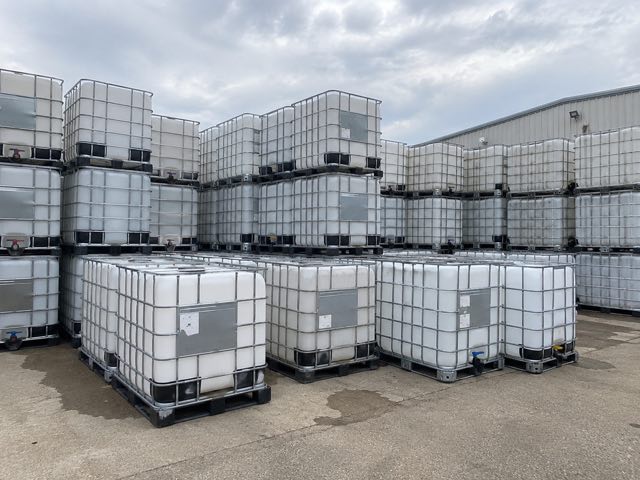
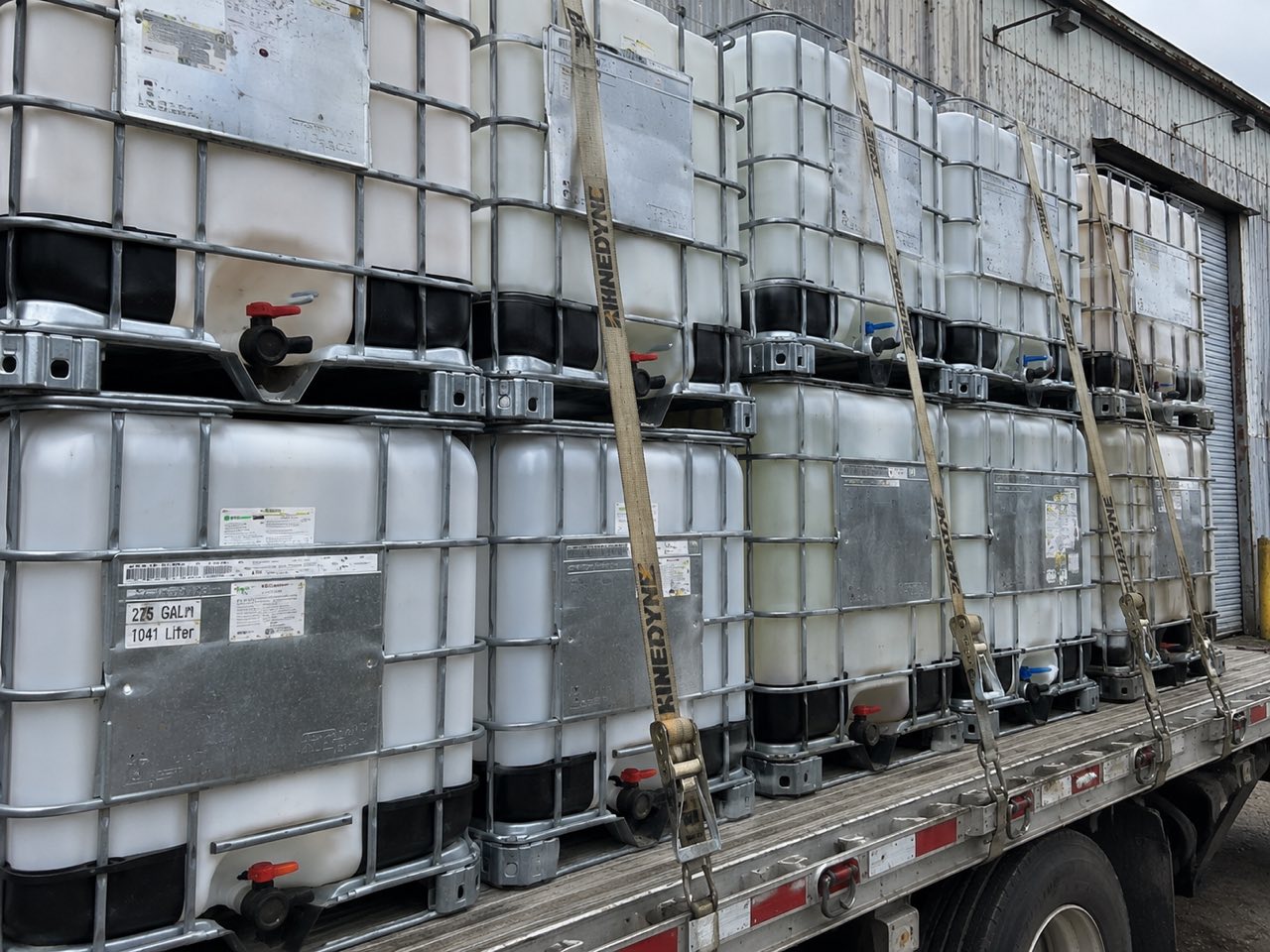
A full 275 gallon tote is 2,418 lb over 13 square feet. Compacted gravel, a concrete pad or a purpose-built stand — not soil, not decking, not pavers laid on sand. Uneven support puts point loading through the pallet and cracks the base.
Raise it if you want gravity
A full tote gives about 1.37 psi at the outlet. Every foot of elevation adds 0.43 psi. Raising the tank two feet nearly doubles your effective head, which is the difference between a dribble and a usable hose flow.
Keep it out of the sun
Translucent HDPE plus daylight plus any nutrient load grows algae within weeks. Shade helps; a UV-opaque cover is the actual answer. This is not optional in California.
Screen every opening
Fine mesh at the inlet and on the overflow. In California, unscreened standing water is a mosquito-breeding issue and in some jurisdictions a code violation.
Route the overflow deliberately
It will overflow, probably during the biggest storm of the year, at full downspout flow. Route it to a drain, a swale or a rain garden — never against a foundation. Size the overflow line at least as large as the inlet.
Plan the winter drain-down
Inland from the bay, hard freezes happen. Drain taps and exposed lines in December, or fit an insulated jacket. In San Francisco proper this is rarely necessary.
Linking multiple totes
Two or more containers linked at the outlets share a level and behave as one tank. It is the standard way to scale, and there are three ways to get it wrong.
- Link at the outlets, not at the lids. Bottom linking equalises the level by gravity and lets you draw from a single point. Top linking only works when the tanks are already full.
- Use full-bore fittings. A 3/4 inch link between 275 gallon tanks takes hours to equalise. Use 2 inch and camlock adapters so the tanks actually behave as one.
- Fit an isolation valve per tank. Without one, cleaning or removing a single container means draining the whole array.
Support matters more when linked
What California and San Francisco actually require
Rainwater capture from rooftops for non-potable use is explicitly permitted in California under the Rainwater Capture Act, and San Francisco has actively encouraged it — the SFPUC has run cistern rebate programmes for exactly this. For a tote under a downspout with a tap on it, feeding a garden, there is nothing to apply for.
The rules tighten when you connect harvested water to indoor plumbing or to any fixture on the potable system. That requires permitting, backflow prevention and, depending on use, treatment. If you are thinking about toilet flushing or laundry, talk to SF DBI before you buy pipe.
Two practical constraints apply regardless: screen everything against mosquitoes, and do not create a nuisance discharge onto a neighbouring property with your overflow. Both are enforced locally and both are easy to design around.
Frequently asked
How many gallons will I collect from my roof?
Roof area in square feet × 0.6 = gallons per inch of rain, times about 0.85 for real-world losses. A 1,000 square foot San Francisco roof produces roughly 510 usable gallons from a one-inch storm and about 11,700 gallons across a typical 23-inch year. The limiting factor is almost never the roof, it is how much you can store and use.
Can I use a used IBC tote for rainwater?
Yes, and it is the most cost-effective option available. Use a Grade A food-safe unit if the water will touch edible crops or you might ever want to treat it for potable use; a Grade B industrial unit with a known benign history is fine for ornamental irrigation. Always fit a UV-opaque cover, whatever the grade.
Is harvested rainwater safe for vegetables?
For soil irrigation, generally yes, with a first-flush diverter and a food-grade container. Avoid overhead spraying directly onto leafy greens close to harvest, and be cautious if your roof is treated wood, has moss treatments, or is old asphalt shingle shedding granules. Drip irrigation at the soil line removes most of the concern.
Do I need a pump?
Only if gravity will not do it. A full tote gives about 1.37 psi at the outlet, which fills watering cans and runs a soaker hose but will not drive a sprinkler or a spray nozzle. A 12 V pump and a filter, roughly $175, turns the system into something you can run a normal hose from.
Written by the yard team at IBC Totes San Francisco. Last reviewed March 2026. Spotted something wrong? Tell us — we would rather fix it than defend it.