Paperwork is not an afterthought here.
Request compliance documents
Name the document you need in the message field: UN inspection record, wash certificate, prior-contents record, diversion statement or insurance certificate.
We are a registered container reconditioner, a California hazardous waste transporter and a CalRecycle-reporting handler, and we perform UN/DOT periodic testing in house. That combination is what lets a container arrive here as somebody's regulated empty and leave as somebody else's certified, documented, road-legal asset.
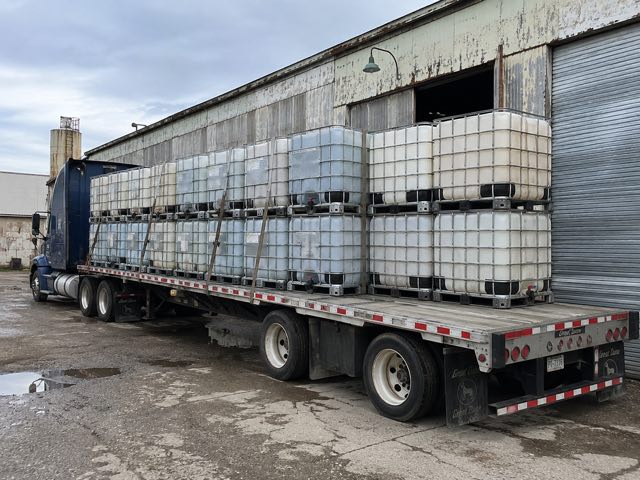
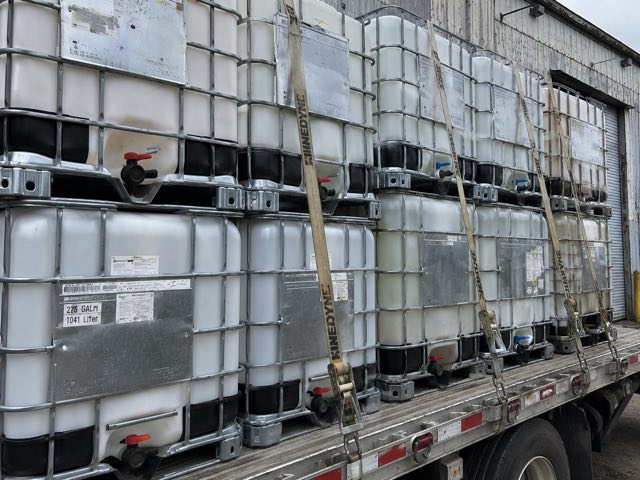
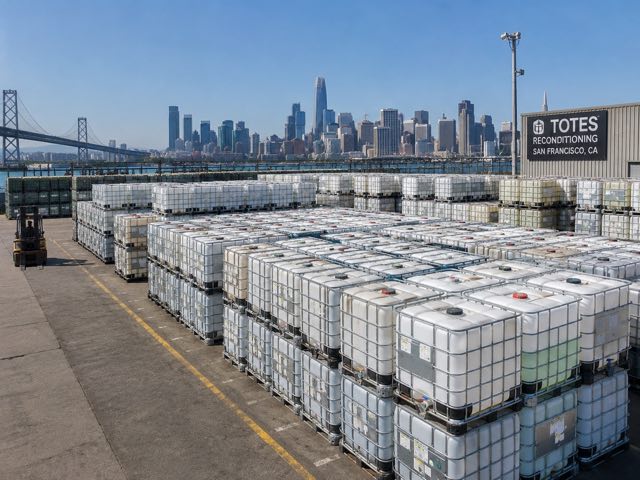
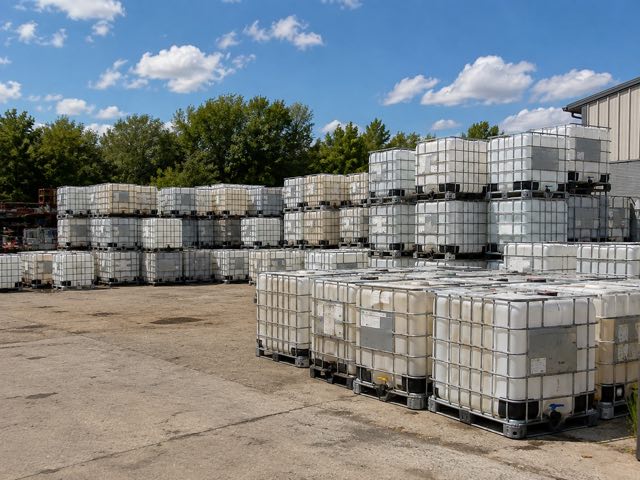
From the yard
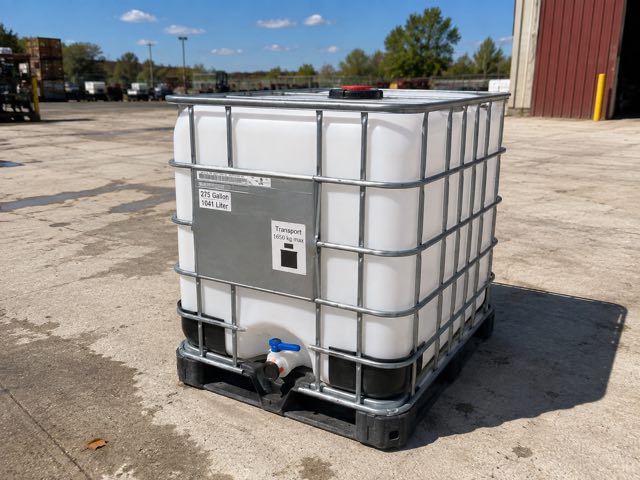
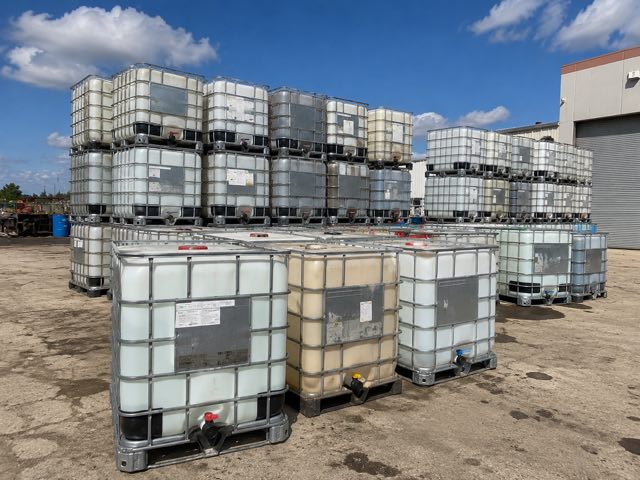
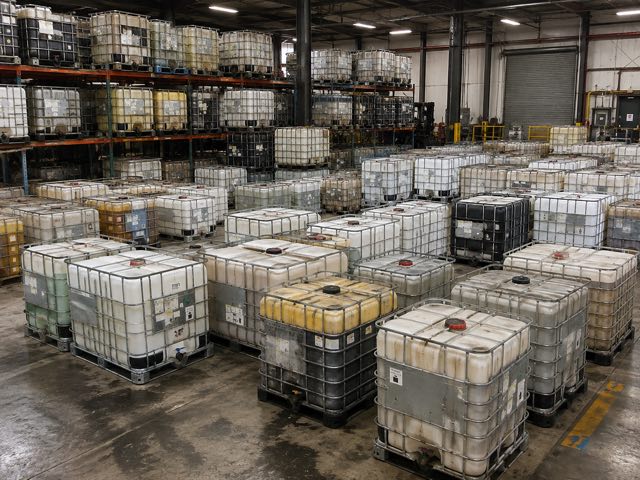
What we hold and what it covers
| Standard / registration | Scope | What you get | Renewal |
|---|---|---|---|
| 49 CFR 178.813 — UN/DOT periodic testing | Composite IBCs in regulated liquid service | Leak test at 3 psi, visual inspection, dated record and plate review | 2.5 yr leak / 5 yr full |
| FDA 21 CFR 177.1520 — food-contact HDPE | Food-grade resale stock | Prior-contents record, dedicated-line wash certificate | Per unit |
| RCRA 40 CFR 261.7 — empty container rule | Containers that held regulated product | Written determination before shipment, manifest where required | Per shipment |
| California hazardous waste transporter | Collection of regulated empties in state | Compliant pickup, manifest handling, chain of custody | Annual |
| CalRecycle handler reporting | HDPE regrind and steel recovery | Quarterly tonnage reporting, diversion statements for your files | Quarterly |
| Proposition 65 | Anything sold into California | Explicit warning text and the reason, stated on the invoice | Per unit |
| General liability & cargo insurance | Delivery, pickup and yard visits | Certificate of insurance naming you as additional insured on request | Annual |
What a UN recertification actually involves
Customers are often surprised how physical this is. There is no software involved and no certificate mill — it is a person, a gauge and a written record.
1 · Plate and marking review
The UN plate is read and photographed: design type, packing group, hydraulic test pressure, stacking load, date of manufacture and last periodic test. Illegible plate, no certification.
2 · Visual and structural inspection
Bottle checked for stress-crazing, deformation, discolouration and wall thinning. Cage checked for weld failure, corrosion at the base ring and distortion. Pallet checked for rot, cracking and fastener integrity.
3 · Leak test
Sealed and pressurised to 3 psi, held and monitored. Any pressure decay outside tolerance fails the unit. Failures return to the rebuild bench once; a second failure sends the container to granulation.
4 · Record and marking
Result, date, inspector and unit number are recorded and the container is marked accordingly. You receive the record with the shipment and a copy stays on file here for five years.
Rated does not mean suitable
Compliance FAQ
Can a used IBC tote still carry a UN rating?
Yes, provided the original UN plate is legible, the container passes a leak and visual inspection, and the reconditioning is documented. A composite IBC carrying regulated liquid must be leak-tested at least every 2.5 years and fully inspected every 5 years under 49 CFR 178.813. We perform and document both on site. What we cannot do is create a rating that was never there — an unmarked container stays unrated no matter how good its condition.
What makes a reconditioned tote food-grade?
Three things together: a traceable single prior food-contact product, a wash on a line that has never processed industrial containers, and documentation you can hand to an auditor. The bottle itself is FDA-compliant HDPE from the day it was moulded — the question is never the resin, it is the history. We supply a prior-contents record and a wash certificate with every food-grade unit.
Do I need a hazardous waste permit to send you empty totes?
For non-hazardous prior contents, no. For containers that held a RCRA-regulated material, the container must be properly emptied under 40 CFR 261.7 before it ships, and depending on the material you may need a manifest. Send us the prior product name and safety data sheet and we will tell you exactly which path applies before anything moves. We are a registered California hazardous waste transporter for the cases where it does.
Do your containers carry Prop 65 warnings?
Reconditioned containers sold into California carry the standard Proposition 65 warning where the prior contents or the container materials trigger it, and we err toward labelling rather than away from it. The specific warning text and the reason for it are stated on the invoice, not buried on a sticker.