Anatomy of the code
Take a representative marking: UN 31HA1/Y/03 26/USA/M5678/1500/2400. Every group means something specific, and reading left to right tells you nearly everything about the container’s legal capability.
| Segment | Example | Meaning |
|---|---|---|
| UN symbol | UN | Certified to UN model regulations |
| Type digit | 31 | 31 = IBC for liquids; 11 = for solids, discharged by gravity; 21 = solids under pressure |
| Material code | HA | H = plastic; HA = rigid plastic inner with outer casing (composite) |
| Category digit | 1 | 1 = designed to be stacked; 2 = not designed to be stacked |
| Packing group | Y | X = groups I, II, III; Y = II and III; Z = III only |
| Manufacture date | 03 26 | Month and year — March 2026 |
| Country | USA | State that authorised the design type |
| Manufacturer code | M5678 | Assigned to the maker or reconditioner |
| Stacking load | 1500 | Maximum permitted stacking load in kg |
| Gross mass | 2400 | Maximum permitted gross mass in kg |
The dates that actually expire
The manufacture date does not expire; the periodic test dates do. Under 49 CFR 178.813 a composite IBC in regulated liquid service needs a leak test at least every 2.5 years and a full periodic inspection every 5 years, both marked on or near the plate.
The clock runs from manufacture, not from purchase. A container bought last month may already have eighteen months left on a five-year cycle. Check the plate before you assume you have time.
The five-year wall
What a UN rating does and does not tell you
- It does tell you the design type passed drop, leakproofness, hydraulic pressure, stacking and vibration testing at the packing group marked.
- It does tell you the maximum gross mass and stacking load the container was approved for.
- It does not tell you whether HDPE is chemically compatible with your specific liquid. That is a separate check against the safety data sheet.
- It does not tell you the container is clean, or what was in it before.
- It does not transfer to a different cage. Move a bottle into another frame and the design-type chain is broken unless done under a reconditioner marking scheme.
- It cannot be recreated. No plate, no rating, permanently.
What an inspector looks for on the plate itself
Legibility first. A plate that has been painted over, corroded, or scoured by a pressure washer at close range is functionally no plate at all. We photograph every plate at intake precisely because they degrade.
Then consistency: does the marked gross mass match the container in front of you, is the category digit consistent with a cage designed for stacking, and does the manufacturer code correspond to a real approval holder. Mismatches usually mean a plate has been moved between frames, which is a serious problem and one we treat as an automatic rejection.
Frequently asked
Does every IBC tote have a UN rating?
No. Many containers used purely for water, food or non-regulated industrial liquid were never UN-marked, and they are perfectly legal for that service. The rating only matters if you intend to transport a regulated material in it. If the plate is missing or was never fitted, the container is limited to non-regulated use permanently.
What does 31HA1 mean?
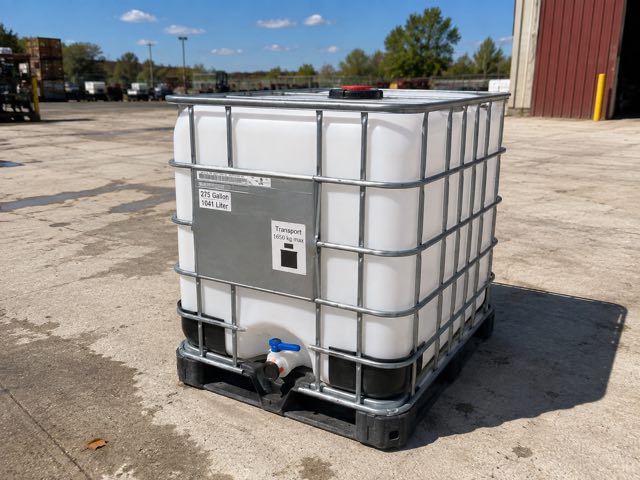
31 = an IBC intended for liquids. HA = a composite construction with a rigid plastic inner receptacle inside an outer casing, which is the standard caged tote. 1 = designed to be stacked. Together it describes almost every caged IBC you will encounter in North America.
Can a reconditioner renew a UN rating?
A reconditioner can perform and mark the periodic tests that keep an existing design-type rating current, which is what we do under 49 CFR 178.813. What nobody can do is create a rating for a container that never carried one, or transfer a rating between frames. Those are the two things worth being suspicious about if a supplier offers them.
What if the plate is illegible?
The container cannot be certified for regulated service. We will still buy it, wash it, sell it for non-regulated use or recycle it — but no inspection can restore what the plate no longer says. Protect plates by keeping pressure washer nozzles away from them; that is how most of them are destroyed.
Written by the yard team at IBC Totes San Francisco. Last reviewed February 2026. Spotted something wrong? Tell us — we would rather fix it than defend it.