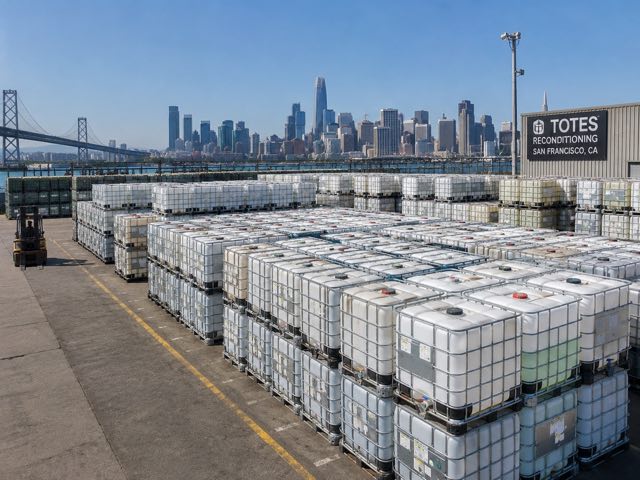
Send us your fleet. Get it back ready to fill.
Book reconditioning & rebottling
One written channel for everything: quotes, bookings, freight and questions. A person reads every one of these.
Toll reconditioning costs $48–$95 per container depending on prior contents and the work required, against $135–$360 to replace the unit. Turnaround is three to seven business days for standard fleets. You keep your own containers, your own asset numbers and your own UN plates; we return them clean, tested and documented.
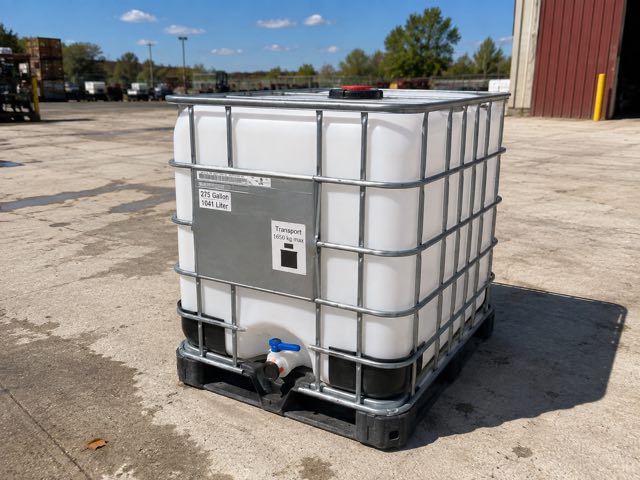
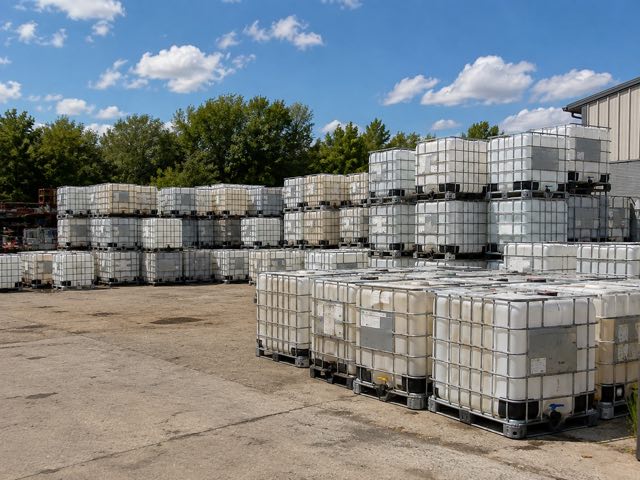
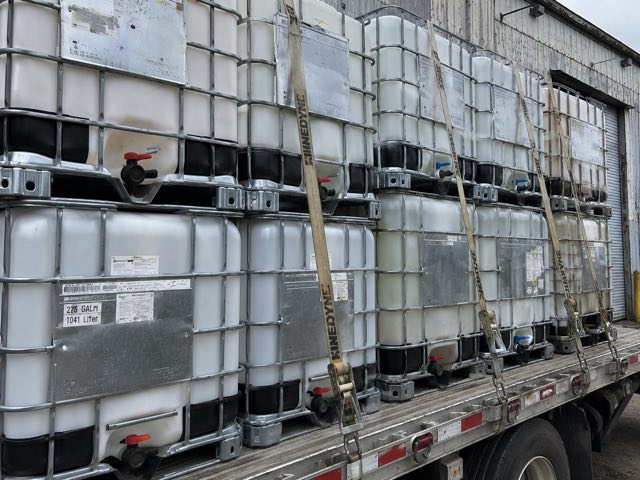
How it runs, step by step
Intake and log
Each unit is weighed, photographed and logged against your asset number. Prior contents are recorded from your declaration and verified against what we find.
Grade and route
Units are routed to the food line, the industrial line, the rebottling bench or — if the bottle is genuinely finished — to rebottling or scrap with a recommendation back to you.
Wash
Hot caustic at 160°F, three rinse stages, potable final flush on the food line. 94% of the water is recovered through a three-stage separator.
Rebuild
Cage straightened in a jig, corroded base rings replaced, soft pallets swapped, new EPDM gasket on every outlet, valves and lids replaced where there is any doubt.
Test
Sealed and held at 3 psi. Failures return to the bench once; a second failure is reported to you with a photograph and a recommendation.
Document and return
Wash certificate, leak-test record and, for regulated service, a UN periodic inspection record. Returned on our own flatbeds inside the Bay Area.
Toll reconditioning pricing
| Service level | Includes | Price per unit | Turnaround |
|---|---|---|---|
| Industrial wash | Triple rinse, caustic, new gasket, leak test, certificate | $48 | 3–5 days |
| Food-line wash | Dedicated line, potable finish, wash certificate | $72 | 4–7 days |
| Wash + cage rebuild | Above plus straightening, base ring, pallet swap | $85 – $110 | 5–7 days |
| Rebottle | New virgin HDPE bottle into your inspected cage | $135 – $165 | 7–10 days |
| UN periodic inspection | Leak test, visual, plate review, dated record | $38 add-on | Same visit |
| Collection & return, Bay Area | Round trip on our flatbed | $14 per unit | Scheduled |
What we need from you
Five answers. Supply them with the first email and the job is quoted and scheduled without a single round trip.
A declaration of prior contents
Per container or per batch. We verify against what we find, and a mismatch stops the batch rather than quietly continuing.
Your asset numbering scheme
If your containers carry asset tags, tell us the scheme. We log against it at intake so what comes back is genuinely your unit, not an equivalent.
The service level you want
Industrial wash, food-line wash, wash plus cage rebuild, or rebottle. We will recommend, but the decision has cost implications you should see.
Safety data sheets for anything regulated
The empty-container determination happens before collection is booked, in writing, at no charge.
A realistic count and a deadline
Fleets of forty or more get scheduled slots rather than queue positions, which typically halves the turnaround.
What is included
- Weighing, photographing and logging every unit against your asset number
- Grading and routing to the correct line — food, industrial, rebottling or scrap
- Hot caustic wash at 160 °F with a triple rinse, potable finish on the food line
- Cage straightening on a jig, base-ring replacement, pallet swap where needed
- A new EPDM gasket on every outlet; valves and lids replaced where there is doubt
- Leak testing at 3 psi with a written record
- A wash certificate tied to the unit number
- Return on our own flatbeds inside the Bay Area
What we will not do
- Scrapping any container without asking you first
- Quietly substituting a different unit for one that failed
- Certifying a container whose UN plate is illegible
If it is not listed, ask
Turnaround, price and process
Indicative 2026 figures. Where a lane or a service level genuinely varies, the range is the range rather than the flattering end of it.
| Service level | Price per unit | Turnaround | Fleet of 40+ | Includes |
|---|---|---|---|---|
| Industrial wash | $48 | 3–5 days | 3 days, scheduled slot | Triple rinse, caustic, gasket, leak test, certificate |
| Food-line wash | $72 | 4–7 days | 4 days, scheduled slot | Dedicated line, potable finish, wash certificate |
| Wash + cage rebuild | $85 – $110 | 5–7 days | 5 days | Above plus straightening, base ring, pallet swap |
| Rebottle | $135 – $165 | 7–10 days | 7 days | New virgin bottle into your inspected cage |
| UN periodic inspection | +$38 | Same visit | Same visit | Leak test, visual, plate review, dated record |
| Sanitisation add-on | +$18 | Same visit | Same visit | Chlorine or peracetic cycle and neutral rinse |
| Odour treatment | +$24 | +1 day | +1 day | Ozone dwell after wash; works about half the time |
| Collection and return, Bay Area | $14 | Scheduled | Scheduled | Round trip on our flatbed |
The problems this actually solves
"Our fleet is UN-plated and we cannot lose the units"
"Half our containers smell and we do not know why"
"We keep scrapping containers over one bad part"
What you end up holding
Reused containers live or die on documentation. This is everything that leaves here with the job, and how long we keep our copy.
| Document | Issued | We retain | What it is for |
|---|---|---|---|
| Intake log with weights and photographs | Every unit | 5 years | Proof of what arrived and in what condition |
| Wash certificate | Every washed unit | 5 years | Audits, food safety, customer requirements |
| Leak-test record | Every unit | 5 years | Evidence the unit held 3 psi |
| Failure report with photographs | Any unit that fails | 5 years | Your decision on rebottle, scrap or return |
| UN periodic inspection record | Where ordered | 5 years | Keeping regulated containers road-legal |
| Diversion statement | Quarterly, free | Ongoing | Sustainability reporting on your scrapped units |
Reconditioning & Rebottling: FAQ
Do I get my own containers back?
Yes — that is the difference between toll reconditioning and a swap programme. Units are logged against your asset numbers at intake and returned to you specifically. If you would rather have a same-day swap out of our stock, we can do that too, but it is a different service and the containers will not be yours.
What if a container fails?
You get a photograph, the failure mode and a recommendation: rebottle, scrap for credit, or return as-is. We do not scrap anything without asking, and we do not quietly substitute a different unit.
Can you handle containers that held regulated material?
Yes, provided they are properly emptied under 40 CFR 261.7 and you supply the safety data sheet in advance. We are a registered California hazardous waste transporter and will tell you before booking whether your specific product needs a manifest.
How is this cheaper than buying reconditioned stock?
It usually is not, on a pure per-unit basis — our stock is often cheaper than reconditioning yours. Toll reconditioning wins when your containers are asset-tagged, UN-plated to a design type you have qualified, or fitted with valves and fittings you have standardised on. Then keeping the same physical unit is worth real money.
Is toll reconditioning actually cheaper than buying our stock?
Usually not on a pure per-unit basis — our reconditioned stock is often cheaper than reconditioning yours. Toll wins when your containers are asset-tagged, UN-plated to a design type you have qualified, or fitted with valves and fittings you have standardised on. Then keeping the same physical unit is worth real money, and that is the honest test.
What happens to a container that fails?
You get a photograph, the failure mode and a recommendation: rebottle, scrap for credit, or return as-is. Nothing is scrapped without asking and nothing is quietly substituted. Our failure rate on incoming customer fleets runs around 9%, and about a third of those are rebottling candidates rather than scrap.
Can you handle a fleet of two hundred?
Yes, on a scheduled programme rather than as one batch. We would typically take them in blocks of forty to sixty so your operation is never without containers, running roughly a block a week. Fleets that size get a named slot rather than a queue position, and the whole programme is usually done inside five weeks.