We started because a perfectly good tank was on its way to a landfill.
Talk to the yard
Whether you are buying twelve totes or clearing out two hundred, the same people answer. Tell us what you have or what you need.
A container business that measures itself in things it did not have to make.
IBC Totes San Francisco buys used intermediate bulk containers, restores them and puts them back to work. We are not a distributor with a warehouse of new stock and a recycling page bolted on. Reuse is the entire business model: roughly nine out of every ten containers we sell have been filled before, and our yard average is six full service cycles before a bottle is finally granulated.
That focus shapes some unusual choices. We keep a dedicated food-grade wash line that industrial containers never touch, even though it costs us throughput. We refuse totes with unknown prior contents rather than sell them with a shrug. We publish grade definitions and stick to them, which occasionally means telling a customer that the cheap option is genuinely wrong for their liquid.
And we do not have a phone number. That is deliberate. Every request — quotes, pickups, freight, complaints — goes through one written channel so nothing is lost to a voicemail nobody checks. It is the single most common thing customers comment on, and after sixteen years we have no intention of changing it.
From the yard
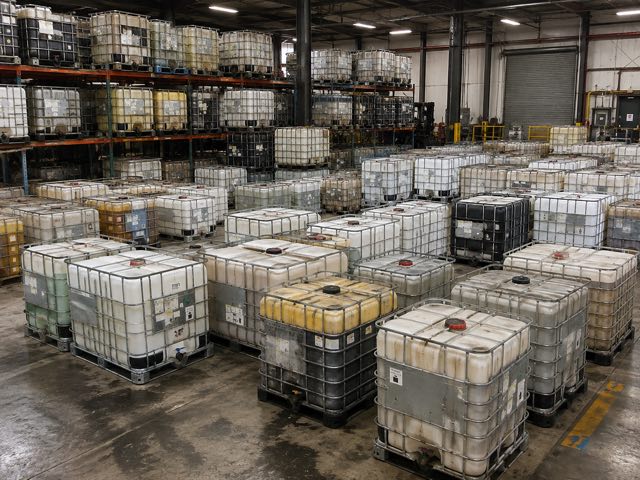
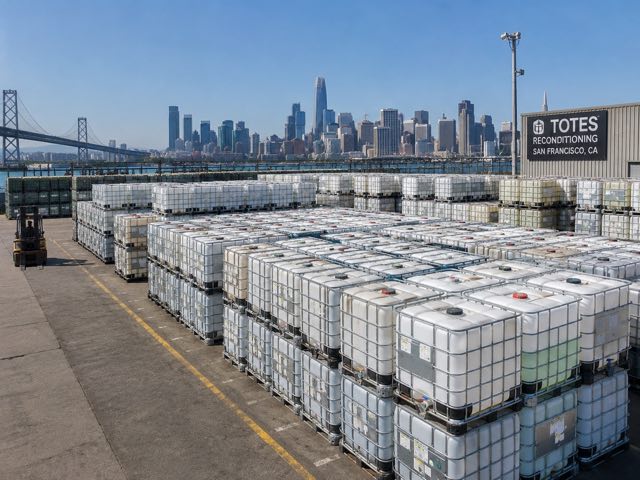
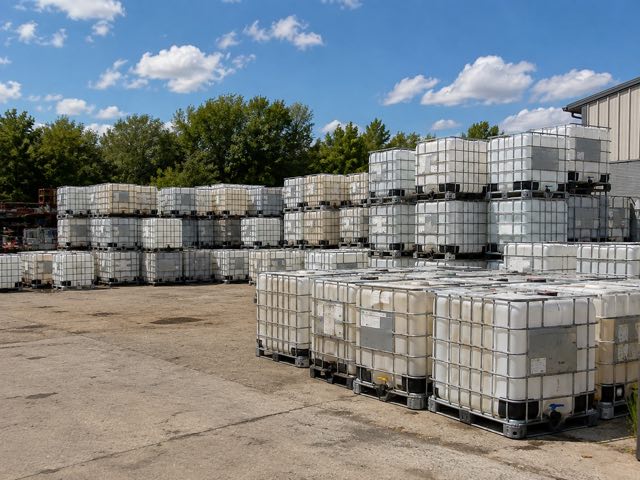
Sixteen years, four expansions, one idea
The full year-by-year record lives on our timeline page. Here are the turns that mattered.
2009 — One truck, one rented lot
A quarter-acre lease off Third Street, a borrowed pressure washer and 200 totes bought from a Modesto cannery. The first year moved 1,100 containers and lost money on freight.
2012 — The first real wash bay
A closed-loop caustic circuit replaced the pressure washer. Water consumption per container dropped by roughly two thirds overnight and Grade A became a category we could honestly sell.
2015 — Rebottling starts
We began sourcing new HDPE bottles to drop into reclaimed cages, opening up customers who needed virgin-clean interiors but were happy to reuse the steel. It is now a third of our volume.
2018 — Bancroft Avenue
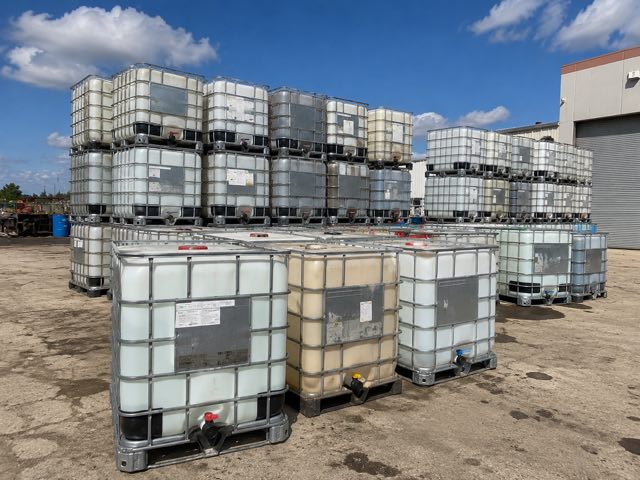
Move to the current 3.4-acre yard with rail-adjacent access, four wash bays, a fabrication shop and covered storage for food-grade stock.
2021 — The granulator
Instead of paying a third party to take our scrap bottles, we brought granulation in house. Landfill diversion crossed 98% for the first time and has stayed there since.
2026 — Where we are now
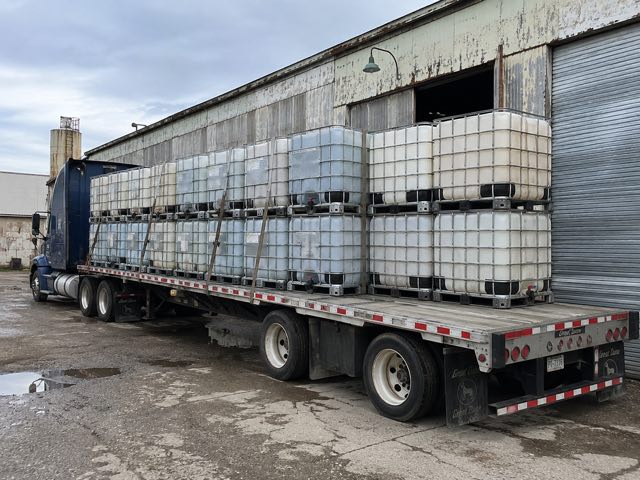
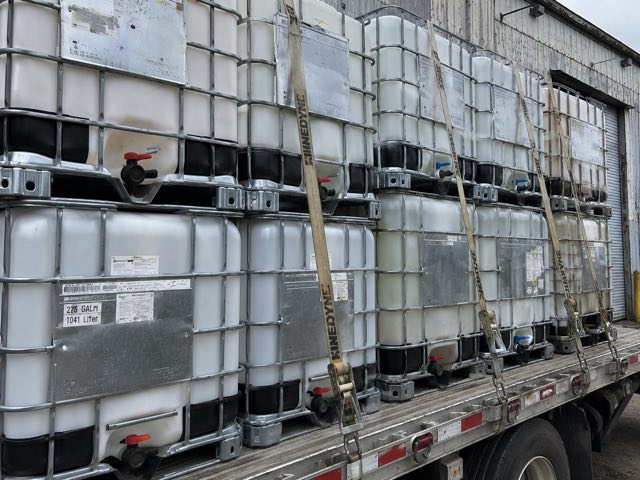
41,800 containers a year, 23 employees, a fleet of four flatbeds and a customer list that runs from two-person kombucha startups to municipal public works departments.
Four rules the yard runs on
No unknown histories
If we cannot name the previous contents and the shipper, the container does not enter the resale stream. It gets recycled instead. We turn away roughly 6% of offered stock on this rule alone.
No grade inflation
A B is a B even when a customer wants an A and the A pallet is empty. Grades are photographed and recorded against a unit number, and you can ask to see the record for anything we ship.
No cross-contamination
The food-grade line has its own bays, its own hoses, its own gaskets and its own staff rotation. Industrial containers never cross into it, whatever the backlog looks like.
No landfill as a first option
Reuse, then repair, then rebottle, then re-cage, then granulate. Landfill is what happens to the 1.4% that is genuinely nothing but contaminated composite trim.
What sixteen years of not manufacturing looks like.
These are cumulative yard figures, reconciled against scale tickets and shipping manifests. The methodology is published in full on our sustainability page.
More about the company
Inside the Bancroft Yard
Four wash bays, a granulator, a fabrication shop and where each of them sits.
Who Runs the Yard
The six people who make the calls, and what they did before this.
Timeline 2009–2026
Every expansion, every setback, year by year.
Certifications & Compliance
UN/DOT, FDA food-contact, CalRecycle and RCRA generator status.
Frequently asked
How long has IBC Totes San Francisco been reconditioning containers?
Since 2009. The first two hundred containers came out of a Modesto cannery and were washed on a rented pressure rig in a leased corner of somebody else's lot. The Bancroft Avenue yard came later, and so did the wash bays, the granulator and the flatbeds. Sixteen years in, the business is still built on the same observation that started it: a container that has held one product is almost always fit to hold another, and the only thing standing between those two facts is an honest wash and an honest grade.
What does the company actually do with a tote it buys?
It gets graded on the deck first, because everything downstream depends on that call. Sound bottles with a documented prior product go to washing and come back as Grade A or B stock. Bottles that fail pressure testing but hold water go to fabrication for atmospheric duty — planters, watering rigs, rain capture. Cages with a failed bottle get rebottled. Only what fails all of those goes to the granulator, and even then the HDPE and the steel are recovered separately rather than landfilled.
Who owns the business and where is it based?
It is independently owned and run from a 3.4 acre yard at 1450 Bancroft Ave in Bayview–Hunters Point, San Francisco. There is no parent group and no franchise arrangement. Twenty-three people work here, sixteen of whom live within three miles of the gate, and the people who answer the phone are the people who will grade your container. That is a deliberate choice rather than an accident of size.
What is the 98.6% diversion figure based on?
Mass, not unit count, and it covers everything that crosses the weighbridge in either direction. We weigh containers in, weigh product out, weigh regrind and recovered steel out, and weigh residual waste to landfill. The residual is the 1.4%: mostly contaminated gaskets, mixed-material labels and the small fraction of bottles whose prior contents make reuse or clean recycling impossible. We publish the working rather than the headline because a diversion number with no denominator is marketing.
Is it cheaper to buy from a reuse yard than from a manufacturer?
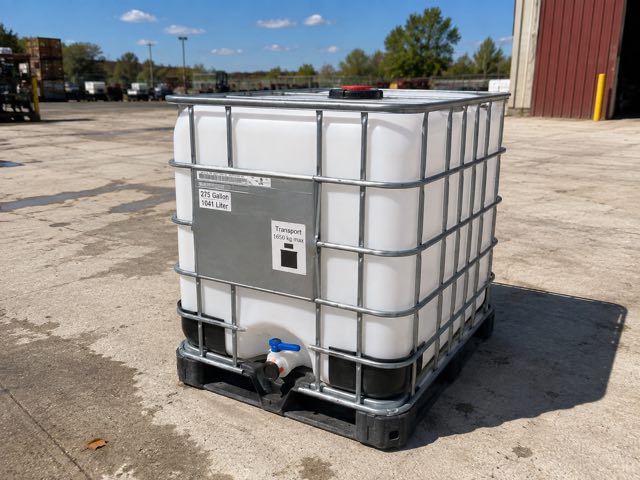
Substantially, and the gap is largest at the grades most people actually need. A washed Grade A industrial 275 gallon unit runs roughly 55% below new, and a rebottled unit with a virgin bottle in a reused cage still comes in around 25% below. Where new wins is on audits that require virgin resin end to end, and we sell new for exactly that case rather than pretending reconditioned covers everything.