New IBC totes — and an honest word about when you need one
Price new ibc totes
Quantity, liquid and zip code is enough to get a real number back. We confirm grade and stock before we quote — no auto-replies.
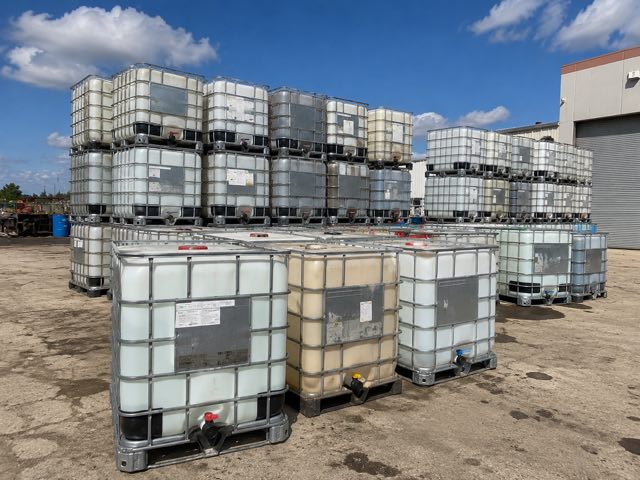
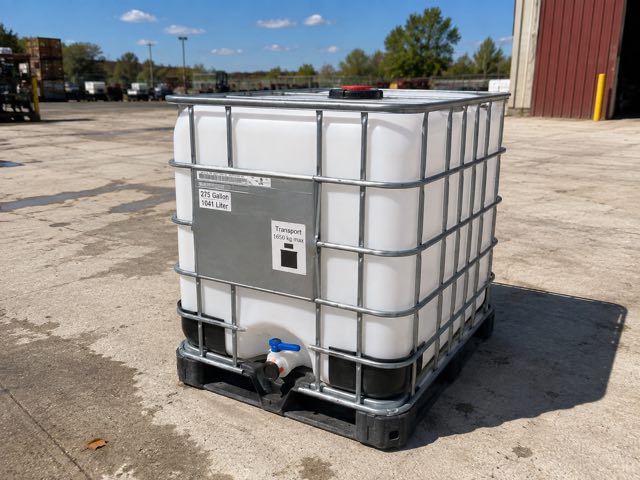
A new IBC tote is a virgin HDPE bottle in a new galvanised steel cage on a new pallet, typically $290–$360 for a 275 gallon caged unit. You genuinely need one when a written specification, a regulator or an export requirement demands virgin packaging. For everything else — industrial liquid, agriculture, water, most food production — a rebottled or Grade A reconditioned tote performs identically for 40–55% less.
The numbers on the plate
Everything below is what you actually receive. Where a figure varies by manufacturer we quote the range rather than the flattering end of it, and we confirm the exact unit before it ships.
- Capacities275, 330 and 550 gal
- BottleVirgin HDPE, blow moulded
- CageNew galvanised steel
- Pallet optionsComposite, steel or plastic
- UN rating31HA1/Y available
- Outlet2 in butterfly, S60×6 or camlock
- Lid6 in vented or solid
- Stack rating2 high in transit, 3 static
- Lead time2–10 business days by size
- Minimum orderOne unit
When new is genuinely the right call
| Scenario | New required? | Why | Our recommendation |
|---|---|---|---|
| Pharmaceutical intermediates | Yes | GMP documentation chains typically exclude reused packaging | New, UN rated, with full certificate pack |
| Written "virgin packaging" spec | Yes | The spec is the spec, whatever the engineering says | New — or renegotiate the spec with our data |
| Export to certain markets | Often | Import rules may require new UN-marked packaging | New, and check the destination rules first |
| Food and beverage production | No | A rebottled bottle is the same virgin resin, never filled | Rebottled — save roughly 40% |
| Industrial chemical blending | No | Grade A washed performs identically for compatible chemistry | Reconditioned Grade A |
| Agriculture and irrigation | No | Cosmetic condition is irrelevant to function | Reconditioned Grade B |
| Construction water & dust control | No | These containers live outdoors and get damaged | Grade C, and buy spares |
Where they end up
Regulated first-fill service
Where a UN/DOT design type and a virgin container are both required, a new unit with a fresh plate and full certificate pack is the shortest path through an inspection.
Long-horizon storage assets
If a container will sit filled for three or more years, starting with a new bottle buys you the entire stress-crazing budget rather than half of it.
Fleet standardisation
Customers building a matched pool of 40 or more identical units sometimes start new so that valves, lids and pallet types are uniform. We will then maintain that fleet on a reconditioning cycle.
What it will and will not hold
A new container has the same HDPE bottle as a rebottled one, so the chemistry is identical. What you are buying is the paperwork chain and a cage nobody has used, and it is worth being clear about which of those you actually need.
| Contents | Verdict | Gasket | What decides it |
|---|---|---|---|
| Pharmaceutical intermediates | Yes | EPDM (standard) | The clearest case for new — GMP chains usually exclude reused packaging |
| Written "virgin packaging" specs | Yes | To spec | The spec is the spec, whatever the engineering says |
| Export where import rules require new | Yes | To spec | Check the destination rules before ordering |
| Regulated liquid, first fill | Yes | To spec | 31HA1/Y design types stocked with the manufacturer certificate |
| Food and beverage production | Overkill | EPDM (standard) | Rebottled is the same virgin bottle for about 40% less |
| Industrial chemical blending | Overkill | EPDM (standard) | Grade A washed performs identically for compatible chemistry |
| Agriculture and site water | Overkill | EPDM (standard) | Grade B or C, and buy spares with the difference |
Exactly what you receive
- A virgin HDPE bottle in a new galvanised steel cage
- A new pallet — composite, steel or plastic, to your specification
- A new 2 in butterfly valve, S60×6 or camlock as ordered
- A new 6 in lid, vented or solid
- The manufacturer certificate
- A UN 31HA1/Y plate where a rated design type is ordered
What you will need separately
- Chemical compatibility for your specific liquid — that is a separate check and we do it free
- Secondary containment, covers and adapters
- Any suggestion from us that you needed a new container when you did not
Ask before you order, not after
Five checks worth five minutes
Written from the problems that reach our returns desk, which is the only honest source for a list like this.
Test whether the spec really says "new"
A great many specifications say virgin resin in product contact, which a rebottled unit satisfies exactly at about 40% less. Only a spec that says new container as an object requires this product.
State the packing group and the liquid
If you need a UN rating, tell us the packing group and the specific liquid at quote time so we supply the right design type and the right gasket rather than a generic unit.
Confirm the pallet type against your handling
Composite, steel or plastic changes tare weight, wash-down suitability and how the base behaves under a narrow-carriage forklift.
Note the periodic test clock starts now
For regulated service the 2.5-year leak test and 5-year inspection run from the manufacture date on the plate. New means the full window, which is part of what you are paying for.
Plan the empties before you take delivery
The truck delivering new containers can collect whatever they are replacing on the same trip, and the credit frequently offsets a good share of the freight.
Three mistakes we watch people make
Buying new because used sounds risky
Ordering new for the lead time
Assuming a UN rating covers compatibility
The commercial detail
Indicative 2026 yard pricing. Everything is quoted properly before anything moves, and freight is always itemised separately.
| Configuration | Price | Lead time | UN rating | Cheaper alternative |
|---|---|---|---|---|
| 275 gal, composite pallet | $290 – $330 | 2–5 days | Available | Rebottled at $195 – $260 |
| 275 gal, steel pallet | $315 – $360 | 2–5 days | Available | Rebottled at $210 – $260 |
| 330 gal | $355 – $410 | 3–7 days | Available | Rebottled at $225 – $285 |
| 550 gal | $640 – $720 | 5–10 days | Available | Grade A washed at $285 |
| 120 gal | $210 – $255 | 5–10 days | Limited | Reconditioned where available |
New IBC Totes: FAQ
Why does a reuse yard sell new totes at all?
Because refusing to would just push customers to a distributor who would happily sell them a new container for every application, including the 80% that do not need one. We would rather be the place that stocks both and tells you the truth about which you need. New units are roughly 8% of our volume and we are comfortable with that number staying small.
What is the actual price difference?
For a 275 gallon caged unit in 2026: new runs $290–$360, rebottled $195–$260, Grade A reconditioned $145–$195, Grade B $115–$155. Across a fleet of fifty containers, choosing rebottled over new saves roughly $6,000 and avoids about 3,900 lb of virgin steel.
Do new totes come UN rated?
Yes, 31HA1/Y design types are stocked and come with the manufacturer certificate. Tell us the packing group and the specific liquid at quote time so we supply the right design type and the right gasket material rather than a generic unit.
Can you take my old containers when the new ones land?
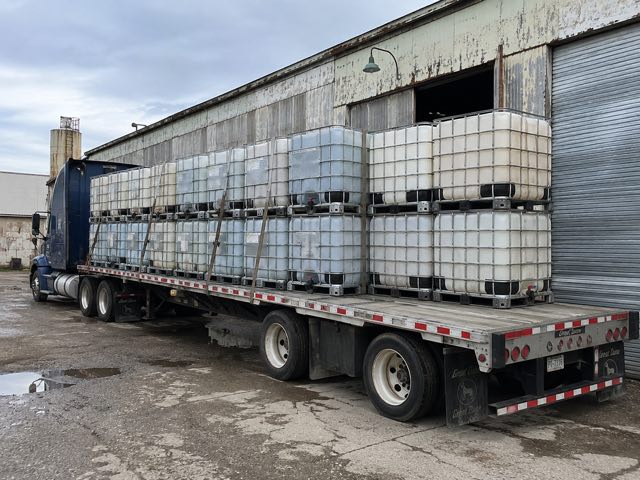
That is the normal arrangement. The delivery flatbed goes out loaded and comes back loaded, we grade your empties at the yard and credit them against the invoice. Twelve or more and the pickup is free.
Do you try to talk people out of buying new?
Where the specification allows it, yes — and we lose margin doing it. A rebottled container is the same virgin bottle for about 40% less, and a Grade A washed unit performs identically for most industrial duty. We would rather be the supplier that told you than the one that took the order quietly.
How long does a new container last?
Ten to fifteen years indoors, eight to twelve outdoors with a UV-opaque cover, four to six outdoors uncovered. The failure mode is stress-crazing rather than anything sudden, and it arrives after six to eight service cycles. Starting new buys you the whole budget rather than part of it.
Will you take our old containers when the new ones arrive?
That is the normal arrangement. The delivery flatbed goes out loaded and comes back loaded, we grade your empties at the yard and credit them against the invoice. Twelve or more and the pickup is free, and the credit often covers most of the freight on the new units.