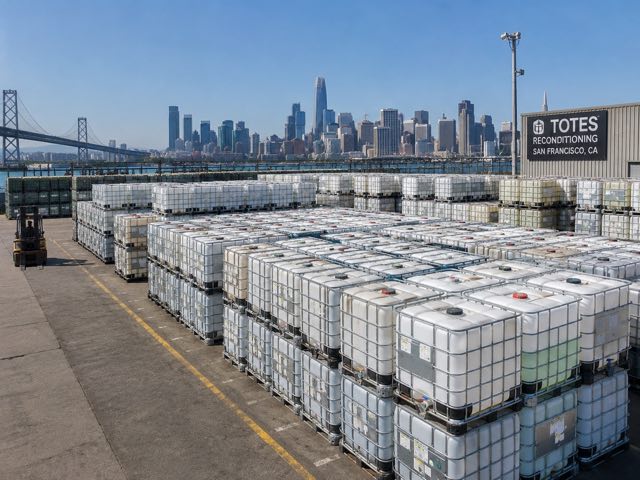
Three and a half acres between the freeway and the bay.
Book a yard visit
We host walk-throughs for buyers, sustainability teams and inspectors. Put a preferred date in the message field and we will confirm a slot.
The yard is organised as a one-way flow with no backtracking. Intake, grading, wash, rebuild, test and dispatch each occupy their own zone, and a container never moves backwards through the sequence. It is the single biggest reason we can promise that a food-grade tote has not shared a hose, a bay or a pallet with an industrial one.
From the yard
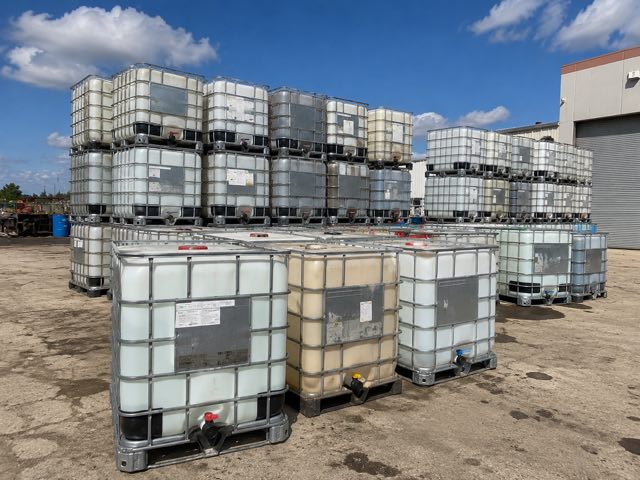
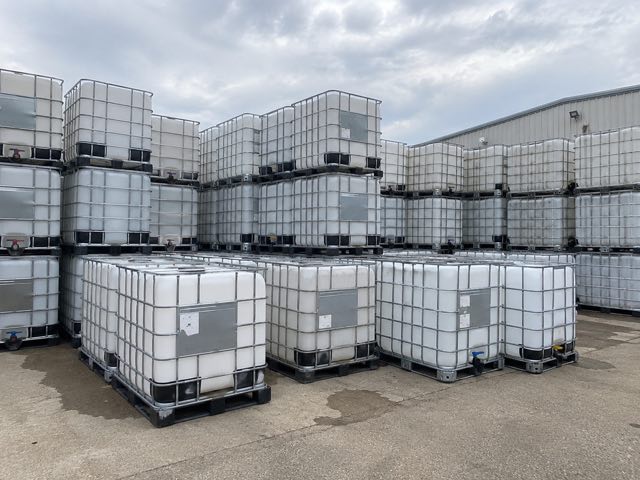
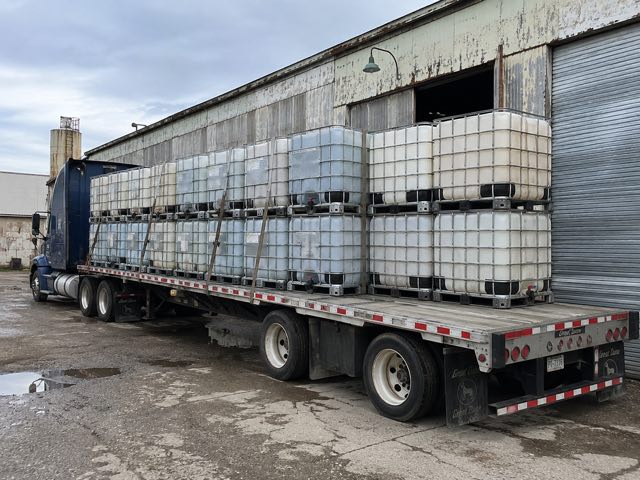
Seven zones, north gate to south dock
Zone 1 — Intake lane and scale
Every inbound load crosses a certified truck scale. Weights, origin, prior contents and UN plate photos are logged against a unit number before anything is unloaded. This record follows the container for the rest of its life with us.
Zone 2 — Grading deck
Covered, lit and equipped with UV lamps and borescopes. Graders check bottle clarity, stress-crazing at the corners, cage weld integrity, pallet rot and valve condition, then assign A, B, C or scrap. Roughly 6% of offered stock is refused here on unknown-history grounds.
Zone 3 — Food-grade wash line
Two dedicated bays with their own hoses, gaskets, detergent circuit and staff rotation. Hot caustic, triple rinse, potable final flush, air dry under cover. Industrial containers are physically unable to enter this line — different bay, different lane, different key.
Zone 4 — Industrial wash bays
Two high-throughput bays running a closed-loop caustic circuit at 160°F. Effluent goes to a three-stage separator; roughly 94% of the water goes back around and the sludge is manifested to a permitted treatment facility.
Zone 5 — Rebuild and rebottling
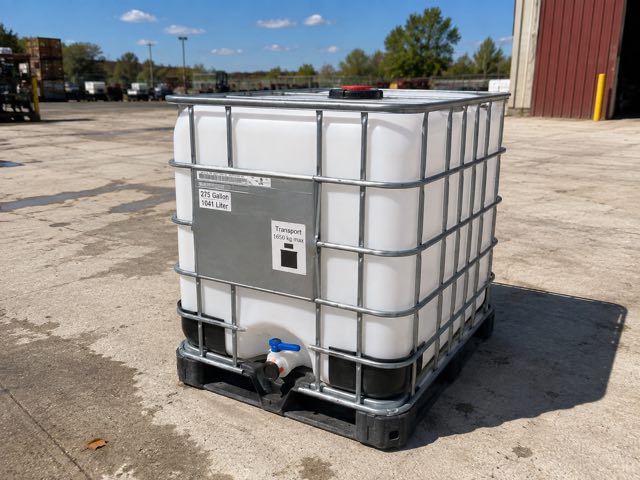
Cage straightening jigs, a hydraulic press for pallet swaps, a gasket and valve bench, and the rebottling station where new HDPE bottles are dropped into reclaimed cages. About a third of everything we ship passes through here.
Zone 6 — Test and certification
Leak test at 3 psi, visual under fill, torque check on the outlet, and a UN plate review for anything destined to move regulated liquid. Failures go back to Zone 5 once, then to Zone 7.
Zone 7 — Granulation and steel recovery
The end of the line. Bottles are cut, shredded and granulated into HDPE regrind; cages and steel pallets are baled for a Bay Area scrap processor; valves and gaskets are stripped into the parts bin.
What the yard actually holds
- Site area3.4 acres
- Covered storage18,000 sq ft
- Wash bays4 (2 food-grade, 2 industrial)
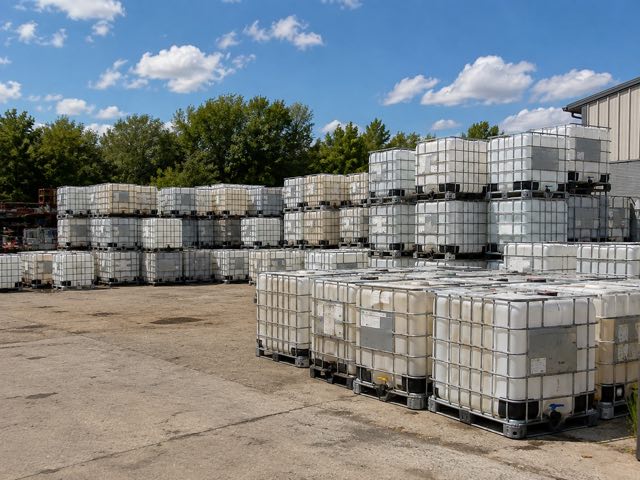
- Containers on the ground≈ 1,400 at any time
- Annual throughput41,800 containers
- Truck scaleCertified, 80,000 lb capacity
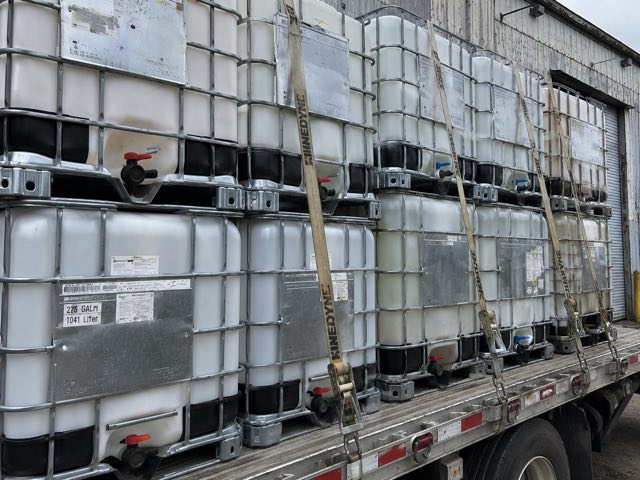
- Fleet4 flatbeds, 1 liftgate box truck
- Granulator capacity1,100 lb/hr HDPE
- Water reuse rate94%
- Rooftop solar62 kW, covers 41% of yard load
A normal week on the deck
| Stage | Units / week | Staff | Bottleneck |
|---|---|---|---|
| Intake & grading | 840 | 4 | Trailer availability |
| Food-grade wash | 150 | 3 | Dry time under cover |
| Industrial wash | 470 | 4 | Caustic circuit turnover |
| Rebottling | 220 | 3 | New bottle lead time |
| Fabrication | 35 | 2 | Design sign-off |
| Granulation | 9,600 lb | 2 | Cut-down labour |
Come and see it
Why Bayview–Hunters Point.
Bayview has carried San Francisco's industrial load for a century, and it has the scars to prove it. Siting a reuse operation here is not neutral — it puts trucks on streets that already have too many. So we run electric yard equipment, keep the granulator inside a sound-treated building, schedule inbound freight outside school hours and hire locally: sixteen of our twenty-three employees live within three miles of the gate.
We are also members of the Bayview Industrial Green Coalition and publish our diversion numbers to the neighbourhood association each quarter. If we are going to occupy industrial land, the least we can do is show our work.
Frequently asked
Can I visit the Bancroft Avenue yard?
Yes, and we would rather you did. The yard at 1450 Bancroft Ave is open Monday to Friday 7:00 AM to 4:30 PM, with Saturday mornings by appointment. Buyers who come in person almost always leave with a better container than buyers who order blind, because you can put your hands on the cage and smell the bottle. Call ahead if you want to see a specific grade, so we can have those units pulled and staged rather than buried on the pad.
How big is the facility and what is on it?
3.4 acres, of which roughly a third is covered. On it: four wash bays, a rebottling line, a grading deck, a pressure-test station, a fabrication shop, a granulator, a covered pad for food-history stock and enough hardstanding to stage several hundred containers. The layout is deliberately linear — containers enter at one end, get graded, and move toward whichever of the four outcomes fits them, so nothing has to be double-handled back up the yard.
How much throughput does the yard handle?
Tens of thousands of containers a year across buying, washing, rebottling and recycling, with the seasonal peak falling between July and November when Central Valley canneries and North Bay wineries are both releasing empties. Wash capacity rather than yard space is the real constraint: four bays running a full shift set the ceiling, which is why we hold a buffer on food-grade stock through the harvest window instead of promising capacity we cannot schedule.
What happens to the wash water?
It runs on a closed caustic circuit rather than going to drain. Water is heated, dosed, used, settled, filtered and returned, with solids dropping out for separate disposal and the caustic charge topped up rather than replaced. A small bleed goes to the sewer under permit, and the rest of the loop stays in the building. It is the single largest capital item in the yard and the reason a toll wash costs $38 rather than $15.
Is the yard permitted for hazardous residue containers?
For residues, yes, within defined limits, and we hold RCRA generator status and work under CalRecycle oversight. What we do not do is accept containers whose last contents were acutely hazardous or unidentified. If you cannot tell us what was in it, we cannot grade it, wash it or price it, and the honest answer is that it is a disposal job rather than a reuse job. Send the safety data sheet before the truck and everything else is straightforward.