Washing containers without washing water down a drain
Book triple-rinse washing
One written channel for everything: quotes, bookings, freight and questions. A person reads every one of these.
A professional triple-rinse costs $38–$72 per container and produces a documented result: hot caustic at 160°F to lift residue and saponify fats, three rinse stages, and a potable final flush on the food line. The environmental difference is the water — our closed-loop separator recovers 94%, against effectively zero for on-site pressure washing, which also discharges residue into a storm drain.
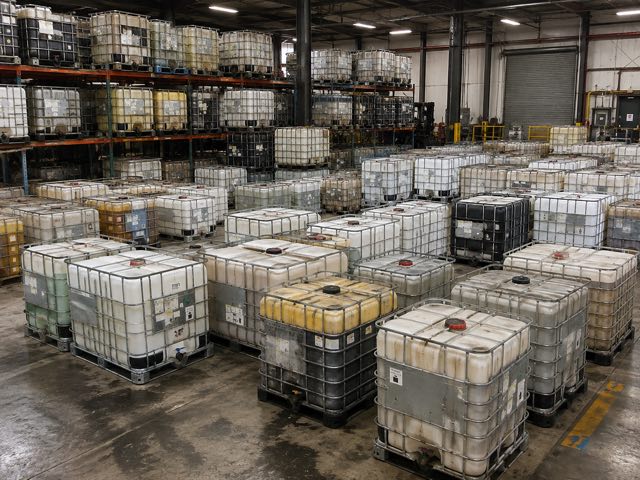
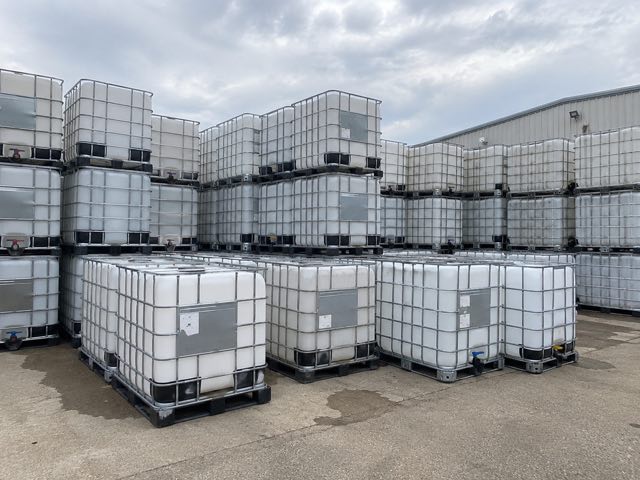
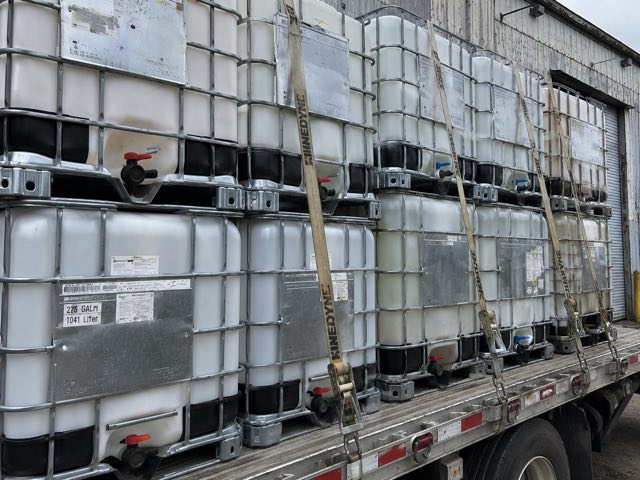
What the operation can actually do
These are measured figures from our own equipment, not manufacturer claims. If a number matters to your specification, ask and we will show you how it is measured.
- Bays4 (2 food-dedicated, 2 industrial)
- Caustic temperature160 °F
- Rinse stages3, plus potable finish on food line
- Fresh water per unit≈ 7 gal
- Water recovery94% through 3-stage separator
- DryingAir, under cover, never in open sun
- Throughput620 units per week
- DocumentationWash certificate tied to unit number
- Sludge handlingManifested to permitted treatment facility
- Turnaround3–7 business days
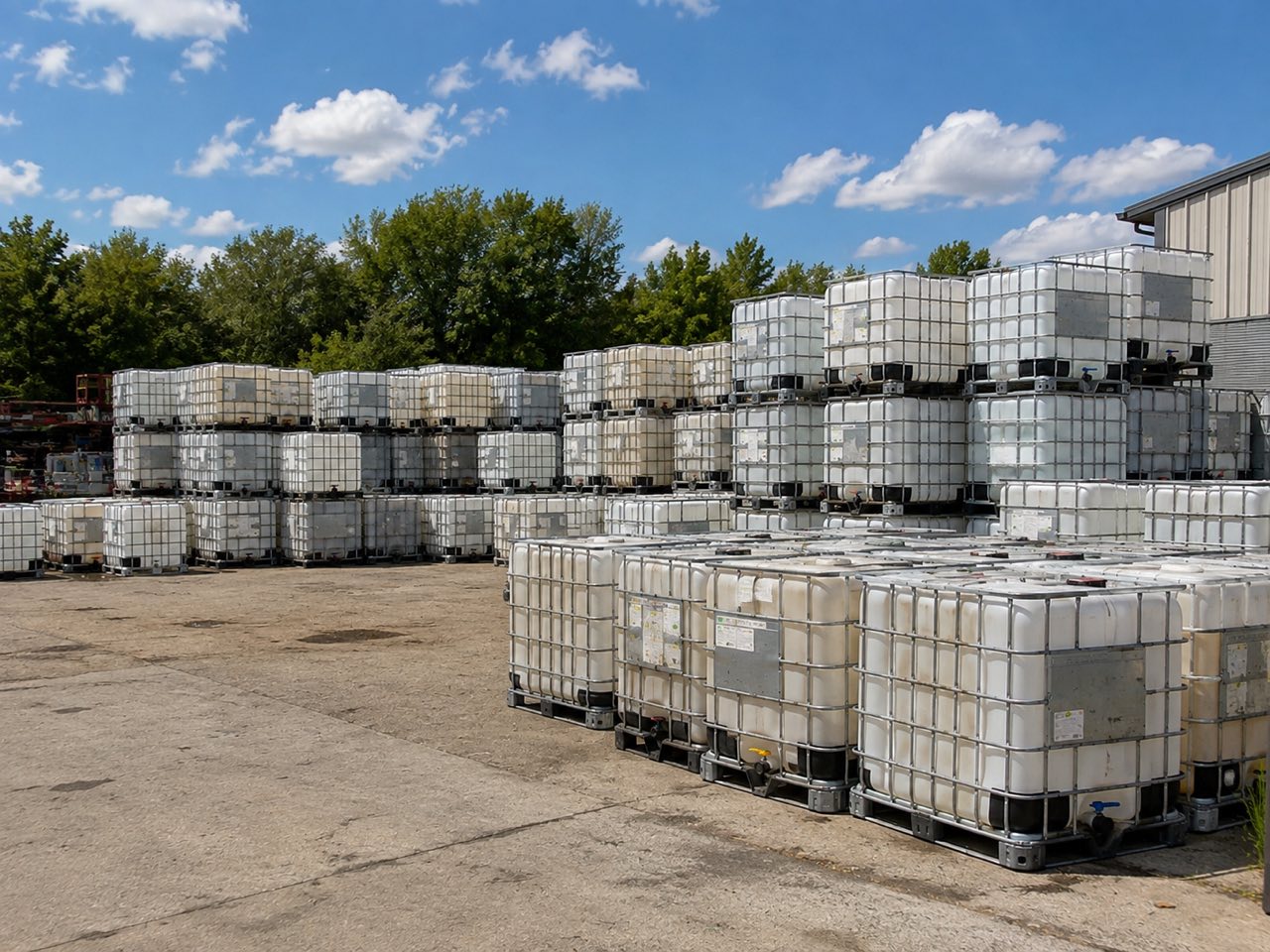
Wash options
| Wash | Process | Suits | Price | Certificate |
|---|---|---|---|---|
| Industrial triple rinse | Hot caustic, 3 rinses, air dry | Non-hazardous industrial residue | $38 | Yes |
| Industrial + degrease | Extended caustic dwell for oils and waxes | Lubricants, oils, waxes | $52 | Yes |
| Food-line wash | Dedicated bay, potable final flush | Food-contact resale or reuse | $72 | Yes, food-line |
| Sanitisation add-on | Chlorine cycle and neutral rinse | Potable water, fermentation | $18 | Yes |
| Odour treatment | Ozone dwell after wash | Persistent residual odour | $24 | Noted on certificate |
| Pre-wash inspection only | Grade and report, no wash | Deciding what is worth cleaning | $9 | Report |
What we need from you
Five answers. Supply them with the first email and the job is quoted and scheduled without a single round trip.
The prior product, by name
It sets the wash route, the dwell time and the chemistry. "Some kind of detergent" is not enough to schedule a bay.
A safety data sheet where one exists
Particularly for anything oily, proteinaceous or aromatic. Those three categories decide whether a container is economic to wash at all.
Containers drained, with lids on
Residual heel is where the contamination lives. Drain through the outlet, cap them, and do not attempt a rinse — a partial rinse sometimes makes our job harder.
Whether you need food-line or industrial
They are physically separate lines with different costs. If the container will hold food afterwards, say so at booking.
A count and a deadline
Forty or more gets a scheduled slot rather than a queue position.
What is included
- Hot caustic circuit at 160 °F with dwell matched to the residue
- Three complete rinse stages, cascaded backwards from clean
- Potable-water final rinse on the food line
- A new EPDM gasket on every outlet
- Air drying under cover, never in open sun
- A wash certificate tied to the unit number and dated
- Sludge dewatered and manifested to a permitted treatment facility
What we will not do
- Any discharge to sewer or storm — 94% of the circuit water is recovered and the rest is manifested
- Washing containers whose prior contents cannot be named
- Promising to remove an odour that has penetrated the resin
If it is not listed, ask
Turnaround, price and process
Indicative 2026 figures. Where a lane or a service level genuinely varies, the range is the range rather than the flattering end of it.
| Wash | Process | Price | Turnaround | Certificate |
|---|---|---|---|---|
| Industrial triple rinse | Hot caustic, 3 rinses, air dry | $38 | 3–5 days | Yes |
| Industrial + degrease | Extended caustic dwell for oils and waxes | $52 | 4–6 days | Yes |
| Food-line wash | Dedicated bay, potable final flush | $72 | 4–7 days | Yes, food-line |
| Sanitisation add-on | Chlorine or peracetic cycle, neutral rinse | +$18 | Same visit | Yes |
| Odour treatment | Ozone dwell after wash | +$24 | +1 day | Noted on the certificate |
| Pre-wash inspection only | Grade and report, no wash | $9 | 1–2 days | Report |
| Collection and return, Bay Area | Round trip on our flatbed | $14 per unit | Scheduled | — |
The problems this actually solves
"We wash them ourselves but the auditor will not accept it"
"The oil containers never come properly clean"
"We have nowhere for the rinse water to go"
What you end up holding
Reused containers live or die on documentation. This is everything that leaves here with the job, and how long we keep our copy.
| Document | Issued | We retain | What it is for |
|---|---|---|---|
| Wash certificate | Every unit | 5 years | Audits, food safety, customer requirements |
| Pre-wash inspection report | Where ordered | 5 years | Deciding what is worth cleaning |
| Sanitisation record | Where ordered | 5 years | Potable and fermentation use |
| Sludge manifest | Continuous | Per regulation | Our compliance, available on request |
| Water reuse figures | On request | Ongoing | Your own sustainability reporting |
Triple-Rinse Washing: FAQ
Can I just pressure wash them myself?
You can, and for a Grade C tote heading into dust-control duty that is fine. For anything else it is a false economy: a pressure washer will not lift saponifiable fats or cured residue from the corners, it uses roughly fifteen times more fresh water, it produces no documentation an auditor will accept, and the runoff usually ends up in a storm drain, which in California is a permitting problem you do not want.
What is a triple rinse exactly?
Three complete fill-and-drain cycles with fresh solution each time, so that residual concentration falls geometrically rather than being smeared around. Combined with hot caustic, which chemically converts fats and oils rather than merely displacing them, it is the difference between a container that looks clean and one that is.
Do you wash containers you did not sell?
Regularly. Toll washing is a standing service and you keep your own units. Send the safety data sheet for the prior contents with the booking and we will confirm the wash route before the truck moves.
What happens to the residue?
Solids and separated product go to a permitted treatment facility under manifest. The water goes back into the circuit. Nothing enters the sewer or the storm system — the whole reason the separator exists is that we did not want it to.
What actually is a triple rinse?
Three complete fill-and-drain cycles with fresh solution each time, so residual concentration falls geometrically rather than being smeared around. Combined with hot caustic, which chemically converts fats and oils rather than displacing them, it is the difference between a container that looks clean and one that is. Continuous spraying, however long, is not a triple rinse.
Can you get a smell out?
Sometimes. If the odour is surface residue, a hot alkaline cycle with a long dwell removes it. If the product penetrated the resin — aromatics, essential oils, some solvents do this — nothing removes it, and ozone treatment recovers about half of the borderline cases for $24. We will tell you which category yours is in rather than washing it twice and charging you twice.
How much water does this actually use?
About seven gallons of fresh water per container, because the caustic circuit is closed and recovers 94% through a three-stage separator. A thorough back-lot pressure wash uses roughly 110 gallons and discharges all of it. Over twenty containers that is 2,060 gallons of difference, which is usually the whole economic argument on its own.