The Reuse Impact Engine
Quote what you just modelled
The engine below writes straight into these fields. Configure it, hit ‘Quote this configuration’, then send it.
96 containers kept out of production
That is roughly 27,594 miles of driving avoided, or the annual carbon uptake of 494 mature trees.
Figures are directional, not an audited LCA. They combine our weighed container masses with published cradle-to-gate factors for virgin HDPE and galvanised steel. We will happily show you the spreadsheet.
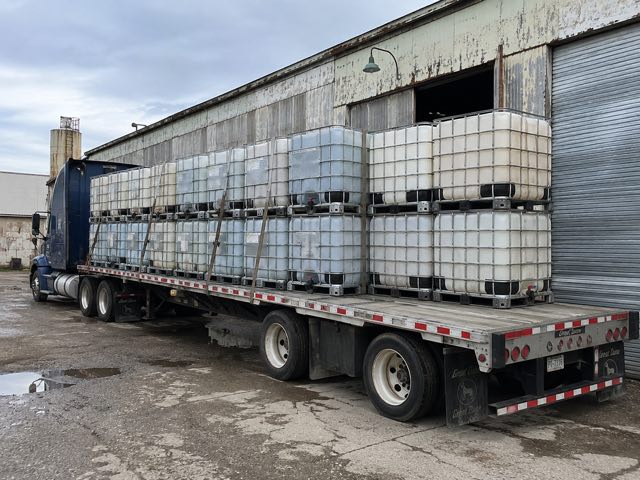
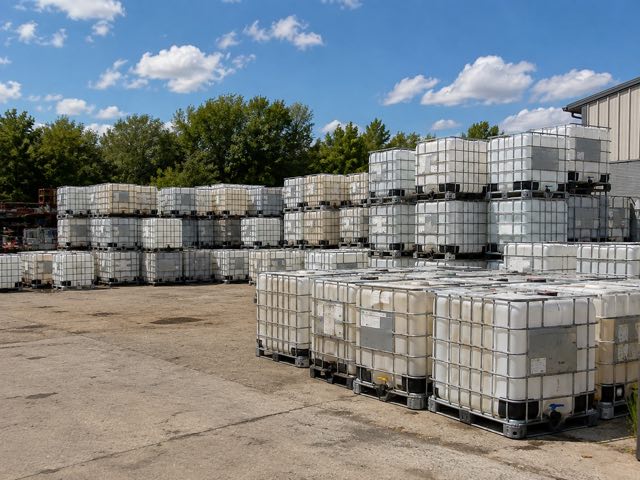
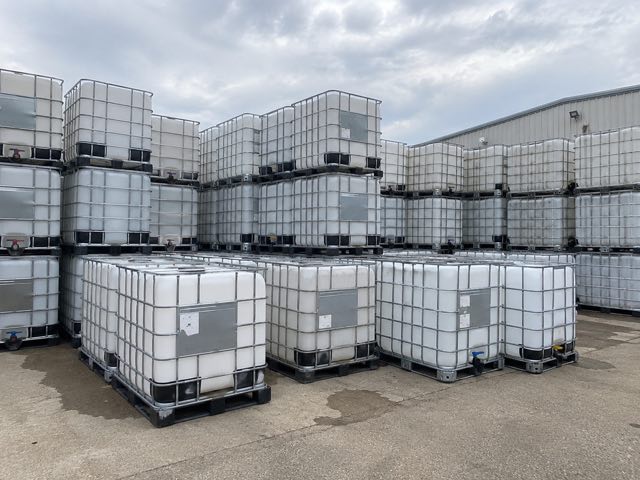
From the yard
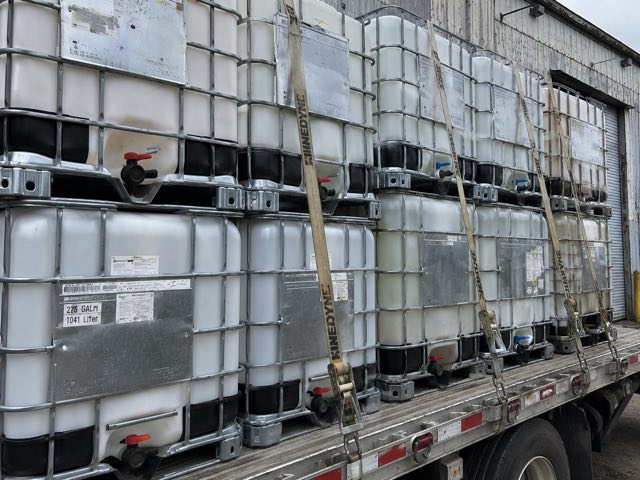
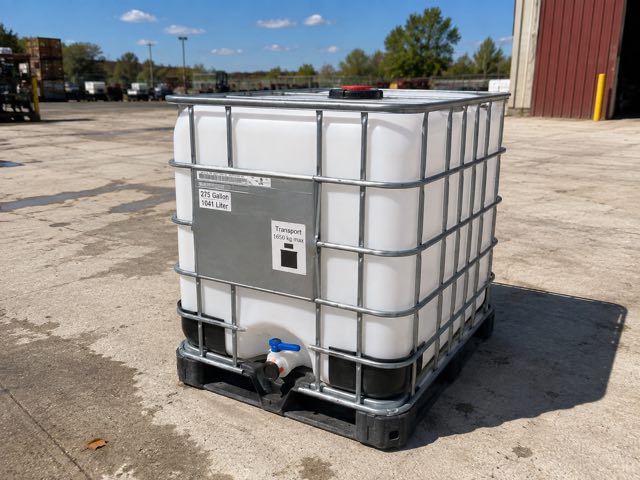
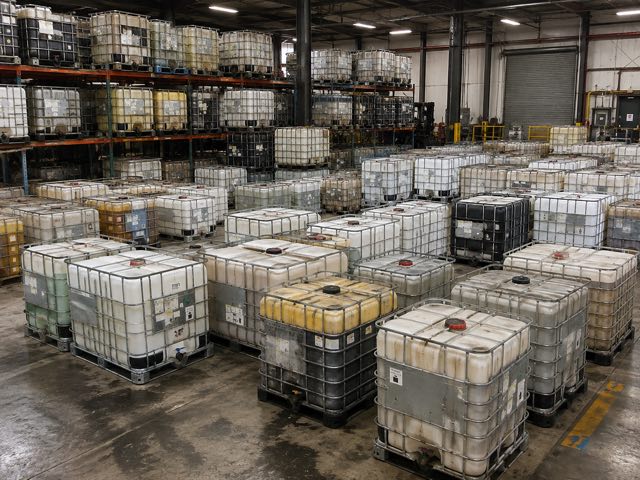
Reusing one 275 gallon IBC tote avoids roughly 133 lb of virgin HDPE and steel, 250 lb of CO₂e, 490 gallons of process water and 1.9 cubic yards of landfill volume — per cycle. The engine above simply multiplies that by your quantity and your cycle count, and adjusts for whether you are reconditioning, rebottling or buying new.
Exactly how the arithmetic works
We would rather show the workings than ask you to trust a badge.
Containers avoided = quantity × refill cycles
Each refill cycle is one container that did not need to be manufactured. This is the term that dominates every result on the page, which is why the slider is there and why it defaults conservatively to four rather than to our actual yard average of six.
Material avoided depends on the sourcing route
Reconditioned reuses the bottle and the cage, so both masses count. Rebottled reuses the cage and pallet only, so the steel counts and the HDPE does not. Buying new avoids nothing, which is why that option returns zeros — it is there for comparison, not for flattery.
Impact factors applied per pound
HDPE: 1.8 lb CO₂e, 9.6 kWh, 2.6 gal water. Galvanised steel: 1.9 lb CO₂e, 2.8 kWh, 4.4 gal water. These are mid-range published cradle-to-gate figures; using the optimistic end would roughly double the headline numbers, which is precisely why we do not.
Landfill volume is uncrushed displacement
1.9 cubic yards for a 275 gallon container, 2.1 for a 330, 3.2 for a 550. Crushed volume would be about a third of this, but containers are rarely crushed before disposal, so uncrushed is the honest figure.
Equivalences use standard conversions
Driving at 0.86 lb CO₂e per mile and mature tree sequestration at 48 lb CO₂ per year. These are illustrative rather than precise — they make a number legible, they do not make it more accurate.
The underlying figures
If you would rather do the arithmetic yourself, here is everything the engine uses.
| Size | Bottle HDPE (lb) | Cage & pallet steel (lb) | Landfill (yd³) | New price | Rebottled | Reconditioned |
|---|---|---|---|---|---|---|
| 275 gal | 55 | 78 | 1.9 | $315 | $195 | $135 |
| 330 gal | 63 | 88 | 2.1 | $355 | $225 | $158 |
| 550 gal | 96 | 132 | 3.2 | $640 | $395 | $285 |
About the engine
Where do the numbers come from?
Container masses are weighed on our own certified truck scale and split into HDPE and steel by component: a 275 gallon caged unit is about 55 lb of bottle and 78 lb of cage and pallet. The conversion factors are published cradle-to-gate life-cycle figures for virgin HDPE resin (approximately 1.8 lb CO₂e, 9.6 kWh and 2.6 gallons of water per pound) and virgin galvanised steel (1.9 lb CO₂e, 2.8 kWh, 4.4 gallons). Landfill volume is the uncrushed displacement of the container.
Is this a life-cycle assessment?
No, and we are careful not to call it one. A real LCA would model transport, wash energy, end-of-life allocation and regional grid mixes, and would be third-party verified. This engine models avoided primary production only, which is the dominant term but not the whole picture. It is directional and it is honest about being directional.
Why does the refill cycle slider matter so much?
Because each cycle is another container that never had to be manufactured. The environmental case for reuse is almost entirely about cycle count — a container used once and discarded avoids very little, while one used six times avoids six manufacturing events. Our yard average is six, and the slider defaults to a conservative four.
Can I get these figures for my actual account?
Yes, at no charge. Every account can have a quarterly diversion statement built from real purchase and return records rather than a model, showing containers, mass diverted and estimated avoided CO₂e. Ask the quote desk to switch it on.