Thirty-four watering rigs, built from containers that failed a leak test
Start a similar project
Describe the problem rather than the container. Most of the useful work in these jobs happened before anyone chose a product.
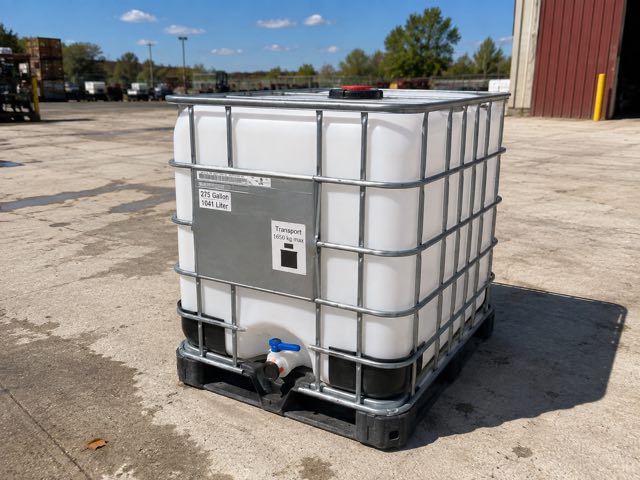
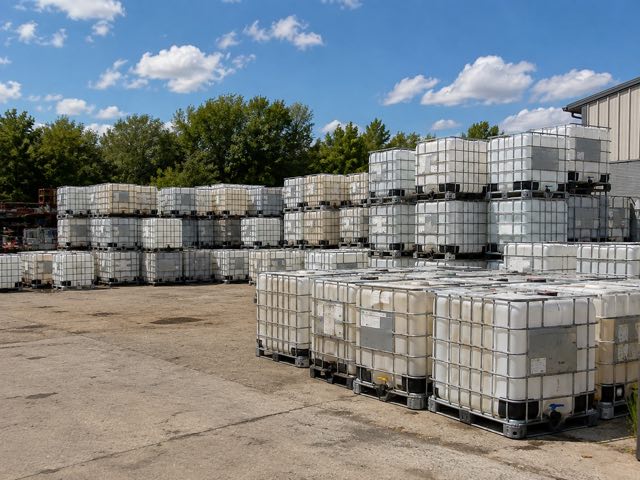
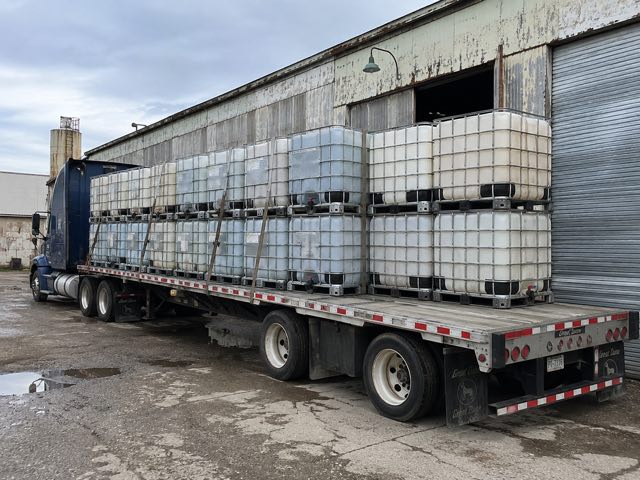
Thirty-four gravity-fed street tree watering rigs were fabricated from retired IBC totes that had failed pressure testing but remained sound for atmospheric use. The programme cut watering rounds by 40%, extended the interval between visits from five days to eight, and diverted 4,250 lb of HDPE and steel from recycling by finding it a second application first.
What we were given
- 1,800 young street trees on a three-year establishment programme
- A crew of four, watering on a five-day cycle through the dry season
- Existing method: a tank truck and a hose, one tree at a time
- Budget that would not stretch to purpose-built equipment
Four constraints
The cycle was too short for the crew
A five-day watering cycle across 1,800 trees was arithmetic that did not work with four people, and the trees at the end of the round were reliably the ones that died.
Purpose-built equipment was out of reach
Commercial gravity watering rigs were quoted at $1,900 each. Thirty-four of them was $64,600, which was roughly four times the available budget line.
The containers had to be genuinely safe
These sit on public streets. Anything we built had to be stable when full, impossible to open casually, and unable to become a hazard if a vehicle clipped it.
Prior contents mattered even for irrigation
Water going onto street trees in residential neighbourhoods needed containers with a benign, documented history. This ruled out most of our failed-test stock, which is industrial.
The solution, step by step
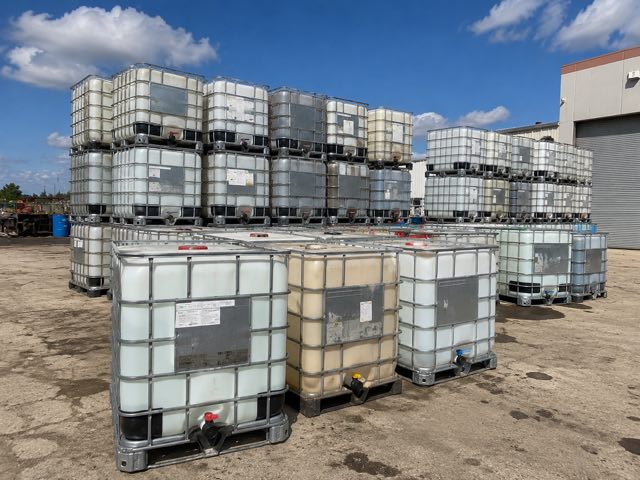
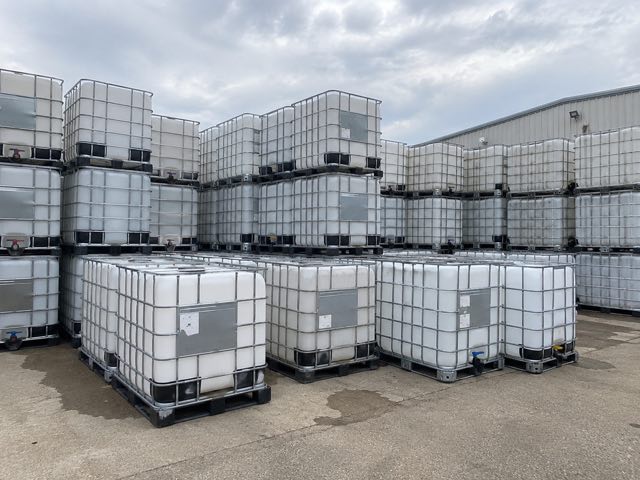
Failed-test food-history containers
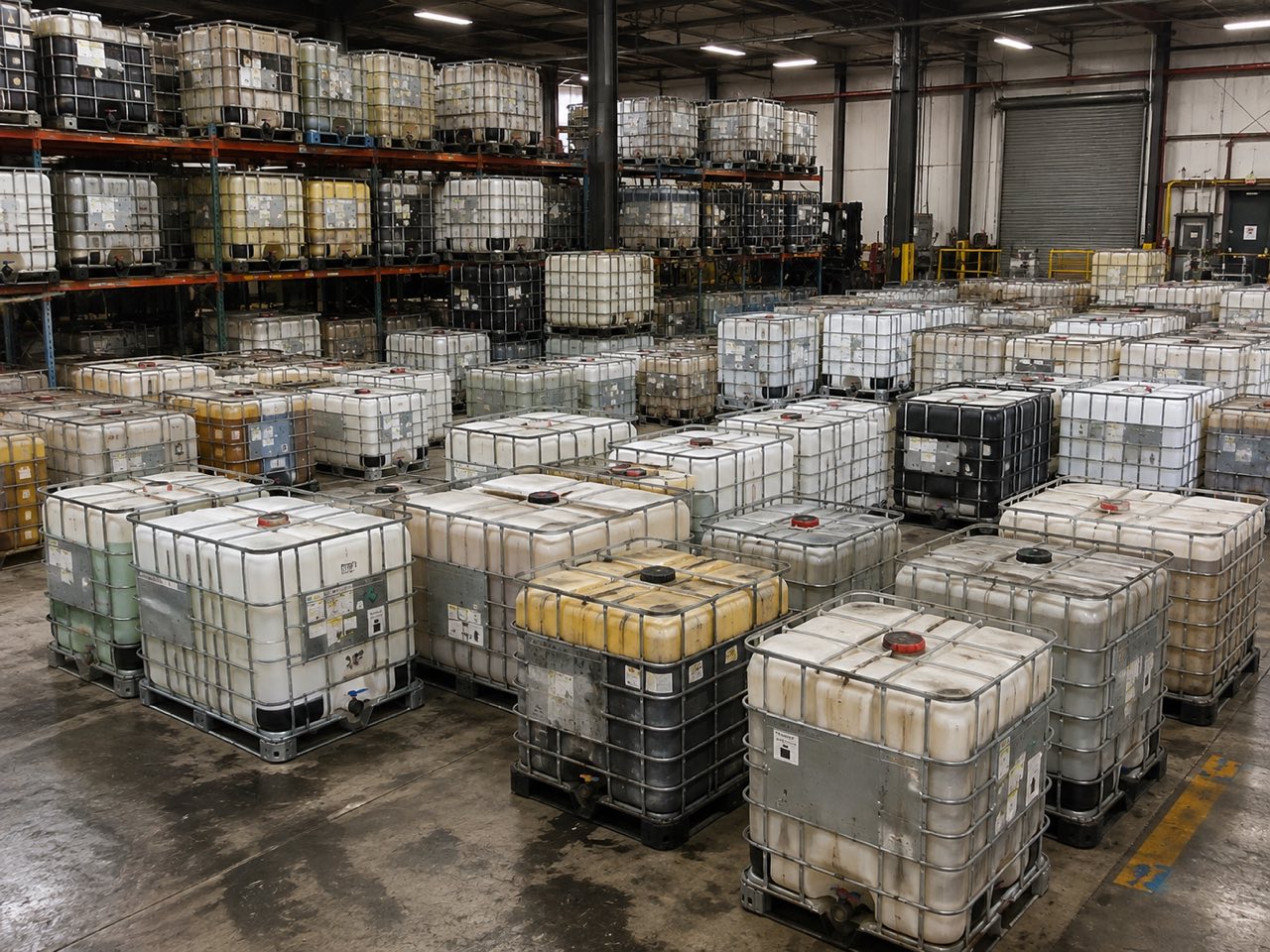
We set aside containers that failed pressure testing but had held syrup, juice concentrate or glycerine. Sound for atmospheric use, benign history, and otherwise heading straight for the granulator.
Cut, capped and plumbed for slow release
Each rig has a screened fill port, an internal baffle to reduce slosh in transit, and four adjustable drip outlets on a manifold that release a full tank over roughly six hours.
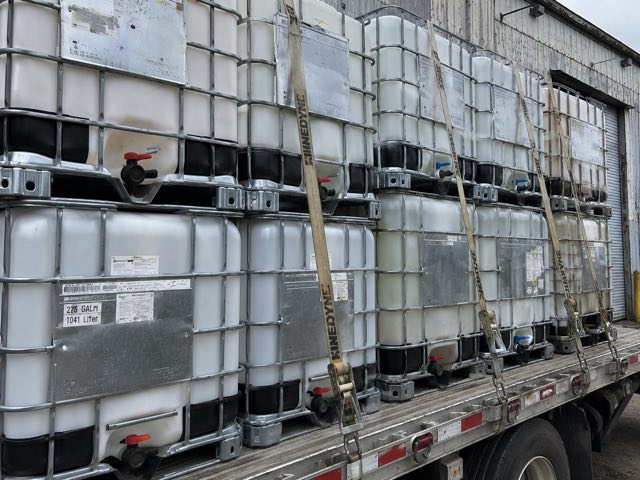
Cage retained as a frame and guard
The original cage stayed on, which gave impact protection, forklift handling and somewhere to mount signage and a lock. It also made the rigs unmistakably what they are, which reduced tampering.
Built in batches across three years
Twelve in 2023, twelve in 2024, ten in 2026, matched to budget cycles rather than delivered as one project. Each batch incorporated fixes from the previous one.
Crew training and a spares kit
Half a day at the yard for the crew, plus a spares kit of drip fittings, screens and gaskets so a failed rig is a ten-minute repair rather than a return to us.
Feedback
“We were expecting something cheap that looked cheap. What we got was something cheap that has needed almost no attention in three years.”
— Urban forestry supervisor
What went wrong
Questions this project raises
Why use totes that failed pressure testing?
Because the test they failed is not the test this job requires. UN pressure certification qualifies a container to be filled, sealed and transported on a public road at internal pressure. A gravity-fed watering rig is open to atmosphere, sits still and is refilled in place, so the only thing that matters is that the bottle holds water without weeping. Sorting containers by the duty they can still perform, rather than by the highest duty they once performed, is what makes this kind of programme cheap.
How long does a gravity watering rig hold a tree?
Eight days on this programme, up from five on the previous round, which is what cut watering visits by 40%. The actual interval depends on emitter sizing, species and weather rather than tank volume, and we set the drip rate during commissioning rather than guessing it from a spec sheet. A 275 gallon rig run too fast empties in two days and drowns the root ball; run too slow it never wets below the surface.
What stops the drip outlets clogging?
Inline screens at the manifold, which the first twelve rigs did not have. We screened the fill port and assumed that was enough; street dust and organic matter clogged the outlets within three weeks. We retrofitted screens at our own cost and every rig since has shipped with them. If you are fabricating something similar, screen at every restriction rather than only at the point where water goes in.
Is an upcycled build cheaper than buying purpose-made equipment?
Substantially, and the gap widens with quantity. A retired tote that would otherwise be granulated carries almost no material cost, so you are paying for fabrication labour and hardware rather than for a moulded tank plus a margin. Thirty-four rigs came in well under the quoted price of commercial watering trailers, and the programme kept 4,250 lb of HDPE and steel in service for a second application before it ever reached the recycling line.
Can a municipality specify these through normal procurement?
Yes. We quote them as a fabricated product with a written specification, unit numbering and a defined warranty, not as salvage. That is usually the sticking point for public agencies — a purchasing department cannot buy something described as a used container, but it can buy a specified watering rig that happens to be built from reclaimed material. Ask us for the spec sheet early and it saves a procurement cycle.