Ninety-one per cent less chemical packaging, on the same cleaning schedule
Start a similar project
Describe the problem rather than the container. Most of the useful work in these jobs happened before anyone chose a product.
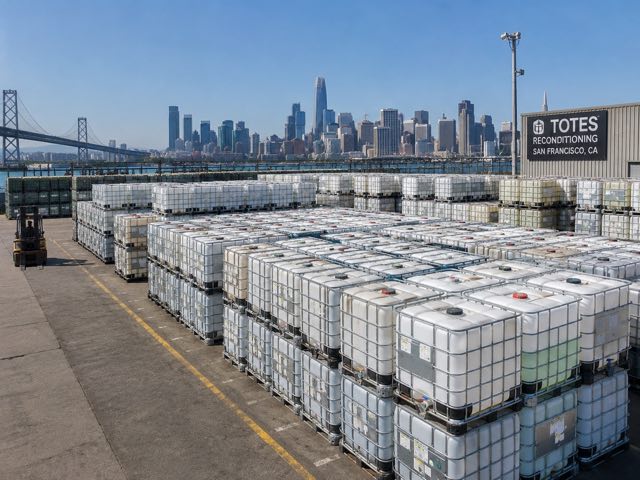
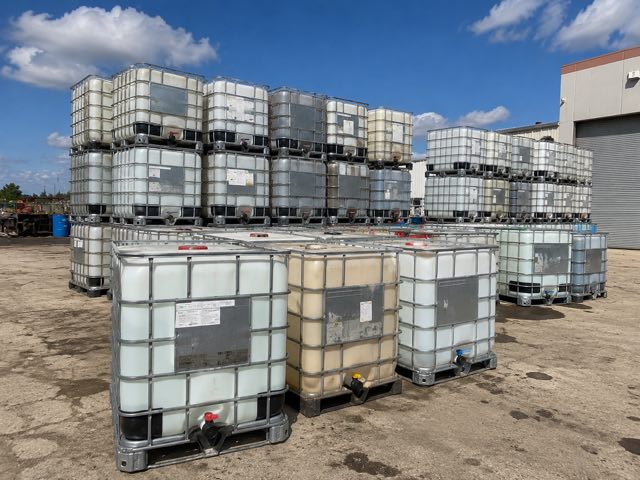
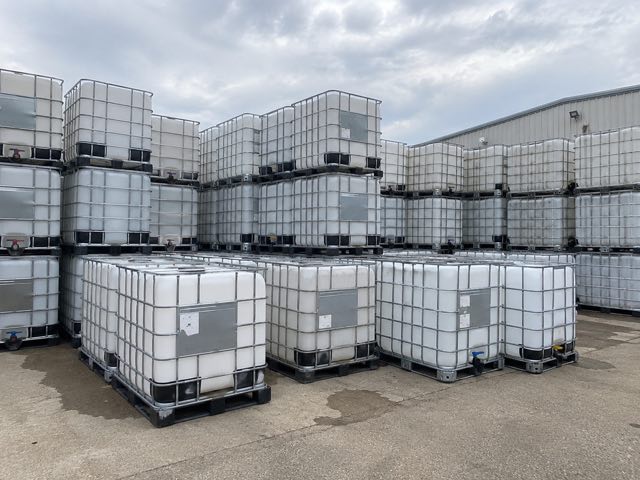
Switching a brewery cleaning programme from 55 gallon drums to a rotated fleet of sixteen reconditioned 275 gallon IBC totes cut chemical packaging waste by 91% by mass, reduced connections per week from 26 to 4, and saved $14,200 a year net of the container investment. The containers return to us for washing and go back out; the brewery never handles disposal.
What we were given
- 22,000 bbl annual production across two brewhouses
- 340 × 55 gallon drums of caustic and acid per year
- Drum storage occupying 210 sq ft of a tight production floor
- Disposal handled by a third party at $22 per drum
Four constraints
Disposal was the real cost
The drums themselves were a manageable line item. Paying $22 each to have 340 of them taken away, plus the floor space to store empties until collection, was not. Total disposal spend was running $7,480 a year before anyone counted the labour.
Twenty-six connections a week
Every drum change is a connection, a purge and an opportunity for a caustic splash. At six to seven drum changes a week across two brewhouses, the exposure was constant and entirely routine — which is exactly when people stop being careful.
Floor space in a building with none
The drum store and the empties awaiting collection occupied 210 square feet of production floor in a building where the brewery was already looking at leasing offsite space.
Chemical compatibility was not obvious
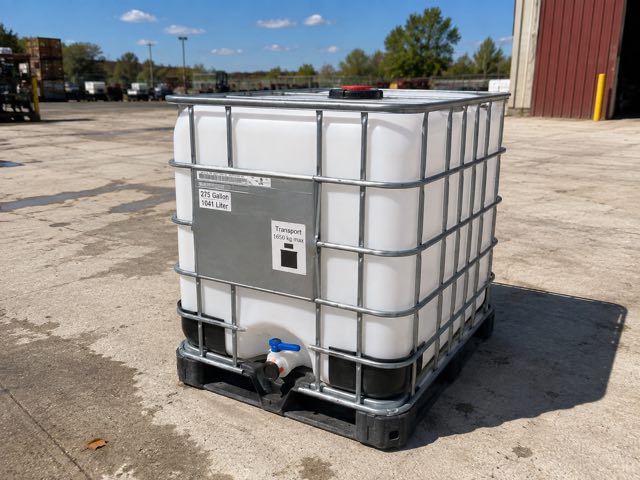
The brewery assumed IBCs were only for water. 50% caustic at a specific gravity of 1.53 grosses 3,633 lb in a 275 gallon tote, which is a genuine forklift question, and the gasket material needed checking rather than assuming.
The solution, step by step
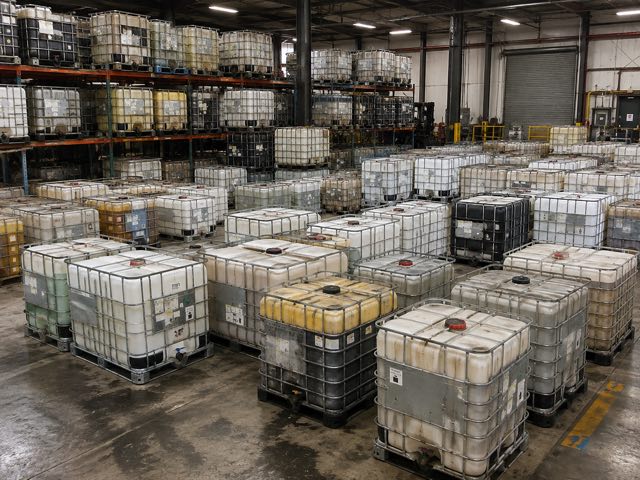
Sixteen Grade A washed industrial totes
Eight in service, eight in rotation. Sized so that a full changeover never leaves the brewery short, with unit numbers tracked at both ends.
EPDM gaskets and a compatibility check
EPDM handles caustic well and was already the right choice; the acid line needed a different gasket, which is precisely the sort of detail that gets missed when nobody asks. We checked both against the safety data sheets before quoting.
A bunded platform for four containers
Fabricated to their footprint with a sump sized to the largest container plus freeboard, forkable, with a grate deck. Replaced an improvised arrangement of drip trays.
A closed collection rotation
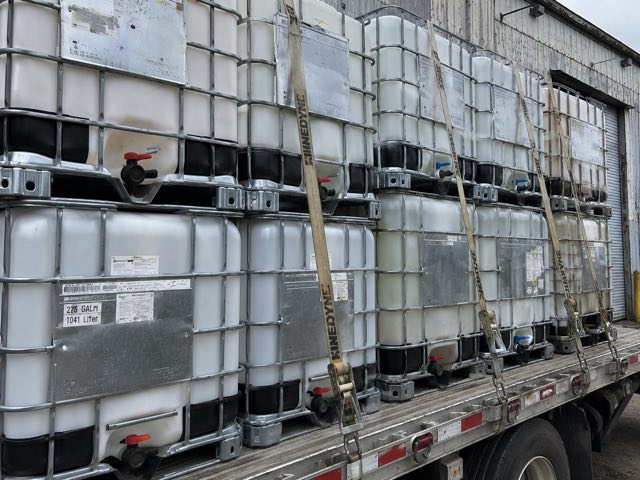
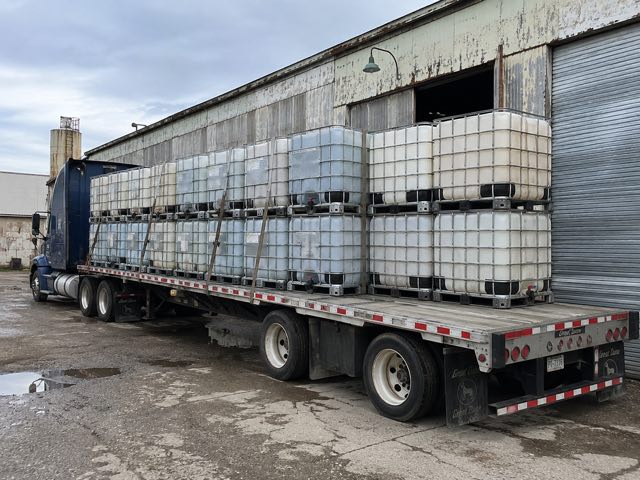
Empties go back on the truck that delivers full ones. They are washed here on the industrial line and returned to the pool. The brewery never handles disposal and never stores an empty for more than a week.
A forklift conversation first
Their 3,000 lb truck could not safely lift a full caustic tote. We sized the programme around delivering at 80% fill and confirmed the derated capacity before anything shipped, rather than after.
Feedback
“The thing nobody warned us about was how much of the old system was labour. We were not buying drums, we were buying a weekly hour of somebody moving them.”
— Production manager, Bayview brewery
What went wrong
Questions this project raises
Can reconditioned IBC totes safely hold caustic cleaning chemistry?
Yes, for the concentrations used in brewery CIP. HDPE is essentially inert to sodium hydroxide and phosphoric acid at cleaning strength, which is why caustic is one of the easiest duties to put a reused container on. What matters more than the bottle is the gasket and valve seal: we fit EPDM on caustic service rather than the nitrile that ships as standard, because nitrile hardens and weeps within a season. We also specify Grade A washed industrial rather than food-grade stock here — paying the food-safe premium for a chemical loop is money spent on documentation you will never use.
How many totes does a closed rotation actually need?
Take your weekly consumption, multiply by the round-trip time in weeks, and add one unit of buffer per chemical. This brewery uses roughly two totes of caustic and one of acid a week with a two-week turn, which is twelve in circulation plus four buffer, so sixteen. The commonest mistake is sizing on consumption alone and then discovering that half the fleet is always on a truck or in a wash bay. If you undersize, you end up buying drums again to cover gaps, which defeats the whole exercise.
What happens to the containers at the end of the rotation?
They come back to the Bancroft yard on the same truck that delivers the replacements, get washed on our closed-loop caustic circuit, and go back into the rotation. The brewery never signs a disposal manifest and never stores an empty. When a bottle finally fails pressure testing — usually after four to six years on this duty — we granulate the HDPE and recover the cage steel, and the customer sees a replacement rather than a waste problem.
Does a tote loop save money or just reduce waste?
Both, and the money is mostly labour rather than chemical price. This brewery saved $14,200 a year net of the container investment, and the largest single line in that was not the drums themselves but the weekly hour of somebody moving, staging and staging-out empties. Connections dropped from 26 a week to 4, which is 22 fewer chances of a spill. Chemical unit cost fell too, because bulk delivery into a tote is cheaper per gallon than the same product in drums.
Do we need bunded containment for a tote on caustic service?
In San Francisco, yes, and we would recommend it regardless. A 275 gallon container of caustic needs secondary containment sized to at least 110% of the largest vessel, and a fire department inspector will ask about it. We fabricate bunded platforms in house sized to the exact footprint, so the pad does not eat more floor than the totes do. Budget for it at the start rather than discovering it at the first inspection.