The short version
- Have the certificate of insurance ready — it is the most common first request.
- Unit-level traceability is what separates a supplier from a seller.
- Diversion reporting is free from us and increasingly required by their side.
- Business continuity questions are fair; single-site operations should answer honestly.
Two different buyers, two different conversations
Most of my day is spent talking to operational buyers — a yard foreman, a cellar master, a maintenance lead. They ask three things: what does it cost, when can I have it, will it hold my liquid. Those are excellent questions and the conversation takes ten minutes.
Then there is the other kind, where a procurement team or a quality function is involved. The list gets longer, the timeline gets longer, and — this is the part I did not expect when I started — the questions get better. Most of what procurement asks is a fair test of whether a supplier is a real operation.
The nine questions
| Question | What they are really testing | Our answer |
|---|---|---|
| Certificate of insurance, additional insured? | Whether you carry real cover | Yes, issued on request, general liability and cargo |
| Can you trace an individual container? | Whether records exist at unit level | Yes — unit number from intake to dispatch |
| What does the prior-contents record look like? | Whether the record is real or a claim | We send a sample before you order |
| How is the wash validated? | Whether "washed" means anything | Documented process, certificate per unit, line separation |
| Can you provide diversion reporting? | Their own ESG obligations | Quarterly, free, from real records |
| What happens if your site goes down? | Business continuity | Honest answer: single site, here is the mitigation |
| Who are your sub-tier suppliers? | Concentration risk | Named intake channels, audited |
| W-9, vendor onboarding, payment terms? | Administrative reality | Standard, net-30 on approval |
| Will you notify us of process changes? | Change control | Yes, in writing, before implementation |
Traceability is the one that separates suppliers
If I had to pick the single question that distinguishes a real reconditioner from somebody moving containers off a lot, it is this one: can you tell me the history of this specific container.
Every unit that crosses our scale gets a number. Weight, origin, declared prior contents, plate photographs, grade, wash line, wash date, leak test result, dispatch date and destination all attach to it. That record survives five years and I can pull any of it on request.
It is not glamorous and it is genuinely expensive to maintain — it is a meaningful share of the intake labour in our cost sheet. It is also the only thing that makes an honest answer possible when a quality team asks what was in the container they are about to fill.
The business continuity question, answered honestly
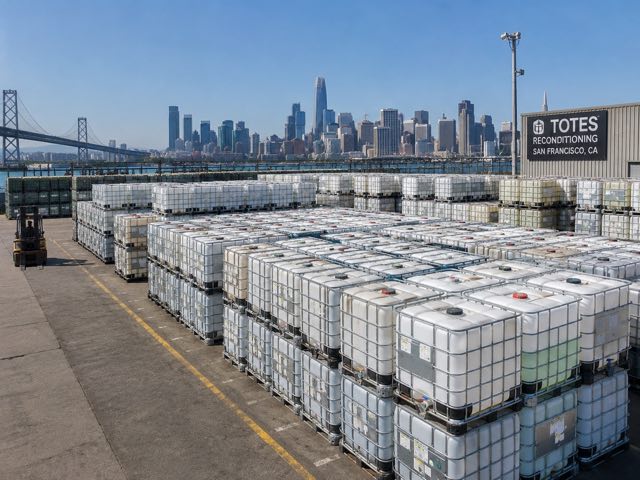
This is the one where I think most suppliers in our industry give a bad answer, so here is ours in full. We operate from a single site in Bayview. If that site becomes unavailable, we cannot wash, we cannot rebottle and we cannot dispatch.
What we can do: we hold stock, so short interruptions are absorbable. We have reciprocal arrangements with two other regional reconditioners for toll washing in an emergency, which we have used once, during a water main failure in 2023. And our records are held off-site, so a customer needing a wash certificate or an inspection record can get one even if the yard cannot open.
What we will not claim is redundancy we do not have. If your continuity plan requires dual-sourcing, dual-source — we would rather be half your supply reliably than all of it on a promise neither of us believes.
If you are the procurement team
- Ask for a sample prior-contents record and a sample wash certificate before the first order. Formats vary wildly and it is much easier to agree one up front.
- Ask whether food-grade and industrial containers share any equipment. The answer tells you more than any certificate.
- Ask for the diversion statement even if you do not need it yet. It costs nothing and it is easier to have the reporting running before someone asks for two years of history.
- Ask about seasonality. If your requirement lands in August and your supplier serves wine country, you want to know that in June.
- Send the safety data sheet with the RFQ. Compatibility checking is free and it removes the most common cause of a rejected delivery.
Written by Wesley Kam, quote desk lead at IBC Totes San Francisco. Published December 18, 2025. Spotted something wrong? Tell us — we would rather fix it than defend it.