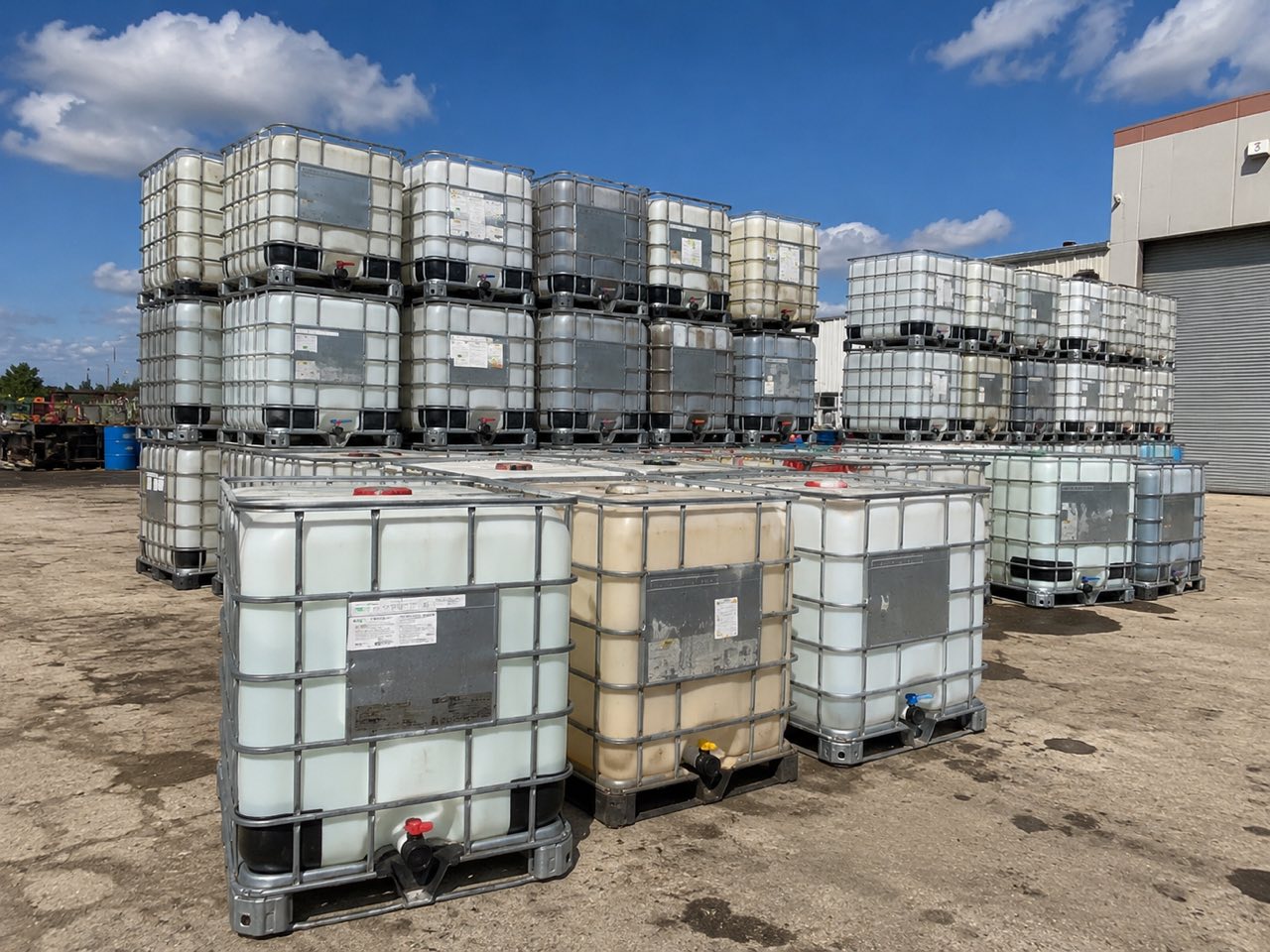
IBC totes delivered to Napa
Get a delivered price to Napa
Quantity, liquid and your postal code is enough. We confirm stock and freight before quoting, so the number you get is the number you pay.
We deliver used, reconditioned, rebottled and new IBC totes to Napa in 2–3 business days, with freight at $285. Harvest changes everything here. Food-grade leasing for August to November books out by June most years, and our North Bay freight lane fills up during crush. Reserve early — we will not bump a confirmed slot, which cuts both ways.
Getting containers to Napa
75–110 minutes via the 80 and the 37. Route: Up the 80 and across the 37, or through Vallejo on a bad traffic day.
- Distance from the yard51 miles
- CountyNapa County
- MethodOwn flatbed, weekly run
- Lead time2–3 business days
- Freight$285
- Typical drive time75–110 minutes via the 80 and the 37
- Liftgate service+$60, up to 4 totes at a time
- Collection of emptiesFree at 12+ units
- Will-call at the yardFree, Mon–Fri 7:00–4:30
- Expedite+$95 where stock is on the ground
Up the 80 and across the 37, or through Vallejo when the 37 is flooded, which it is more often than people outside the North Bay realise. Winter storms close that route with little warning and add forty minutes.
Napa runs are scheduled Monday and Thursday. During crush we add a Wednesday and, in a heavy year, a Saturday morning.
Valley-floor deliveries are straightforward. Hillside wineries above Silverado Trail and up toward Howell Mountain are not — narrow switchbacks, low branches and gravel drives that a loaded flatbed will not attempt.
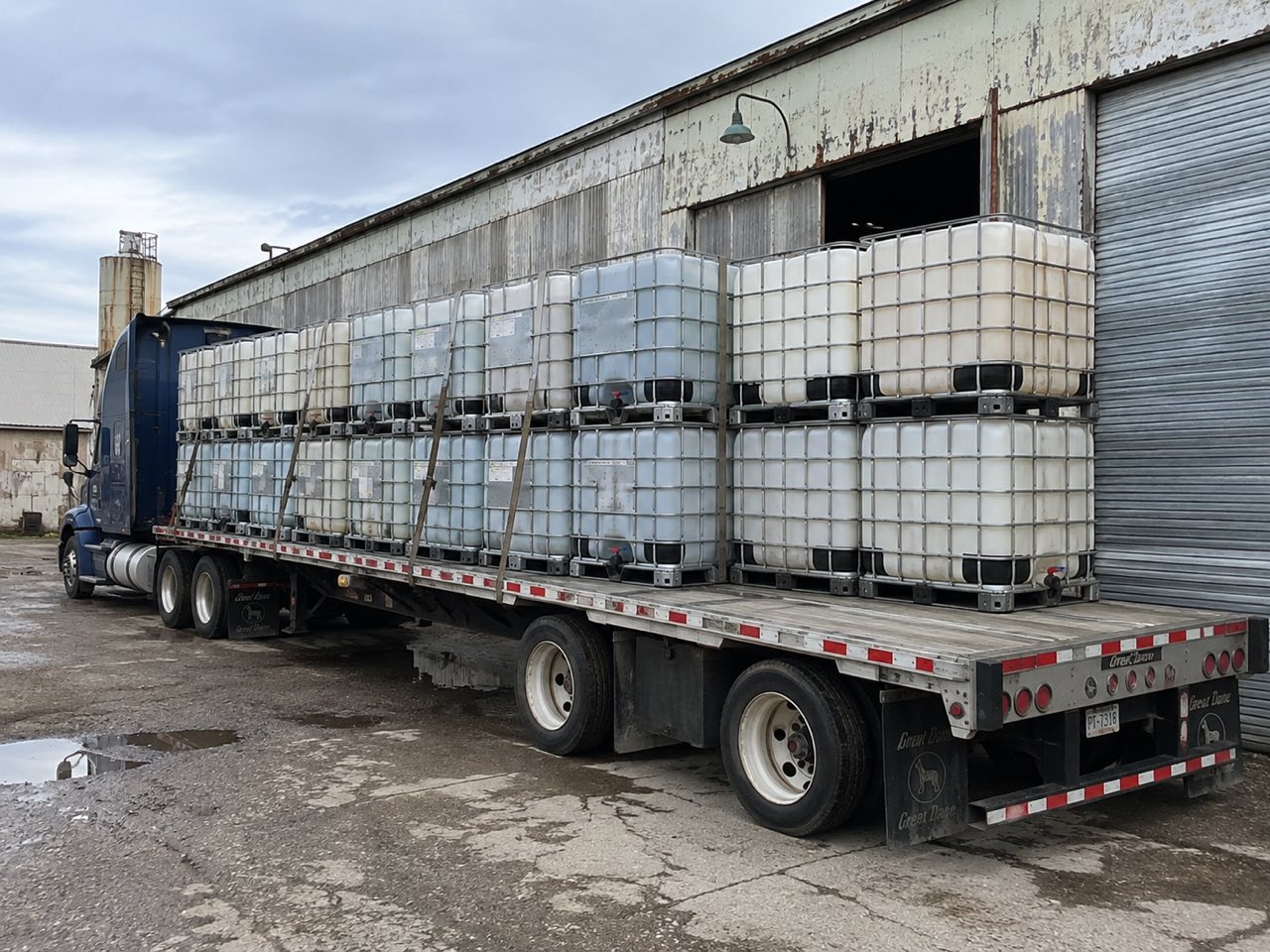
What our dispatcher checks for Napa
Written from the deliveries that went wrong, which is the only reliable source for this kind of list.
Hillside sites need a box truck
Crush windows move
Book leasing by June
Who buys containers in Napa
Share of our order book on this lane over the last twelve months, with what each sector actually orders.
| Sector | Share of lane | Usual grade | Typical order | What it is for |
|---|---|---|---|---|
| Wineries and custom crush | 44% | Grade A food-safe, leased | 20–60 units | Must, juice and finished-wine holding through crush |
| Agricultural inputs | 17% | Grade A washed, Grade B | 8–24 units | Liquid fertiliser, compost tea, foliar sprays |
| Hospitality and food service | 13% | Grade A food-safe | 2–8 units | Bulk oil, waste oil, kitchen chemistry |
| Olive oil production | 11% | Grade A food-safe | 4–16 units | Autumn pressing season, overlapping crush |
| Vineyard operations and water | 9% | Grade B and C | 6–20 units | Frost protection, dust control, equipment wash-down |
| Everything else | 6% | Mixed | 1–6 units | Trades, small producers, community projects |
Districts and postal codes on this lane
Areas we deliver into
Postal codes
Not listed? The lane still covers you — these are simply the codes that come up most often. Put your postal code in the form and we will confirm the freight before you commit.
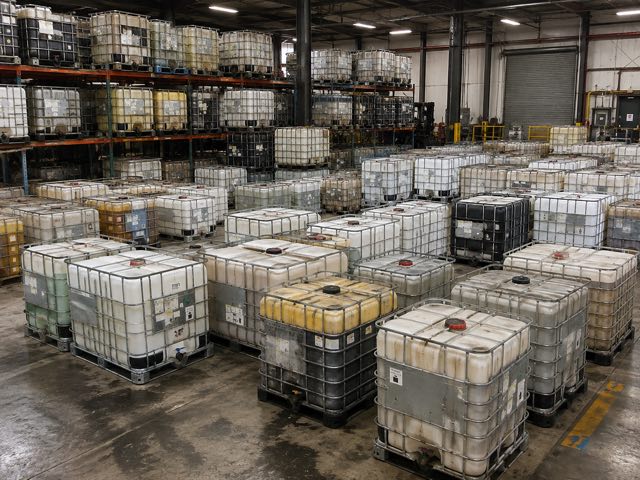
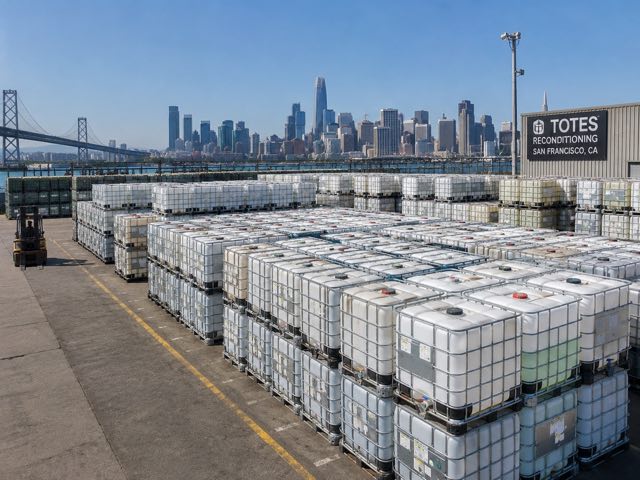
What we collect from Napa
Napa returns containers in a very seasonal pattern: almost nothing from December to July, then a flood in November and December as leases come back and owned fleets get cleared out.
A meaningful share of what we buy here has spent nine months in a field uncovered, which shows in the UV degradation. We still buy it — often at Grade B or C — and we say the same thing every year: a $48 cover roughly doubles outdoor service life.
- Empties collected per year≈ 2,600
- Share arriving November–December58%
- Share showing UV degradation47%
- Leased units returned≈ 900
- Average price paid$34 – $78 per unit
How demand moves in Napa
Worth knowing before you plan a purchase. The quiet months are when reconditioning slots and leasing stock are easiest to get.
| Period | Demand | What is actually happening |
|---|---|---|
| January – May | Low | The quiet window; best time to reserve and to recondition |
| June – July | Rising | Reservations close; leasing stock is committed |
| August – November | Peak | Crush. Confirmed slots only from the third week of August |
| December | Falling | Leases return; our heaviest intake month here |
Available in Napa
Everything in the yard is available on this lane. These are the four lines that move most often.
| Product | Grade | 275 gal price | Lead time to Napa | Documentation supplied |
|---|---|---|---|---|
| Reconditioned IBC totes | Grade A washed / B rinsed | $135 – $195 | 2–3 business days | Prior contents + grade record |
| Food-grade IBC totes | Grade A food-safe | $165 – $235 | 2–3 business days | Prior contents + wash certificate |
| Rebottled IBC totes | New bottle, reused cage | $195 – $260 | +2–4 days | Bottle certificate + cage record |
| New IBC totes | Virgin HDPE, new cage | $290 – $360 | +2–6 days | Manufacturer certificate |
| Cages, pallets and parts | Reclaimed, inspected | $28 – $85 | 2–3 business days | Condition note |
| Drums, 55 gallon | Reconditioned | $28 – $85 | 2–3 business days | Prior contents record |
Rules worth knowing in Napa County
Not legal advice — just the things that come up most often on this lane, and what we do about them.
Food-contact documentation
Custom crush facilities run product for many labels and get audited by their clients. Wash certificates tied to unit numbers drop straight into their HACCP files, which is why we issue them as standard rather than on request.
Agricultural container rinsing
Triple-rinsed agricultural chemical containers can usually enter the recycling stream, but the rules depend on the specific product and the rinse record. Send the label and we will tell you which path applies.
Napa County water use
Frost protection and irrigation draw rules affect how much on-site storage is worth having. Several customers have moved from drawing on demand to storing ahead of a frost event.
Send the safety data sheet
What Napa uses containers for
Wineries and crush facilities
Agricultural inputs
Hospitality
Olive oil production
IBC totes in Napa
How quickly can you deliver IBC totes to Napa?
2–3 business days. We run our own flatbeds to Napa, which is why the lead time is predictable rather than dependent on a carrier's schedule. Freight is $285. Requests landing before 10:00 AM during yard hours are quoted the same day.
Do you collect used IBC totes from Napa?
Yes. Twelve or more units earns free pickup, usually scheduled on the return leg of a delivery run — Napa is 51 miles from the yard, well inside our 250-mile collection radius. We pay $25–$95 per 275 gallon unit depending on condition and prior contents, in cash or as credit against your next order.
What grade of tote do most Napa customers buy?
Harvest changes everything here. Food-grade leasing for August to November books out by June most years, and our North Bay freight lane fills up during crush. Reserve early — we will not bump a confirmed slot, which cuts both ways.
Can I collect from the yard instead of paying freight?
Yes, and for smaller orders from Napa it is often the sensible choice. Will-call pickup at 1450 Bancroft Ave, San Francisco, CA 94124 runs Monday to Friday 7:00 AM to 4:30 PM and Saturday mornings by appointment. Bring straps and remember that an empty 275 gallon tote weighs 125 lb.
How many totes does a crush actually need?
It varies enormously with your press schedule and how much you move as juice rather than as fruit. As a rough guide, we see about one 275 gallon container per 800 to 1,200 cases of eventual production for a facility that moves a lot of juice, and far fewer for one that presses straight into tank. The more useful question is how many you need in the single busiest fortnight, because that is what sizes the fleet.
Should we lease or buy for harvest?
Lease, almost always. A forty-unit owned fleet costs roughly $4,900 per harvest once you amortise it and count the four to six units a year lost to sun and frost. The same forty leased for three months is about $1,870, delivered, collected and food-line washed with certificates. You also stop storing them for nine months, which is the cost nobody counts.
Can you deliver to a hillside winery?
Usually, on a box truck with a liftgate rather than a flatbed. Send us a photo of the last hundred yards of the drive — gradient, surface, overhanging branches and the turning space at the top. We will tell you honestly what we can get up there and split the load across two trips if that is the answer.
Other places on this run
We deliver to these towns on the same lane, usually on the same truck:
Cities with their own page