The short version
- Foot pump, not a hand tap — most health codes require hands-free operation.
- Greywater must be captured, never discharged to the ground or a storm drain.
- Use a food-grade donor container with a documented history.
- Check your specific county requirements before building; they vary.
Why build rather than buy
We started making these in 2023 after a Ferry Building vendor asked whether we could do something cheaper than the commercial portable sinks, which start around $900 and go up quickly. The first one was a favour. We have now built about thirty.
The gap in price is not because the commercial units are overpriced. It is because they are manufactured, and we are starting from a container that already exists and has failed a pressure test for liquid service — perfectly sound for holding water at atmospheric pressure, and otherwise on its way to the granulator.
The build
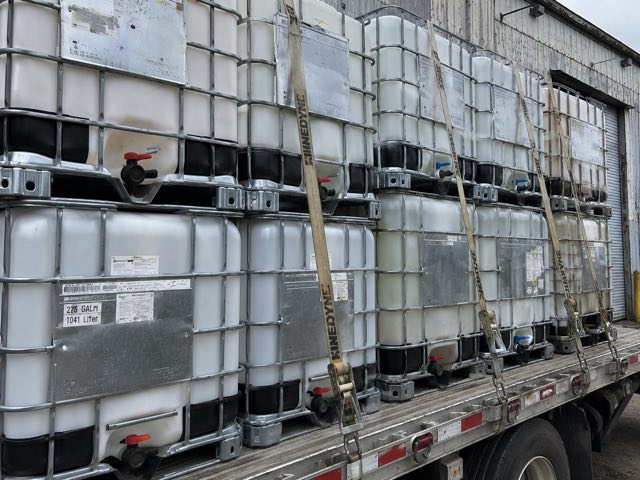
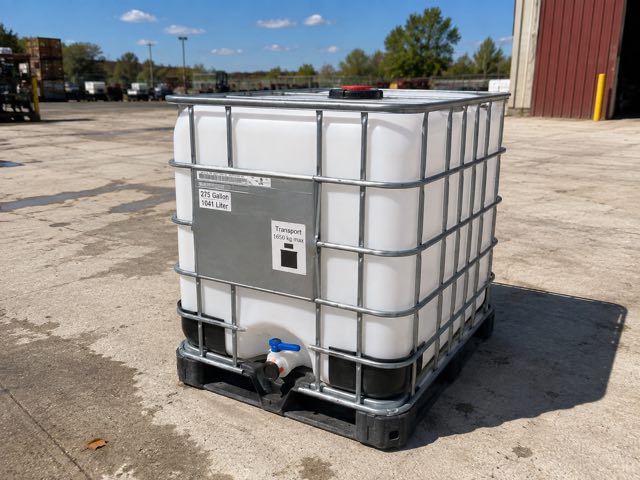
- Donor container275 gal, food-contact history, sanitised
- StandWelded steel, forkable, 4-way entry
- BasinStainless, 16 × 20 in, drop-in
- SupplyFoot pump, 12 V or manual diaphragm
- Greywater55 gal poly drum, sealed, quick-disconnect
- Soap and towelMounted dispensers, stainless brackets
- Fill pointScreened, lockable lid
- Overall footprint48 × 40 in
- Weight, full≈ 2,600 lb
- Build time≈ 5 hours
- Price$310
The whole thing sits on a 48 × 40 footprint so it moves with a standard pallet jack when empty and a forklift when full. Vendors fill it at home with a hose and it lasts a full market day for a busy stall.
The bits that health inspectors actually check
Requirements vary by county and I am not going to pretend one design satisfies every jurisdiction. But across the Bay Area markets we have supplied, the same five things get checked.
Hands-free operation
A foot pump, not a hand tap. Turning a tap with clean hands defeats the purpose and most codes say so explicitly. This is the most common reason a home-built station fails.
Warm water, where required
Some jurisdictions require water at a minimum temperature for handwashing. We can fit a 12 V inline heater, which adds about $140 and needs a battery. Check before you assume ambient is acceptable.
Greywater captured, not discharged
Waste water goes into a sealed drum, not onto the ground and never into a storm drain. Ours quick-disconnects so it can be emptied at an approved point. Discharging market greywater to a storm drain is a real enforcement issue in California.
Potable supply, documented
The tank must hold potable water and be sanitised. We use food-grade donor containers with a documented prior product, sanitise them before delivery, and provide the record. Inspectors do occasionally ask.
Soap and single-use towels, mounted
Dispensers fixed to the unit, not a bottle balanced on the edge. Trivial, and it is what gets written up.
Variants we have built
| Variant | Change from standard | Price | Used by |
|---|---|---|---|
| Standard market station | — | $310 | Farmers market vendors |
| Double basin | Two basins, split greywater | $430 | Prepared-food stalls |
| Heated | 12 V inline heater and battery box | $450 | Counties requiring warm water |
| Job site | Heavier stand, no basin, hose bib | $240 | Construction and landscaping |
| Event / festival | Four stations plumbed to one 550 gal tote | Quoted | Event organisers |
| Community garden | Simplified, rainwater fed, non-potable signage | $185 | Community groups |
The community garden version is worth a note: it is fed from harvested rainwater, it is clearly signed non-potable, and it is for washing tools and produce that will be washed again. Do not use a rainwater-fed station for handwashing where food is being handled.
If you want to build your own
Everything above is the design and you are welcome to it. Three pieces of advice from having got them wrong.
Build the stand before you cut anything, and check the basin height against the people who will use it — we made the first two too tall. Use a diaphragm foot pump rather than a bilge pump; bilge pumps do not self-prime reliably and you will be chasing air locks at seven in the morning. And size the greywater drum for a full day, then check it: a busy stall uses more than you think, and a full greywater drum with nowhere to go ends the trading day.
And use a container whose history you know. A wash station is one of the few upcycled builds where the water touches people directly.
Written by Tomás Beltrán, fabrication lead at IBC Totes San Francisco. Published March 19, 2026. Spotted something wrong? Tell us — we would rather fix it than defend it.