The short version
- Mention empties when you order — the truck is coming to you anyway.
- A round trip usually prices below a one-way once the collection credit is applied.
- The scheduling constraint is timing flexibility, not distance.
- Backhauling is the cheapest emissions reduction available to a business like ours.
Half of every trip used to be waste
When I arrived here in 2019 the freight operation was simple and expensive. A truck loaded at the yard, drove to Sacramento, unloaded, and drove back empty. Every delivery was a round trip that only earned on one leg.
Meanwhile a completely separate part of the business was arranging collections — going out empty to fetch somebody's used containers and bringing them back. Two half-utilised trips, often to the same corridor in the same week, planned by two different people.
The fix is obvious in retrospect and it took about eight months to actually implement, because the hard part is not the idea. It is the scheduling.
How a round trip is actually planned
Deliveries are batched by corridor, not by date
Napa and Sonoma run together. The 880 corridor — Hayward, Fremont, San Jose — runs together. Sacramento and Stockton share a run via the 205. A customer who wants Tuesday specifically pays for that; a customer who accepts "this week" joins a corridor.
Collections are held against corridors, not against dates
When somebody in Modesto offers us twenty empties, that collection sits in a pool waiting for a Modesto-corridor delivery. Usually it waits less than a week.
The truck is loaded for the outbound and sized for the return
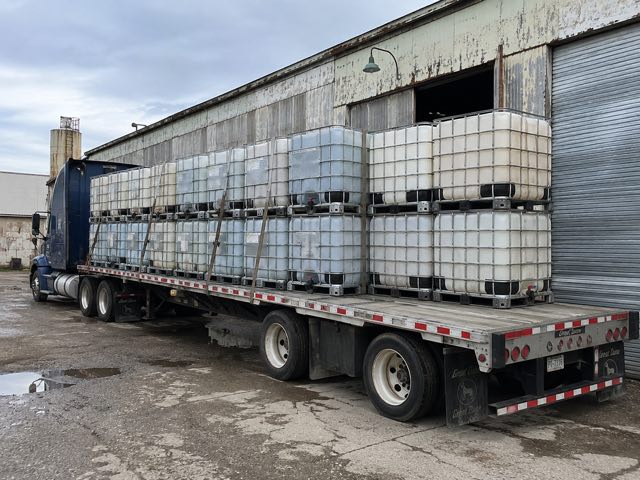
This is the bit that took practice. Forty containers out and twenty-six back is fine. Forty out and forty-five back is a second trip. The dispatcher has to know both numbers before the truck leaves.
Drivers carry straps and a grading sheet
Empties get a quick condition note at pickup so the yard knows what is arriving. It is not a full grade — that happens on the deck — but it catches the load that is obviously not what was described before it travels a hundred miles.
Anything left over goes on the next run
We do not send a second truck for six containers. The customer is told the collection window, not a date, for exactly this reason.
What it is worth
| Separate trips | Round trip | Difference | |
|---|---|---|---|
| Loaded miles, Sacramento run | 88 | 176 | +100% |
| Total miles driven | 352 | 176 | −50% |
| Diesel per container moved | baseline | ≈ 52% of baseline | −48% |
| Driver hours | baseline | ≈ 58% of baseline | −42% |
| Typical customer freight, 12 units | $320 delivery | $320 − collection credit | Often net negative |
That last row is the one customers care about and it surprises people. If you are taking a delivery and also have empties to sell, the credit for the empties frequently exceeds the freight charge for the delivery. The round trip costs you less than nothing in freight terms.
Why most suppliers do not do this
Two reasons, and neither is that they have not thought of it.
The first is that it requires being in both businesses. A distributor who only sells containers has nothing to collect. A waste handler who only collects has nothing to deliver. The round trip only exists if you buy and sell the same thing, which is a structural feature of a reuse yard rather than a clever operational idea.
The second is that it requires customers to be flexible on timing, and asking for that is uncomfortable. We ask anyway, and we explain why: a corridor slot is materially cheaper than a dedicated run and the saving goes to the customer. Most people, told the reason, take the window.
The environmental part, briefly
How to use this as a customer
- Mention empties in your first email, even approximately. "We think we have about twenty" is enough to start planning a round trip.
- Take a delivery window rather than a date where you can. It is worth real money and it is worth it to us too.
- Have the empties accessible when the truck arrives. A driver who has to wait forty minutes for a forklift operator eats the margin that made the round trip worthwhile.
- Ask for the collection credit to be shown separately on the quote. It should be, and if it is not, ask why.
Written by Ingrid Halvorsen, freight & logistics at IBC Totes San Francisco. Published February 26, 2026. Spotted something wrong? Tell us — we would rather fix it than defend it.