The short version
- Empty totes are priced on volume, not weight — density is the whole story.
- Double-stacking empties can move you a full freight class.
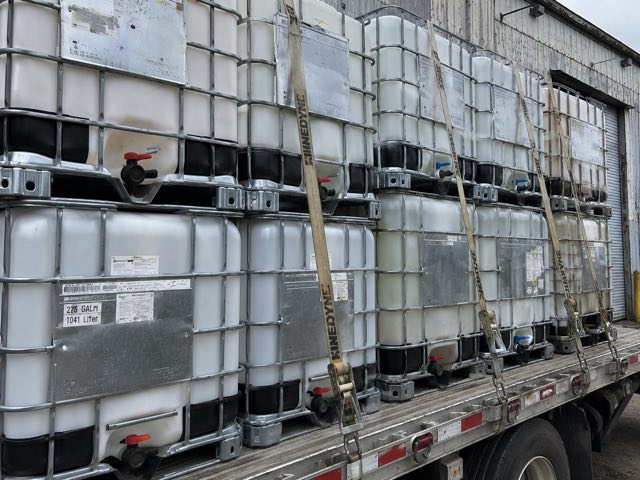
- Above about forty units, a dedicated flatbed beats LTL on cost and on damage.
- Consolidating one order beats chasing unit-price discounts.
Freight is priced on density, and empties have none
Less-than-truckload freight in North America is classified under the NMFC system, and for most commodities the dominant input is density — pounds per cubic foot. A carrier is selling space on a trailer. A heavy, dense pallet uses little space and pays a low class. A light, bulky one uses a lot and pays a high class.
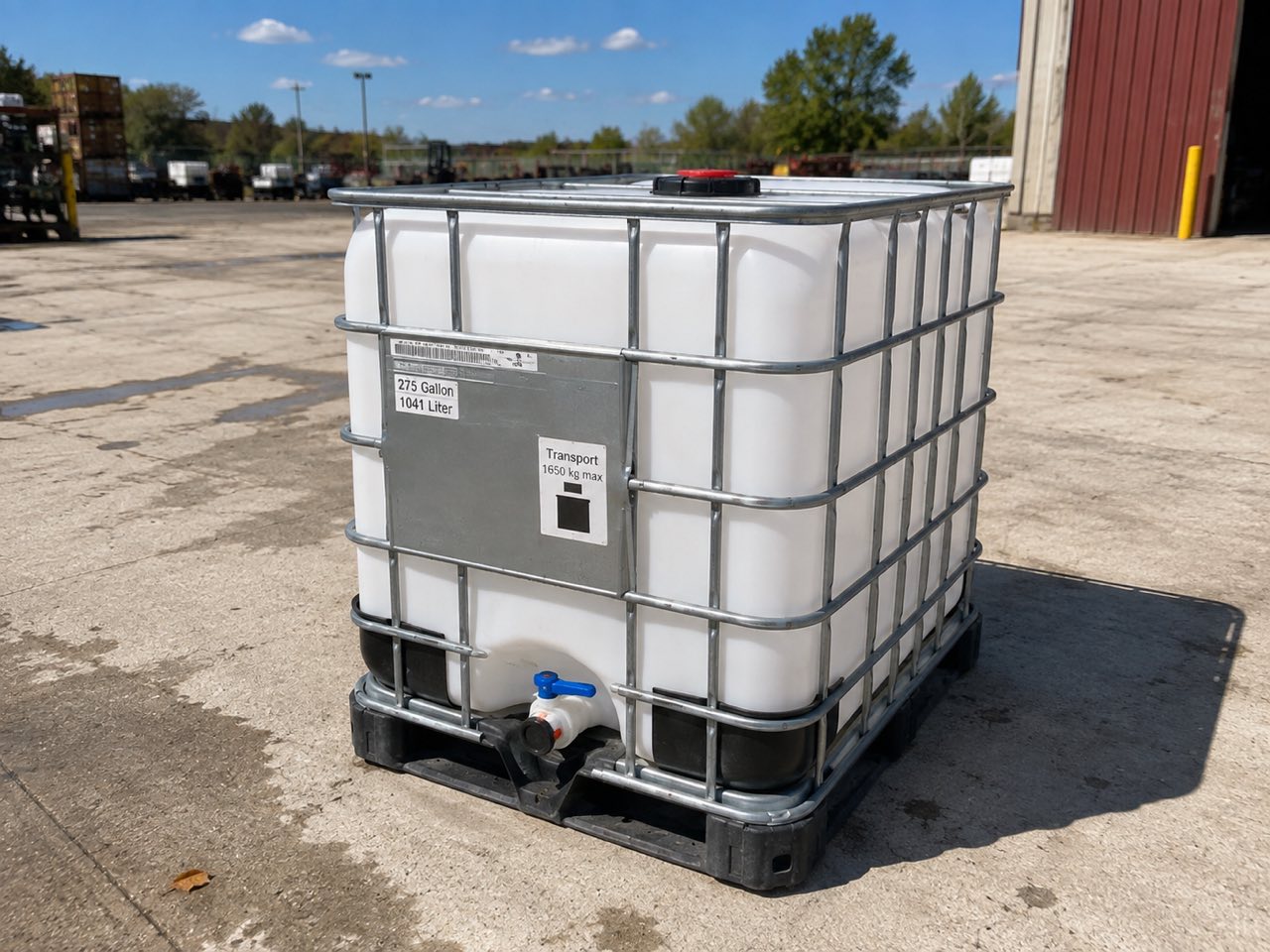
An empty 275 gallon IBC is 125 lb occupying roughly 13 cubic feet. That is about 9.6 lb per cubic foot, which lands it in the class 150 to 175 band depending on the carrier and the exact packaging. In practical terms you are paying to move a box of air with a plastic tank drawn around it.
| Configuration | lb / cu ft | Typical class | Relative LTL cost |
|---|---|---|---|
| Single empty tote, unstacked | 9.6 | 175 | Highest |
| Empties double-stacked, wrapped | 19.2 | 125 | ≈ 70% |
| Empties quad-stacked in a van | 38.5 | 85 | ≈ 50% |
| Full tote of water | 186 | 50 or by weight | Priced on weight |
Double-stacking is the single biggest lever
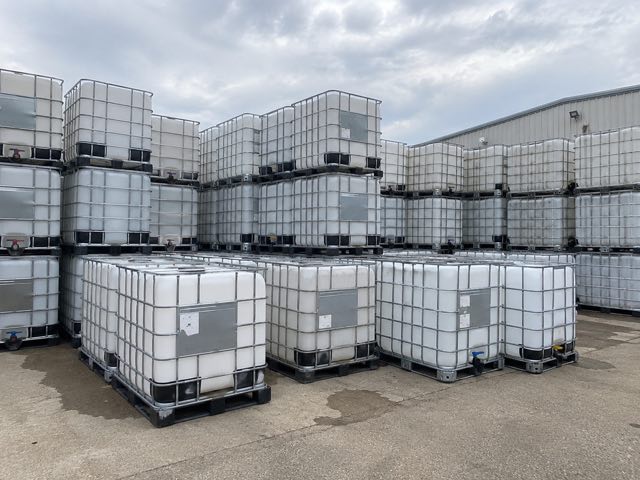
Empty composite IBCs stack four high safely. Most LTL shipments I see arrive to us stacked one or two high because whoever loaded them did not think about class, and that decision is frequently worth more than the price they negotiated per unit.
The caveats are real but manageable: stack empties only on matched pallet types, wrap the stack so it behaves as one unit, and do not stack anything on top of a partially filled container. And check the receiving end can get a four-high stack through the door before you build one.
What we do on our own outbound
Where LTL stops making sense
There is a crossover point, and it is lower than most buyers expect. Somewhere around forty units, a dedicated flatbed beats LTL on price, and it beats it comprehensively on damage.
| Quantity | Best method | Why |
|---|---|---|
| 1–8 | Our own truck or will-call | Flat local rate; LTL overheads dominate |
| 9–24 | Our flatbed, or LTL if far | Depends entirely on distance |
| 25–39 | Compare both | Genuinely close; ask for both numbers |
| 40–80 | Dedicated flatbed | Full-load pricing, no terminal handling |
| 80+ | Multiple flatbeds | Empties double-stack to 80 per 53 ft trailer |
The damage argument matters as much as the price. LTL freight is handled at terminals — unloaded, sorted, reloaded, sometimes several times. Every one of those touches is an opportunity for a forklift tine to find a bottle. A dedicated flatbed is loaded once at our dock and unloaded once at yours.
Full totes have the opposite problem
Everything above inverts once there is liquid in the container. A full 275 gallon tote of water is 2,418 lb in the same 13 cubic feet — 186 lb per cubic foot, which is dense enough that you are priced on weight rather than class.
Then the constraint becomes gross vehicle weight. A 53 ft flatbed reaches 80,000 lb GVW at roughly 18 to 20 full water totes depending on the tractor, and considerably fewer with anything denser. You will run out of legal weight long before you run out of deck.
This is why almost everybody ships containers empty and fills on site, and why we quote empty freight for essentially every order that is not a local delivery of pre-filled product.
Four things that reduce a freight bill
- Consolidate. One order of forty beats four orders of ten by more than any volume tier we offer on the containers themselves.
- Double-stack, and tell the shipper you want it done. It is not automatic.
- Give us empties to collect on the return leg. Roughly 71% of our outbound miles come back loaded, and a round trip prices better than a one-way.
- Be flexible on the date. A delivery that can join an existing scheduled run to your area costs materially less than one that generates a dedicated trip.
Written by Ingrid Halvorsen, freight & logistics at IBC Totes San Francisco. Published March 18, 2025. Spotted something wrong? Tell us — we would rather fix it than defend it.