The short version
- Grade B is about condition and cleanliness, never about structural integrity.
- Every Grade B is leak-tested exactly like a Grade A.
- A $38 toll wash frequently turns a Grade B into an A — cheaper than the price gap.
- Buy the lowest grade your application genuinely needs and spend the difference on spares.
What Grade B actually is
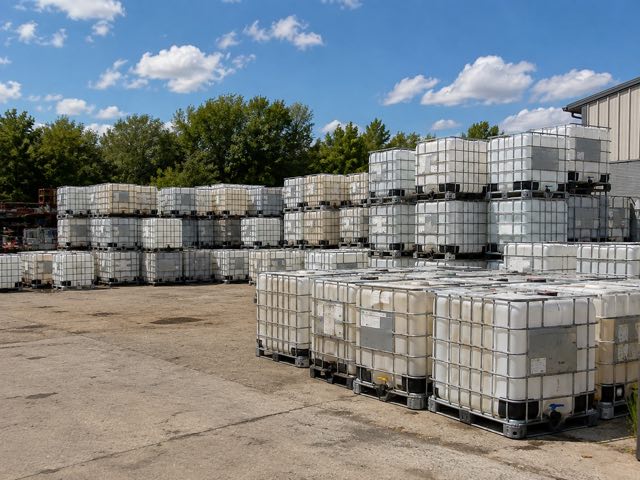
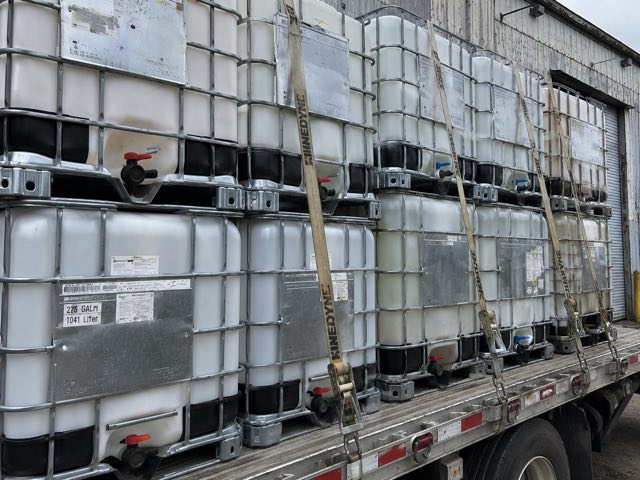
A Grade B container in our yard has been rinsed rather than run through the full caustic wash. It has a named, non-hazardous prior product recorded against its unit number. It usually shows staining, sometimes has a faint residual odour, and may have minor cage dents or a repaired weld.
What it is not, and this is the part buyers do not believe: structurally different. Every Grade B is sealed and held at 3 psi before it ships, exactly like a Grade A. It has passed the same crazing inspection, the same base check and the same cage weld review. It got a new EPDM gasket like everything else that leaves here.
The grade describes cleanliness and cosmetics. It does not describe whether the container will hold your liquid.
Where a Grade B is exactly as good
| Application | Grade A price | Grade B price | Real difference in performance |
|---|---|---|---|
| Construction site water | $165 | $125 | None |
| Dust suppression | $165 | $125 | None |
| Liquid fertiliser and ag inputs | $165 | $125 | None |
| Irrigation and compost tea | $165 | $125 | None |
| Wash water and greywater | $165 | $125 | None |
| Ballast and counterweight | $165 | $125 | None |
| Rain capture for ornamentals | $165 | $125 | None |
| Beverage or food product | $165 | $125 | Substantial — buy the A |
| Anything with a customer audit | $165 | $125 | Substantial — buy the A |
Seven of those nine rows say "none". That is roughly the shape of our order book too, and yet Grade B is only 22% of what we sell against 41% for Grade A. Some of that gap is genuine requirement. A good chunk of it is people buying reassurance.
Which is partly my fault
When somebody asks for "good quality used totes" the path of least resistance is to quote Grade A. It is easier, the customer is happy, and nobody complains about a container that is cleaner than it needed to be.
But a construction customer buying six Grade A totes for site water has spent $240 more than they needed to on containers that will be dented by a skid steer within a quarter. That money would have been better spent on two spare Grade Cs.
The question I try to ask now
And you can upgrade one later for less than the price gap
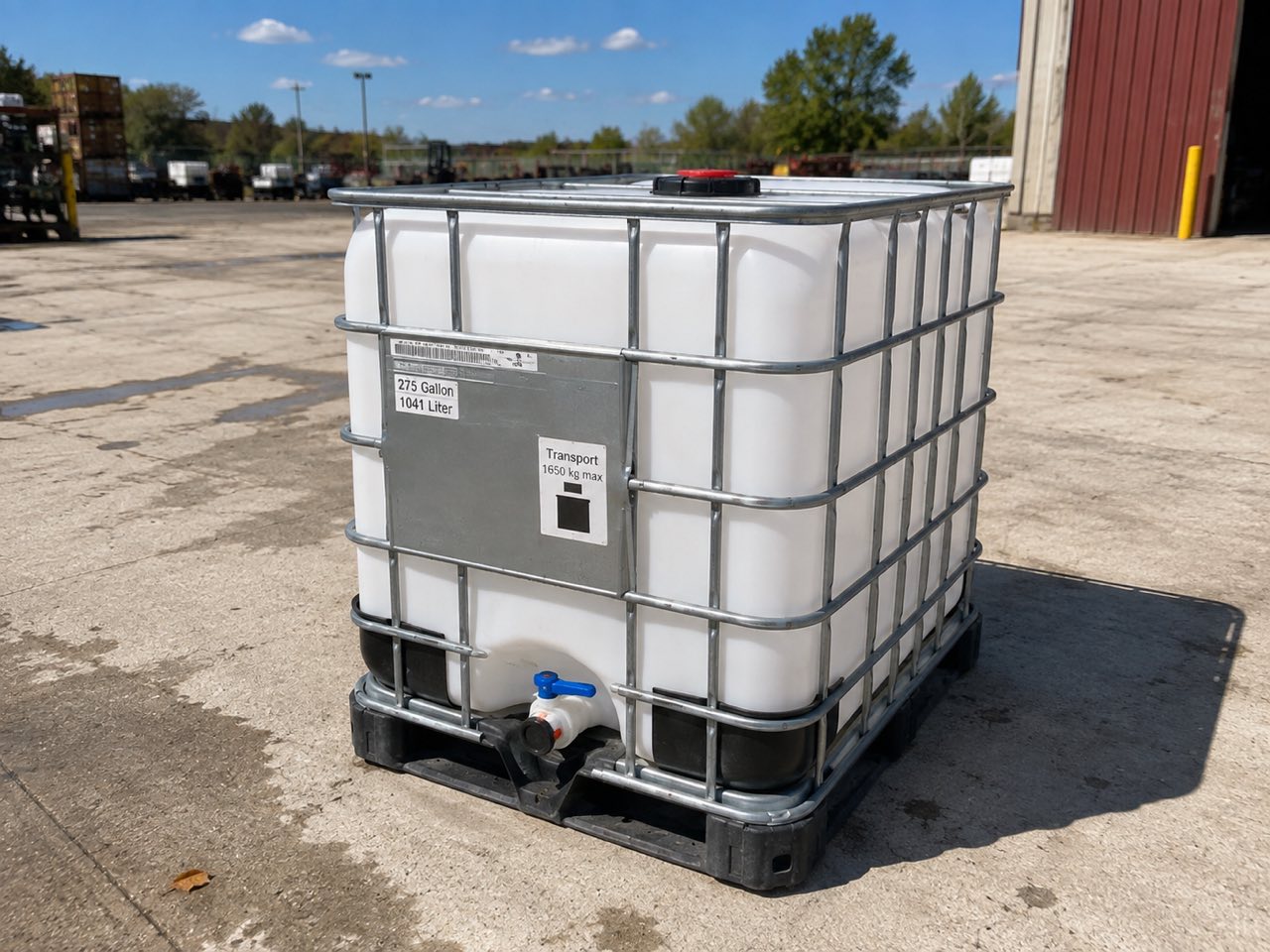
Here is the arbitrage almost nobody uses. The gap between Grade B and Grade A on a 275 gallon container is about $40. A toll wash on our industrial line is $38.
If the Grade B problem is staining and odour rather than structural damage — which it usually is — a proper caustic wash brings it out as an A, with a wash certificate. You have paid $163 instead of $165, so on a single unit it is a wash in both senses. But you have deferred the decision until you know what the container is actually for, which on a fleet is worth real money.
Where it genuinely pays is a mixed fleet: buy twenty Grade B, use fifteen as they are, and send five through the wash when a job needs them clean. That is $2,690 against $3,300 for twenty Grade A.
When not to do this
- Anything touching food, beverage, cosmetics or potable water. Buy Grade A food-safe, or rebottled.
- Anything a customer or auditor will inspect. The staining will start a conversation you do not want to be having.
- Long-horizon storage where you want the full remaining service life. Grade A stock is generally younger.
- Anywhere residual odour would transfer to your product — which includes some surprising cases, like storing packaging materials.
Outside those four, ask for the B. Worst case I will talk you back up to an A and explain why.
Written by Wesley Kam, quote desk lead at IBC Totes San Francisco. Published April 9, 2025. Spotted something wrong? Tell us — we would rather fix it than defend it.