The short version
- The purchase price of the empty is about 69% of our total cost per unit.
- Failed units are the single most misunderstood line — we absorb 14% attrition.
- Labour is cheaper than most people assume; water and energy are much cheaper than they assume.
- Volume does not reduce our per-unit cost much. Freight consolidation does.
Why publish this at all
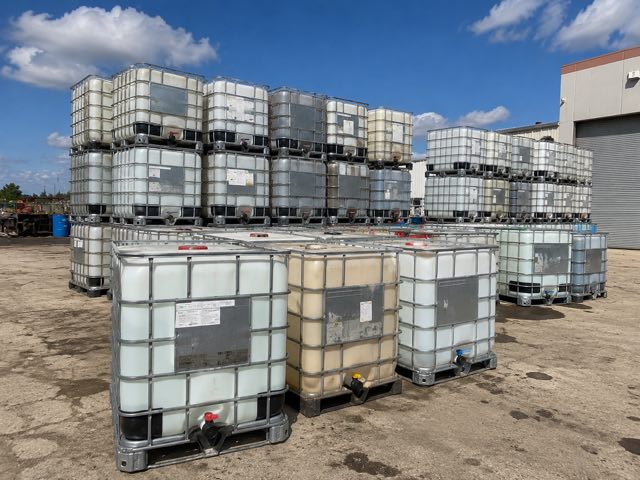
Twice a month somebody asks why a used tote costs $165 when we "got it for nothing." The assumption underneath is that reuse is free — that because no factory was involved, the container arrived at our gate as pure margin. It did not, and the misunderstanding costs us goodwill during price conversations that ought to be simple.
So here is the cost sheet for a single Grade A washed 275 gallon industrial tote, averaged across the twelve months to February 2024. The numbers move with scrap steel prices and with what we pay for empties, but the shape of it has been stable for years.
The cost sheet
| Line | Per unit | Share | Notes |
|---|---|---|---|
| Purchase of the empty | $58.00 | 69% | Weighted average across Grade A/B/C intake |
| Collection freight | $6.20 | 7% | Net of backhaul savings |
| Intake, grading, logging | $3.40 | 4% | 9 minutes of a grader’s time |
| Wash labour | $5.80 | 7% | 14 minutes across two bays |
| Water and energy | $2.90 | 3% | 7 gal fresh water, ~4 kWh |
| Detergent and caustic | $1.60 | 2% | Per-unit share of the circuit |
| New EPDM gasket | $2.10 | 3% | Fitted to every single unit |
| Valve or lid replacement | $1.90 | 2% | Fitted to about 30% of units |
| Attrition absorbed | $8.10 | 10% | Units that fail after we have paid for them |
| Total cost per saleable unit | $84.00 | 100% | Before overhead, lease or sales cost |
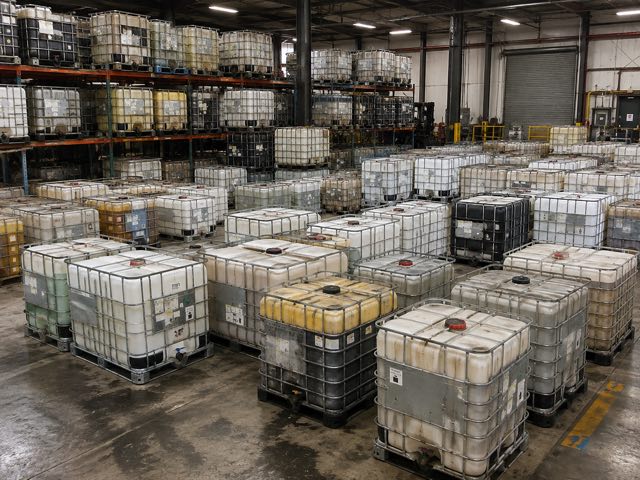
The line people never guess is attrition. We buy containers on a photograph and a description, and roughly 14% of what we pay for turns out to be unsaleable once it is on the grading deck under proper light — a stress-crazed corner, a base ring that has corroded through, a prior product nobody disclosed. We still paid for those. The cost gets spread across the units that survive.
Labour is cheaper than you think, and water is much cheaper
Wash labour is $5.80 per container. That surprises people who imagine somebody scrubbing a tank by hand for an hour. In practice a bay processes a container in about fourteen minutes of attended time, and one tech runs two bays. The physical work is loading, connecting and inspecting; the actual cleaning is done by heat, caustic and dwell time while the tech is doing something else.
Water and energy together are $2.90. Before we built the closed loop in 2012 that line was closer to $9 and it was the fastest-growing cost in the business. San Francisco water and sewer charges are not gentle, and we were putting 110 gallons down a drain per container. Now we put about seven gallons of fresh water in and recover 94% of the circuit. The separator paid for itself in five years and has been quietly printing money since.
The counter-intuitive part
Why buying fifty does not halve the price
Our tiering starts at twelve units and improves again at forty-eight, but the discount is modest — around 10% and 16% respectively. Customers who have bought manufactured goods in volume expect much steeper curves, and the reason they do not get one here is that almost none of our cost is fixed.
A factory making new totes spends heavily on tooling and then very little per additional unit. We spend almost nothing on tooling and $84 per additional unit, every time, because every container is individually bought, graded, washed and tested. There is no economy of scale hiding in a wash bay.
- What volume genuinely does reduce: freight per unit, which falls sharply on a full flatbed.
- What volume genuinely does reduce: our sales and quoting time, which is why the tiers exist at all.
- What volume does not reduce: the purchase price of the empties, the wash, the gasket or the attrition.
- What reduces cost more than volume: giving us empties back, which lowers our intake price on the next batch.
What this means if you are buying
Three practical conclusions. First, be suspicious of prices far below the market for a stated grade — at $95 for a "Grade A washed" tote somebody is either mislabelling the grade or skipping the wash, and both of those problems arrive at your dock rather than staying at theirs.
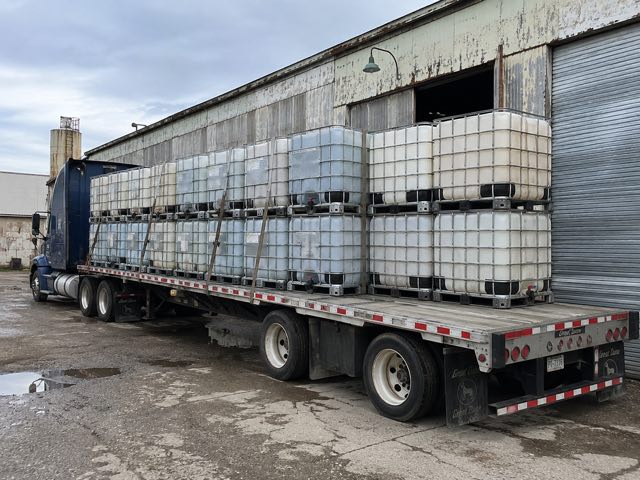
Second, if you have empties, mention them. A trade-in changes our intake cost on the next batch and it is the one lever that moves our pricing more than order size. Third, consolidate freight rather than chasing unit price. Moving forty containers on one flatbed instead of twelve on three trucks saves more money than any tier we offer.
And if the arithmetic still looks tight to you, look at the other end: a new 275 gallon caged tote is $290 to $360. Everything above is the story of why we can sell the same working capacity for less than half of that, and still keep twenty-three people employed in Bayview.
Written by Marisol Trejo, founder & managing partner at IBC Totes San Francisco. Published March 12, 2024. Spotted something wrong? Tell us — we would rather fix it than defend it.