The short version
- Steel is 62% of an IBC by weight, plastic about 44% of the rest.
- Scrap prices set the floor under what any empty is worth to anybody.
- When steel rises, rebottling gets relatively cheaper against new.
- A straight cage is worth far more than its scrap value — do not scrap repairable frames.
Where the mass actually is
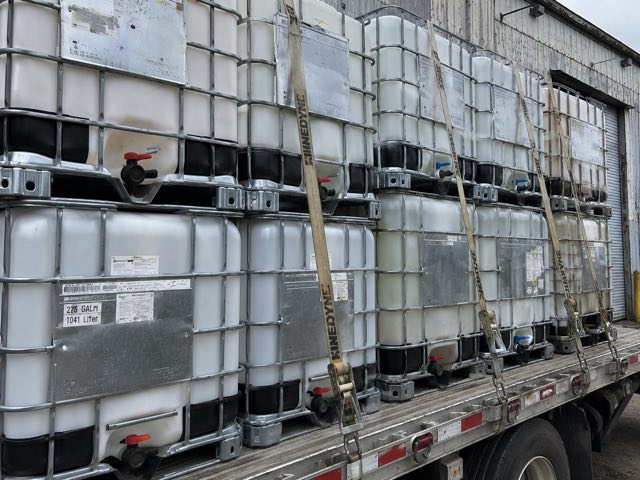
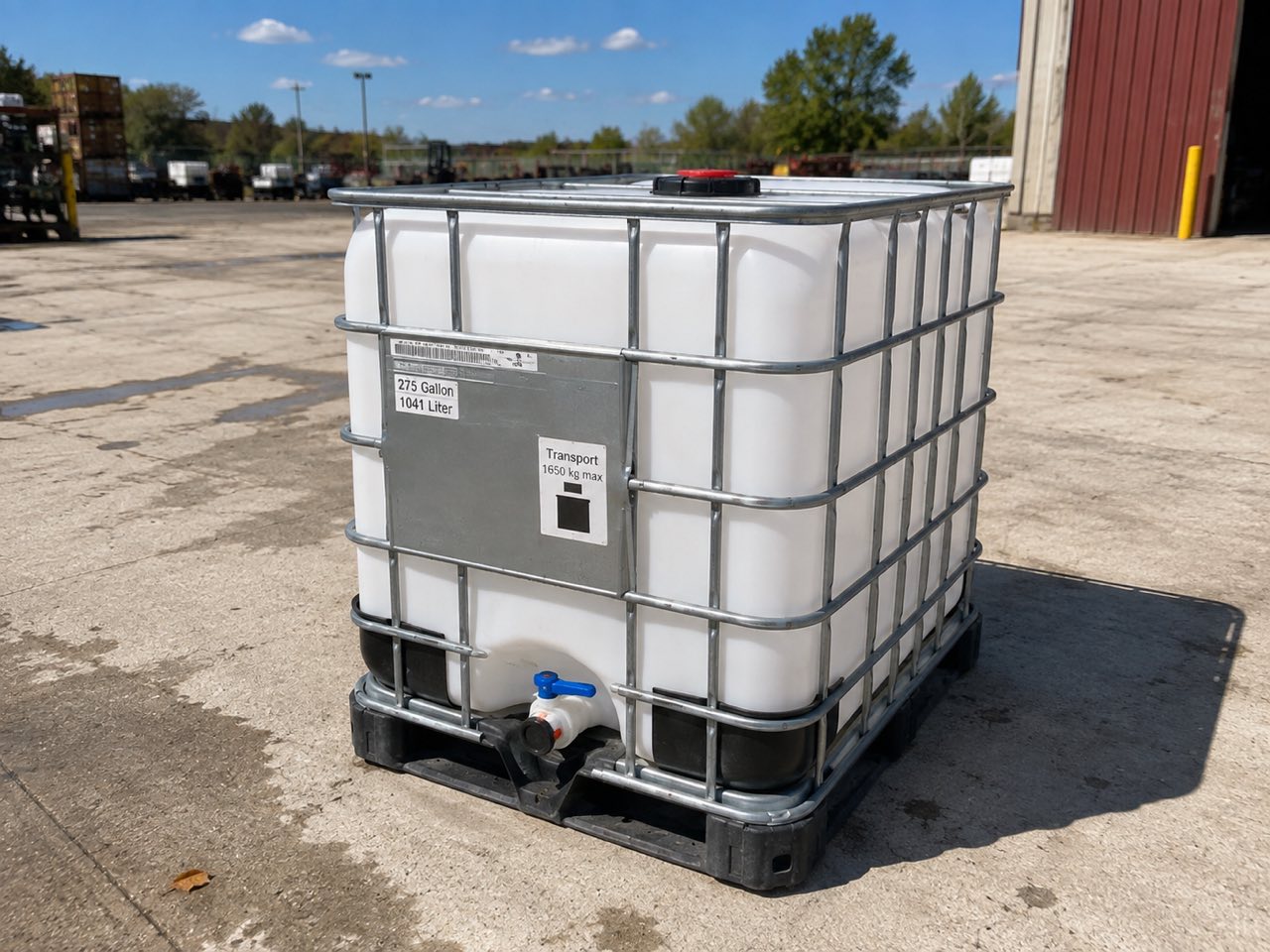
Ask somebody what an IBC tote is made of and they say plastic. It is a reasonable answer — the plastic is the part that does the work and the part you look at. It is also, by weight, the minority of the container.
| Component | Weight | Share | Material |
|---|---|---|---|
| Bottle | ≈ 55 lb | 44% | HDPE |
| Cage | ≈ 62 lb | 50% | Galvanised steel tube |
| Pallet runners / base | ≈ 16 lb | 12% | Steel |
| Composite pallet deck | ≈ 14 lb | 11% | HDPE |
| Valve, lid, gasket | ≈ 3 lb | 2% | Poly and elastomer |
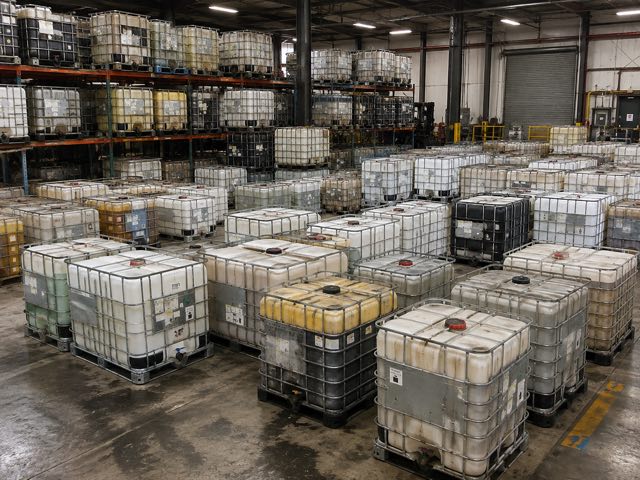
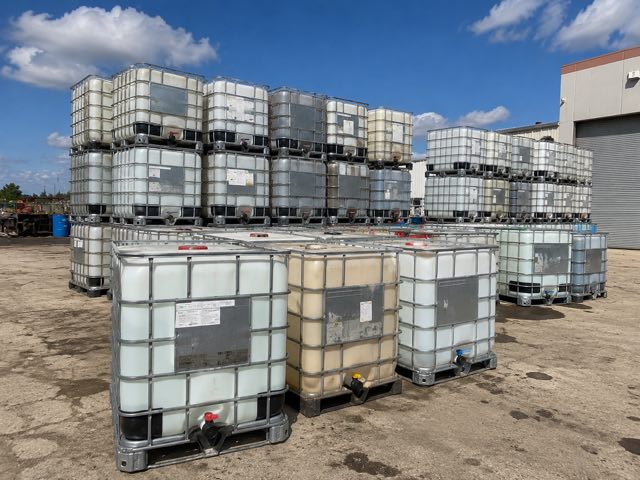
Roughly 78 lb of steel per container. Across the 39,000-odd containers we handled last year that is something like 1,500 tonnes of steel passing through a 3.4-acre yard in Bayview — which is why what happens in the scrap market matters to us far more than it seems like it should.
Scrap sets the floor under every empty
Here is the mechanism. Any empty IBC has a value that is not zero, because somebody will always cut it up and sell the steel. That scrap value is the floor. Everything a reconditioner pays above it is payment for the container being reusable rather than merely recyclable.
When regional scrap prices rise, the floor rises. Sellers of empties have a better outside option, so we have to pay more to keep containers in the reuse stream rather than watching them go to a shredder. When scrap falls, the reverse — and the reuse stream gets relatively cheaper to supply.
| Scrap price environment | Floor per container | What we pay for a Grade B | Reuse premium |
|---|---|---|---|
| Low | ≈ $8 | $40 – $52 | ≈ 5–6× |
| Mid | ≈ $12 | $45 – $58 | ≈ 4× |
| High | ≈ $18 | $52 – $68 | ≈ 3× |
The important observation is that the reuse premium compresses as scrap rises. In a high-scrap environment more containers get shredded, because the gap between "sell it for scrap today" and "sell it to a reconditioner" narrows. That is bad for us and, more to the point, bad for the material.
Which is why rebottling economics move with steel
A rebottled container reuses about 78 lb of steel and buys a new bottle. A new container buys both. So the value of rebottling is essentially the avoided cost of new galvanised steel — and that tracks the steel market directly.
When steel is expensive, new containers get more expensive faster than rebottled ones do, because a larger share of a new container's cost is steel. The gap widens and rebottling looks better. When steel is cheap, the gap narrows and the case for rebottling rests more on lead time and less on price.
This is worth knowing if you are planning a fleet purchase across a year or two. It is not worth trying to time — nobody in this business has ever successfully timed the scrap market — but it explains why the price relationship between new and rebottled moves around more than the relationship between Grade A and Grade B.
Two practical consequences
First, and I say this to every customer clearing out a yard: do not send repairable cages to scrap. A straight galvanised cage is worth $45 to $85 to us as a component and about $12 to $18 as scrap steel. Even a bent one is usually worth more straightened than shredded. The difference on twenty containers is real money.
Second, if you are selling empties, ask about credit rather than cash. Taking the value as credit against your next order typically nets 10 to 15% more than the cash price, and it insulates you somewhat from where the scrap market happens to be sitting that month.
The thing that would genuinely help
Written by Marisol Trejo, founder & managing partner at IBC Totes San Francisco. Published September 4, 2025. Spotted something wrong? Tell us — we would rather fix it than defend it.