The short version
- Photograph the UN plate square-on and in focus — it is the single most valuable image.
- The product label determines whether a container is food-grade candidate or industrial.
- A straight cage is worth more than a clean bottle; cages are harder to replace.
- Tell us about anything unusual. Surprises reprice a lot; disclosed problems rarely do.
Why photographs work at all
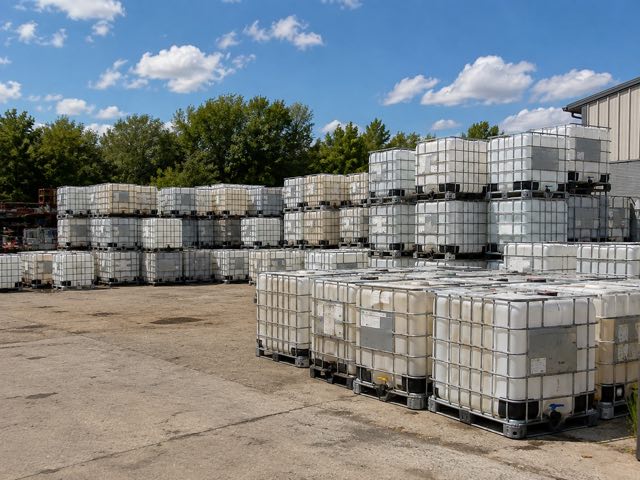
People are often surprised that we will quote a firm price on forty containers we have never seen. The reason it works is that used IBC value is driven by a small number of binary facts, and almost all of them are visible.
What was in it. Is the plate legible. Is the cage straight. Those three answers move the price from $25 to $95 per unit, and two photographs answer all three about eight times out of ten.
Photograph one: the UN plate
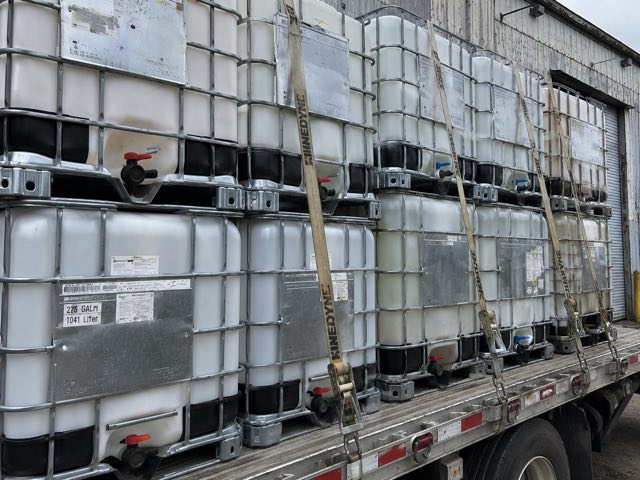
Square on, in focus, close enough to read. This is the highest-value image you can send and the one people most often get wrong — a blurry angled shot of a plate tells me nothing except that the plate exists.
What I read off it: the design type, which tells me it is a liquids IBC and whether it was built to be stacked. The packing group, which tells me what class of regulated liquid it may carry. The manufacture date, which tells me both the container's age and whether it has periodic testing left on the clock. And the manufacturer code, which tells me who built it and therefore how the cage and pallet are likely to be constructed.
| What the plate shows | Effect on my price |
|---|---|
| Legible, manufactured within 4 years | Top of the range — regulated service still available |
| Legible, 5–8 years old | Mid range — periodic test needed, factored in |
| Legible, over 10 years old | Lower — remaining bottle life is the question |
| Illegible or missing | Non-regulated use only; typically −$15 to −$25 per unit |
| Plate does not match the container | Refused — automatic |
Photograph two: the product label
The label on the bottle, or the shipping paperwork if the label has gone. This determines the entire route the container will take through our yard.
A single food-contact product — cane syrup, fruit concentrate, olive oil, glycerine, vinegar — puts the container into the food-grade candidate stream, which is where our highest prices are, because that stock is supply-limited and always short. A named non-hazardous industrial product puts it in the main stream. A regulated product means a conversation about the empty-container rule before anything moves.
And no label with no answer means I cannot buy it for resale at any price. It goes into the recycling stream at scrap value, and that is not me being difficult — it is that everything downstream depends on the prior-contents record being true.
The one that costs sellers money
What I read from the frame around the subject
This is the part people do not realise is happening. Even a photo aimed at the plate shows me a good deal of the container.
- Cage geometry. Bars that are visibly out of square, a bowed top rail, or a corner that has been hit. A straight cage matters more than a clean bottle, because bottles are replaceable and a badly bent cage is not economically straightenable.
- Base ring. The bottom ring sits in whatever the pallet collects and corrodes from the inside. If I can see rust blooming along it in a photograph, it is worse than it looks.
- Pallet type and condition. Composite, steel, plastic or — occasionally still — wood. Wood means a swap, which I price in.
- Storage conditions. Grass growing round the base tells me it has been outside. Chalky, dull plastic tells me it has been outside uncovered, which shortens remaining life.
- Valve and lid. Present, missing, or replaced with something improvised. Missing valves are cheap; improvised ones sometimes indicate a leak somebody was working around.
What happens after the quote
The price I send is firm for 30 days and subject to the containers grading as described. Roughly nine lots in ten grade as expected and we pay the quoted figure.
When a lot does not, you get the photograph and the revised figure before we process anything. Not after. I have been on the receiving end of a "we regraded your load" phone call in a previous job and it is a bad way to run a relationship.
The best thing a seller can do is over-disclose. Tell me nine of the forty were outside for two years, or that six had a different product in them, or that four have cracked pallets. Disclosed problems almost never move my price, because I have priced for them. Undisclosed ones move it a lot, because now I am also wondering what else I do not know.
Written by Desmond Okafor, yard manager at IBC Totes San Francisco. Published May 21, 2025. Spotted something wrong? Tell us — we would rather fix it than defend it.