The short version
- Set the overflow at the top of the gravel, never in the soil layer.
- Coarse gravel wicks; garden soil compacts and stops wicking within a season.
- An inspection and fill tube is not optional — you cannot manage what you cannot see.
- Use containers with a documented food-contact history for anything edible.
Why a wicking bed at all
A conventional raised bed in a San Francisco school garden has one fatal problem: summer break. Nobody is there for six weeks and the beds cook. Every September the volunteers come back to a bed of dead tomatoes and a certain amount of demoralisation.
A wicking bed puts the water underneath. A sealed reservoir sits at the bottom, a coarse medium wicks moisture upward by capillary action, and the plants draw down from below. Water loss to evaporation is a fraction of surface irrigation because the surface is never wet. A bed that needed daily watering survives a week, sometimes two.
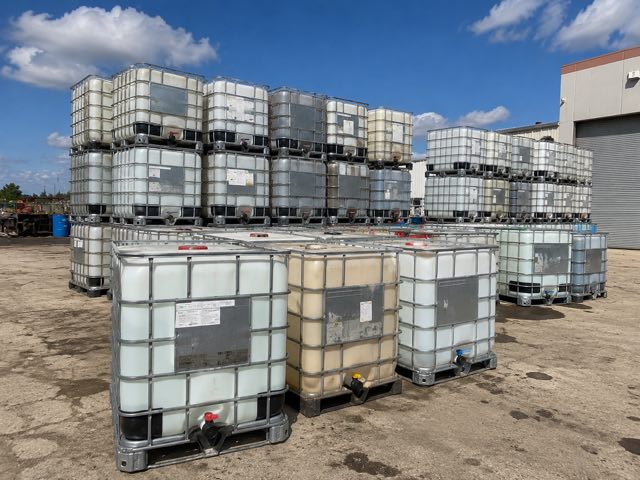
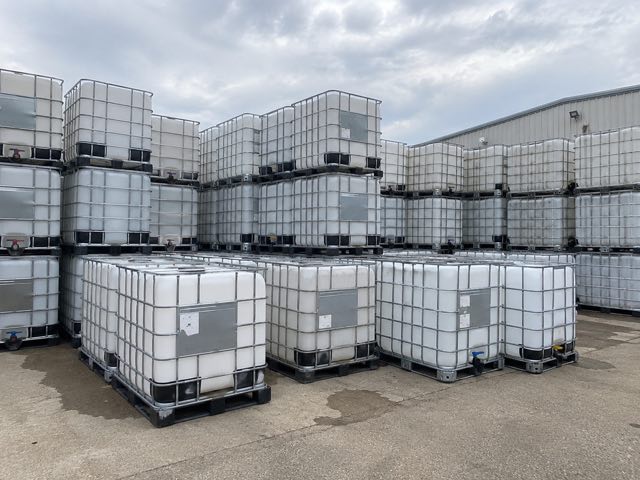
And a 275 gallon IBC cut horizontally is very close to the ideal vessel: watertight, food-grade if you pick the right donor container, roughly a metre wide, and it arrives with a steel cage you can keep as a trellis.
The design we settled on
- Donor container275 gal, food-contact history, failed leak test
- CutHorizontal, at 45% of height for the base
- Reservoir volume≈ 40 gal
- Wick medium20–40 mm washed gravel, 8 in deep
- SeparatorGeotextile between gravel and soil
- Soil depth12 in above the separator
- OverflowAt the top of the gravel, 3/4 in bulkhead
- Fill / inspection tube3 in PVC to the reservoir floor
- CageRetained, cut down, used as trellis
- Build time≈ 90 minutes per unit
Everything in that list is the result of getting it wrong at least once. Three of the decisions are worth explaining.
The three mistakes in the first forty
Overflow set too high
We originally put the overflow a few inches into the soil layer, reasoning that more stored water was better. It is not. Soil sitting permanently in standing water goes anaerobic within a season — it smells, the roots rot, and the bed underperforms a plain raised bed. The overflow belongs at the top of the gravel so the soil is never saturated, only moist from below.
Soil as the wick medium
The second batch used a sandy soil mix in the wick layer because it seemed like it would wick better than gravel. It does, for about four months. Then it compacts under its own weight, capillary continuity breaks, and the bed silently stops working while looking completely normal. Coarse washed gravel does not compact. It is less efficient per inch and it lasts fifteen years.
No inspection tube
The first forty had a fill point but no way to see the water level. Volunteers had no idea whether the reservoir was full, empty or somewhere in between, so they either over-filled — pushing water into the soil — or let it run dry without noticing. A 3-inch PVC tube to the reservoir floor solves both: you fill through it and you look down it with a torch.
The donor container matters
We only build edible-garden planters from containers with a documented food-contact history — the same stock that would have gone out as Grade A food-safe had it passed the leak test. That is written on the invoice, and if a school asks for a specific prior product we can usually match it.
We do not build them from industrial-history containers, at any price, and I would be sceptical of anyone who does. A container that failed a pressure test is still perfectly sound for holding soil at atmospheric pressure; what it is not is unknowable in its history when children are going to eat what grows in it.
What they actually do in the field
| Conventional raised bed | IBC wicking bed | |
|---|---|---|
| Watering interval, summer | Daily | 7–10 days |
| Water used per season | Baseline | ≈ 45% of baseline |
| Survives a six-week break | No | With one top-up |
| Build cost (our build) | $120–$200 timber | $185 |
| Expected service life | 5–8 years | 15+ years |
| Slug and snail pressure | Higher | Lower — dry surface |
The eighteen we built for Bayview Elementary in 2024 went through a full summer with two top-ups and no losses. That is the number the teachers care about, and honestly it is the number I care about too.
Schools, community gardens and non-profits in San Francisco get these at cost plus fabrication labour. If you want to build your own, everything above is the design — take it, and skip our first forty.
Written by Tomás Beltrán, fabrication lead at IBC Totes San Francisco. Published February 27, 2025. Spotted something wrong? Tell us — we would rather fix it than defend it.