The short version
- EPDM and oil is the single most common bad pairing we see.
- Always fit a new gasket — a compressed one will not seal reliably a third time.
- Over-torquing distorts the flange and causes a weep that a new gasket will not fix.
- Send us the safety data sheet and the gasket choice becomes a check, not a guess.
Why the cheapest part causes the most leaks
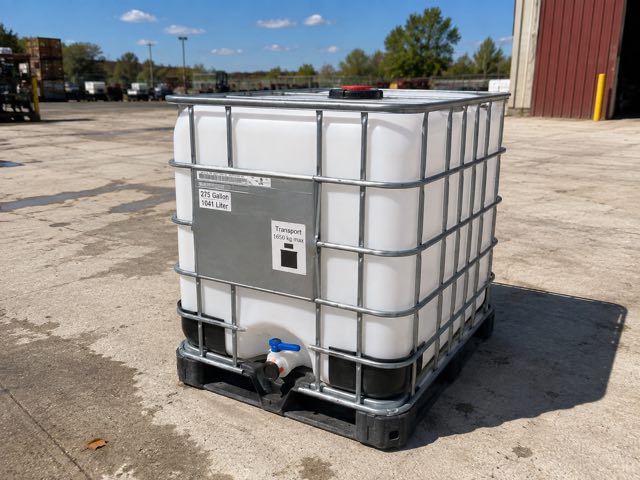
When a customer tells me a container is leaking, my first question is never about the bottle. In our own returns data, roughly seven out of ten reported leaks trace to the outlet gasket or the valve, and only about one in ten to the bottle itself.
That ratio makes sense once you think about what the gasket is being asked to do. It is a compressed elastomer ring in permanent contact with the product, at whatever temperature the container reaches, taking every vibration of a flatbed and every torque cycle of somebody tightening a valve. And it costs six dollars, so nobody specifies it.
Four materials, and what each one hates
| Material | Good with | Destroyed by | Temp range | Relative cost |
|---|---|---|---|---|
| EPDM | Water, acids, alkalis, steam, ketones, glycols | Oils, fuels, hydrocarbons, greases | −40 to 300 °F | 1× |
| Nitrile (Buna-N) | Oils, fuels, greases, vegetable oils | Strong acids, ketones, ozone, sunlight | −30 to 250 °F | 1.2× |
| Viton (FKM) | Solvents, aromatics, strong acids, heat | Ketones, hot water/steam, amines | −15 to 400 °F | 8–12× |
| Silicone | High and low temperature, food contact | Solvents, steam, abrasion | −80 to 450 °F | 3× |
The pairing that goes wrong most often is EPDM with anything oil-based. EPDM is the default because it is cheap, food-contact capable and superb with the water-based chemistry that makes up most of what moves in totes. Put vegetable oil, diesel or a hydrocarbon-based lubricant against it and it swells, softens and stops sealing — usually within weeks, and always at the worst moment.
The counter-intuitive Viton note
The other half of the problem is torque
Even the right elastomer fails if it is crushed. Over-torquing an outlet valve distorts the poly flange it is seating against, and once that flange is out of plane no amount of new gasket restores the seal. You get a slow weep that nobody can find, the container gets blamed, and the actual cause was somebody leaning on a wrench eighteen months ago.
We torque to the manufacturer figure with a wrench, not by feel, on every unit we assemble. If you are fitting your own valves, look up the number for your fitting — it is usually far lower than instinct suggests.
The diagnostic is simple: fit a new gasket correctly torqued. If the weep persists, the flange is distorted and the bottle needs replacing or the container downgrading to atmospheric service.
What to do in practice
Replace the gasket every time
Not "if it looks worn". A gasket that has been compressed for two years has taken a set and will not reliably seal a third time. It also holds residue in the compressed face where no wash reaches.
Match the elastomer to the liquid, not to the container
The bottle is HDPE regardless. The gasket is where the chemistry decision actually lives.
Ask for the SDS check
We check resin and gasket compatibility on request before quoting, and it takes fifteen minutes. Discovering the answer after you have filled 275 gallons is considerably slower.
Keep spares of the right material
A set of six correct gaskets is $36 and lives in a drawer. The container that needs one will need it on a Sunday.
Torque properly, once
To the figure, with a wrench. Then leave it alone — repeated re-tightening is its own failure mode.
Written by Priya Raghunathan, wash chemistry & compliance at IBC Totes San Francisco. Published February 4, 2025. Spotted something wrong? Tell us — we would rather fix it than defend it.