The short version
- The saving is in disposal and handling, not in the container price.
- Fewer connections means fewer caustic exposure events, which is the safety argument.
- A rotated tote fleet hands the disposal problem back to the supplier.
- Check the forklift first — 50% caustic in a 275 gallon tote grosses 3,633 lb.
What changed in five years
In 2021 most of our brewery customers bought drums, mainly for caustic and acid cleaning chemicals. Today almost none of them do. The shift has been near-total and it happened without anybody running a campaign about it.
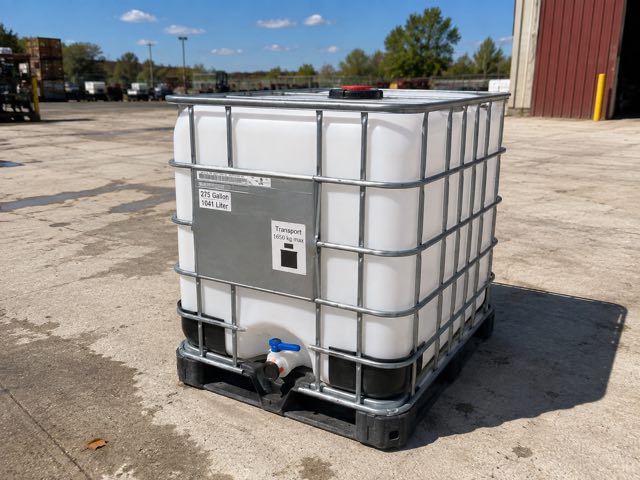
The interesting part is that it was not driven by container price. A 55 gallon poly drum at $45 works out at $0.82 per gallon of capacity; a 275 gallon tote at $165 is $0.60. That is a real difference but it is not enough on its own to reorganise a cleaning programme.
It was always about disposal
A brewery going through 340 drums a year has 340 empty drums a year to deal with. At $22 each for third-party collection that is $7,480 — considerably more than they spent on the chemicals' packaging in the first place.
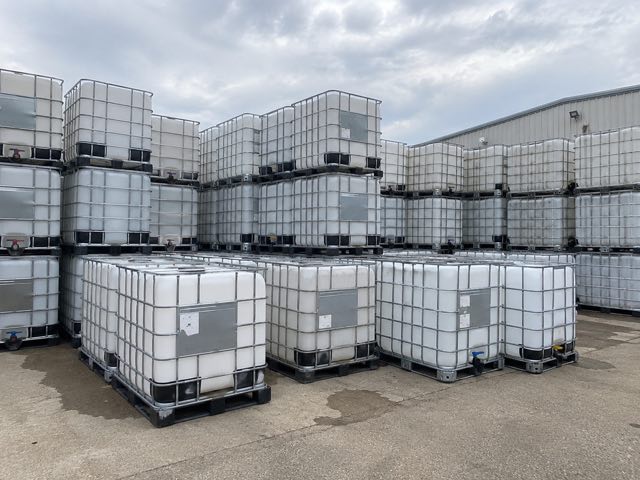
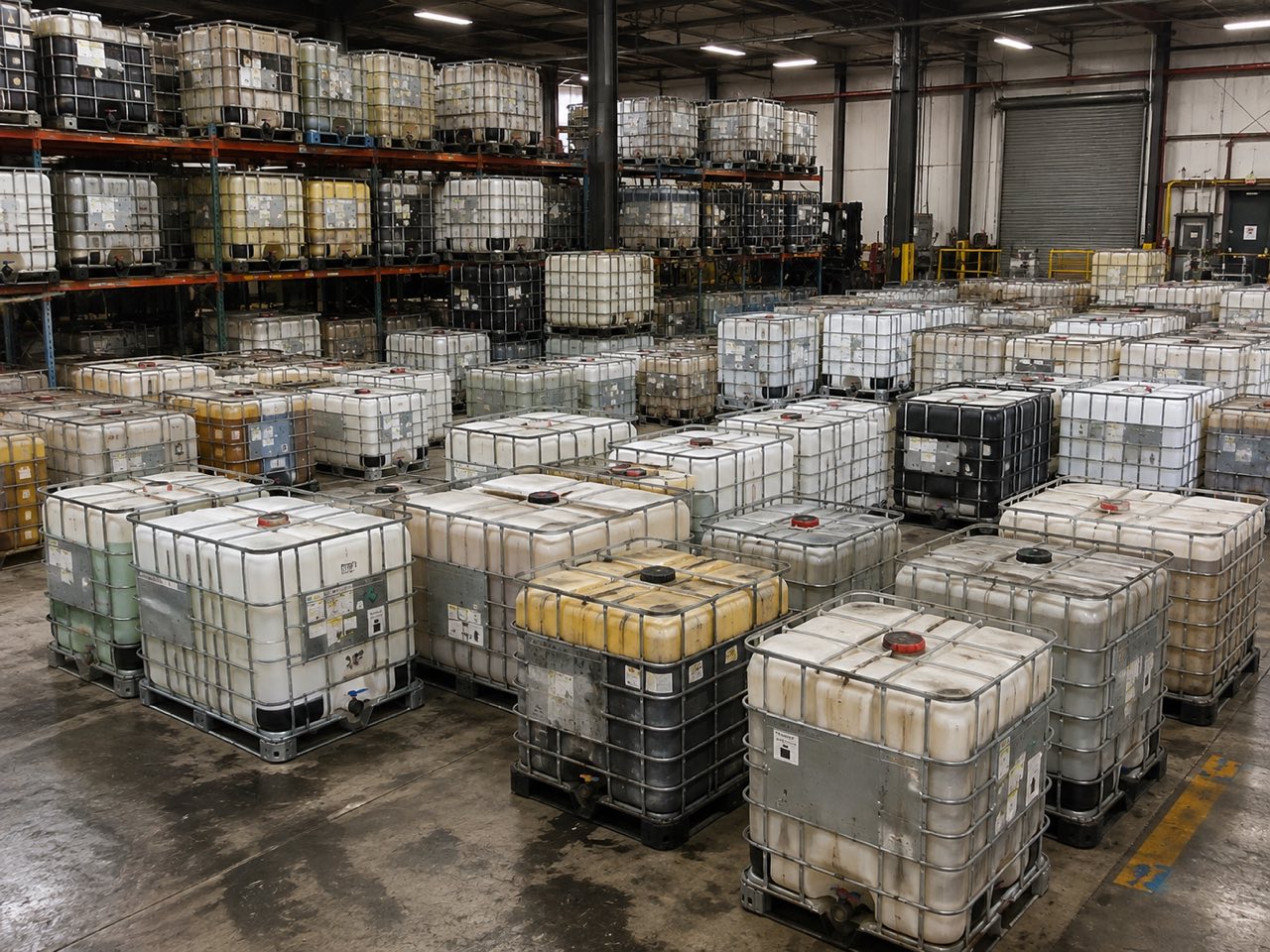
Then the empties have to live somewhere until collection day, which on a tight production floor is 210 square feet of space that could be doing something useful. Then somebody has to move them there, which is labour nobody counts because it happens in fifteen-minute increments.
| 340 drums/year | 16 rotated totes | |
|---|---|---|
| Container cost | ≈ $15,300 (in chemical price) | Leased or owned, rotated |
| Disposal cost | $7,480 | $0 — returned to supplier |
| Empties storage | 210 sq ft | 0 sq ft |
| Connections per week | 26 | 4 |
| Packaging waste by mass | baseline | ≈ 9% of baseline |
| Net annual change | — | ≈ $14,200 saved |
The argument the safety officer makes
Twenty-six connections a week versus four. That is the number that ends the discussion in most breweries once somebody says it out loud.
Every drum change is a connection, a purge and an opportunity for a caustic splash. At six or seven drum changes a week across two brewhouses, the exposure is constant and entirely routine — which is exactly the condition under which people stop being careful. Nobody puts on a face shield for the four-hundredth time with the same attention as the first.
Reducing the frequency by 85% does more for that risk than any amount of retraining. It is the same logic as reducing the number of times a forklift crosses a walkway.
Three things to get right when you switch
Check the forklift before you order
50% sodium hydroxide has a specific gravity of 1.53, which means a full 275 gallon tote grosses 3,633 lb — not the 2,400 lb everyone remembers. That is outside the safe envelope of a great many 3,000 lb forklifts once you account for load centre. We now ship at 80% fill for customers whose trucks are marginal.
Get the gasket material right
EPDM is correct for caustic and excellent with it. It is the wrong choice for some acid lines and it is destroyed by anything oil-based. Send us the safety data sheet for both your caustic and your acid — they usually want different gaskets and people assume one answer covers both.
Sort out secondary containment before the first delivery
A bunded platform sized to the largest container plus freeboard. Improvised drip trays under a 275 gallon tote of caustic are not containment; they are a gesture. We fabricate these to the footprint, and it is worth doing before the containers arrive rather than after.
The rotation is the whole point
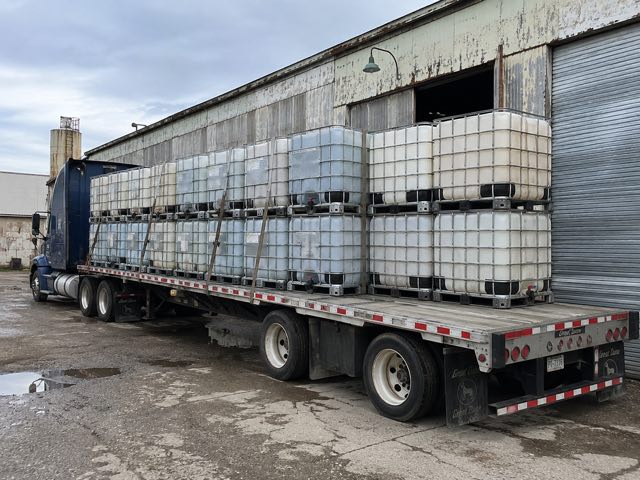
The arrangement that makes this work is not buying sixteen totes. It is running a rotation: eight in service, eight in circulation, empties going back on the truck that delivers full ones, washed here on the industrial line and returned to the pool.
The brewery never stores an empty for more than a week and never handles disposal at all. We never send a truck out empty. And the containers do six or eight cycles a year instead of sitting in a corner, which is the number that drives the environmental case for the whole thing.
It only works if your chemical supplier will fill totes, which most now will, and if somebody is willing to take the empties back reliably. That second part is the bit that used to be missing, and it is why this shift happened when it did rather than a decade earlier.
Written by Wesley Kam, quote desk lead at IBC Totes San Francisco. Published April 16, 2026. Spotted something wrong? Tell us — we would rather fix it than defend it.