The short version
- Reserve food-grade stock by late June for an August–November harvest.
- Leasing is usually cheaper than buying for a seasonal fleet, and it books out first.
- A two-week delivery window costs nothing and protects you when the crop moves.
- Grade A industrial is a legitimate fallback for cleaning solutions and water, freeing food-grade units for product.
Why food-grade supply is different
Our industrial stock is essentially demand-limited: if more people want washed Grade A totes, we buy more empties and wash more. There is slack in the system.
Food-grade is supply-limited, and the constraint is upstream of us entirely. We can only sell a container as food-grade if it held a single traceable food-contact product and we can name the shipper. That means our inventory is a function of how many food producers happened to empty a tote recently — not of how hard we work.
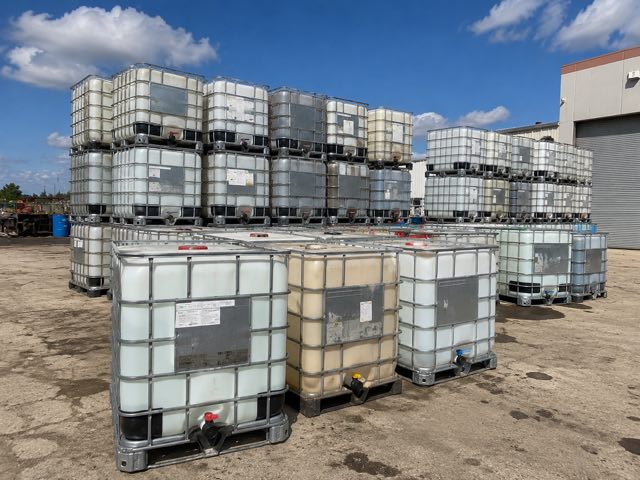
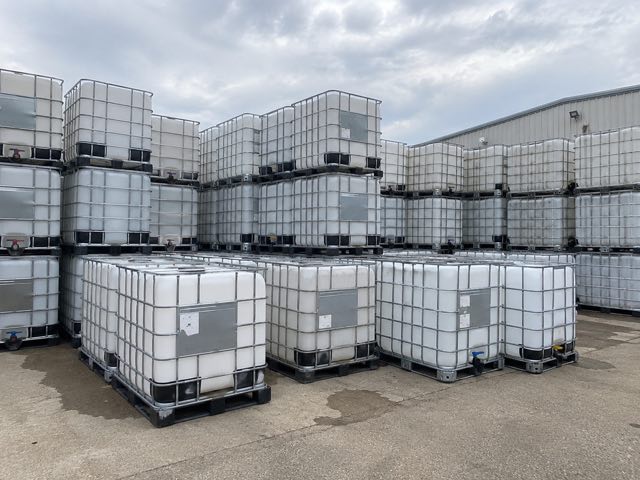
On a normal week that is 100 to 200 units on the covered pad. In a good week we take in thirty. In a week where a Central Valley cannery finishes a run, we might take in ninety. It is lumpy, and nothing we do smooths it.
The ten weeks where everything collides
Northern California crush runs roughly mid-August to early November. Cider follows apples, slightly later. Brewing volumes rise into the autumn. Juice packers run their heaviest weeks in September. All of these customers want the same product from the same limited pool, in the same ten weeks.
| Month | Food-grade enquiries | Units available | Typical outcome |
|---|---|---|---|
| May | Low | 180–200 | Anything you want, next day |
| June | Low | 160–190 | Best month to reserve for autumn |
| July | Rising | 150–180 | Still comfortable |
| August | Heavy | 90–140 | Confirmed slots only |
| September | Peak | 40–90 | Waiting list forms |
| October | Peak | 40–100 | Waiting list, some leasing returns |
| November | Falling | 110–160 | Recovers as leases come back |
The reason this catches people is that the constraint arrives suddenly. In the first week of August we usually look comfortable. By the third week we are turning down orders, because harvest dates moved forward across the whole valley and everybody called at once.
What actually works
Reserve in June, not August
A reservation costs nothing and holds stock against your name. We do not release a confirmed slot to somebody else, which cuts both ways — but that is the point of confirming it.
Take a two-week delivery window rather than a date
Harvest moves with the weather. A window you can call within is more useful to you and much easier for us to plan around than a fixed date you will have to change.
Consider leasing rather than buying
If you need forty containers for eleven weeks, leasing is typically 60% cheaper than buying and storing them. It also books out earliest, usually by early July.
Split the fleet by duty
Food-grade units for product; Grade A washed industrial for cleaning solutions, water and waste. There is no reason to spend food-grade money on a container that will hold caustic.
Tell us your prior-product preference early
If your HACCP documentation is simpler when the prior contents match your category, we can build the lot from inbound stock over several weeks. That needs lead time, not luck.
If you are reading this in September
It happens, and it is not hopeless. Rebottled units are the usual answer — a new virgin HDPE bottle in a reclaimed cage removes the prior-contents question entirely and supply is not seasonal, though lead time runs three to seven days. It costs about $50 more per unit than food-grade reconditioned.
Beyond that, ask us what is coming in. We know roughly what is scheduled for intake over the following fortnight and we would rather tell you honestly that we can cover twelve of your twenty units next Thursday than take an order we cannot fill. And if we genuinely cannot help, we will say so early enough for you to call somebody else.
Written by Wesley Kam, quote desk lead at IBC Totes San Francisco. Published July 15, 2024. Spotted something wrong? Tell us — we would rather fix it than defend it.